Mazda CX-70 and CX-90 Sales Are Falling: What Went Wrong?
Mazda CX-70 and CX-90 sales are down sharply in the U.S. Here's what's behind the decline, Mazda's safety strategy, tariffs, PHEV demand and the surprising Mazda3 surge.
Key Takeaways
- Mazda CX-90 and CX-70 sales are falling sharply in the U.S., with both large SUVs down more than 24% through the first half of 2026.
- The CX-90 sold 21,271 units through June 2026, down 24.2% from the same period a year earlier.
- The CX-70 sold 5,974 units through June, down 28.5% year over year.
- Mazda says it is preparing product enhancements for its large-platform SUVs and wants to increase awareness of the CX-70, CX-90 and the broader lineup.
- Mazda also has a strong safety story, with the CX-70 and CX-90 among a lineup that has earned multiple IIHS Top Safety Pick+ awards.
- The Mazda3 is doing something nobody expected from an aging compact car: sales are rising while Mazda’s larger SUVs are struggling.
- Tariffs, the changing economics of plug-in hybrids and weaker demand for expensive electrified vehicles are adding pressure to Mazda’s large SUVs.
Mazda Has a CX-70 and CX-90 Sales Problem
Mazda has a problem with its big SUVs, and the sales numbers aren’t exactly hiding it.
The CX-90 and CX-70 were supposed to move Mazda further upmarket. Instead, both are taking a beating in the U.S. market.
Through the first six months of 2026, Mazda sold 21,271 CX-90s in the United States. That’s down 24.2% from the same period in 2025.
The CX-70 is doing even worse on a percentage basis. Mazda moved just 5,974 units through June, a decline of 28.5% year over year.
Those aren’t numbers Mazda can simply shrug off.
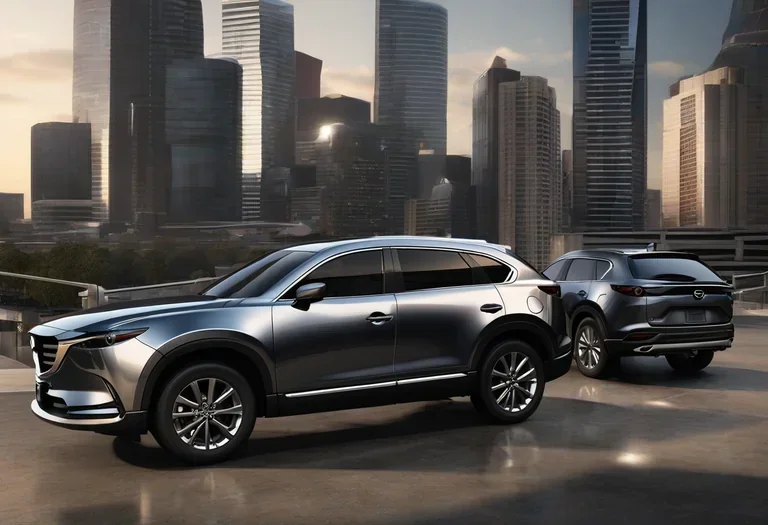
The CX-90 is a relatively new vehicle, and the CX-70 is basically the two-row version of the same basic architecture. These are supposed to be important vehicles for Mazda’s move into a more premium part of the market.
Instead, buyers aren’t exactly lining up.
Why Are Mazda CX-70 and CX-90 Sales Falling?
There’s no single reason.
That’s important because it’s tempting to blame everything on one issue, whether that’s pricing, the powertrain, tariffs, plug-in hybrids or competition.
The reality is that Mazda has several things working against it at the same time.
First, the CX-70 and CX-90 entered a brutally competitive SUV market. Buyers have more choices than ever, and many of those competitors have years of customer familiarity behind them.
Second, Mazda pushed these vehicles upmarket. The CX-90 isn’t simply a replacement for the old CX-9. Mazda wants customers to see it as a more premium alternative to mainstream three-row SUVs.
That’s a tough sell.
When you’re asking buyers to spend serious money, they start looking at everything: reliability, resale value, dealer support, interior space, fuel economy, warranty coverage and how much the competition is discounting.
That’s where Mazda has to prove the CX-70 and CX-90 are worth the money.
Mazda’s Large SUV Strategy Is Under Pressure
The CX-70 and CX-90 ride on Mazda’s large-vehicle architecture, which also supports the brand’s longitudinal inline-six and plug-in hybrid powertrains.
On paper, it’s an impressive setup.
The CX-90 offers rear-biased all-wheel drive, a longitudinal six-cylinder engine and a level of chassis sophistication that you wouldn’t normally associate with a mainstream Mazda.
The problem is that sophisticated doesn’t automatically mean desirable.
I’ve been around cars for 30 years, and this is one of the oldest lessons in the business: engineering a good vehicle and selling a good vehicle are two different jobs.
You can build a technically impressive SUV and still have trouble convincing people to buy it.
That’s where Mazda appears to be now.
What Is Mazda Doing to Fix the CX-70 and CX-90?
Mazda isn’t sitting still.
Chief Financial Officer Jeffrey Guyton recently said the company is preparing a number of product enhancements for its large-platform vehicles. He did not provide details or a specific timeline, but Mazda also plans to increase awareness of the CX-70, CX-90 and the broader large-platform lineup.
That’s a little different from saying Mazda is simply going to throw more safety features at the problem.
The company has a safety story worth using, but the latest strategy appears to involve both product changes and better communication about what these SUVs already offer.
And frankly, Mazda needs both.
Why Is Mazda Talking About Safety?
Safety is one area where Mazda has legitimate ammunition.
Mazda’s U.S. lineup has accumulated an impressive number of IIHS Top Safety Pick+ awards. The company’s current safety information lists the CX-70 and CX-90 among the 2026 Mazda models earning the organization’s top award.
That’s not marketing fluff by itself. Those are independent safety evaluations.
The problem is getting buyers to care.
Most people don’t walk into a dealership saying, “Show me the SUV with the best crash-test score.”
They ask about price.
They ask about fuel economy.
They ask how much room it has.
They ask what the monthly payment is.
And if they’re spending $50,000 or more, they’re probably comparing it against a Toyota, Honda, Hyundai, Kia, Ford, Subaru or something from a luxury brand.
Safety can help close the deal, but it probably isn’t going to create the initial interest by itself.
Are Tariffs Hurting the Mazda CX-70 and CX-90?
Yes, tariffs have added another problem for Mazda’s U.S. business.
The CX-70 and CX-90 are built in Japan and imported into the United States, leaving them exposed to U.S. trade costs that don’t affect every competitor in the same way.
That matters because Mazda already operates at a smaller scale than giants such as Toyota, Honda and Ford.
When you’re a smaller automaker, additional costs don’t disappear. Somebody eventually pays for them.
Usually, that’s the manufacturer, the dealer, the customer or some combination of all three.
And when the vehicle is already positioned as a premium-priced alternative, adding more cost isn’t exactly what Mazda needs.
What Happened to the CX-70 and CX-90 Plug-In Hybrids?
The plug-in hybrid versions face another problem: the economics of buying one have changed.
The CX-70 PHEV and CX-90 PHEV were designed to give buyers electric driving capability without giving up the ability to take long road trips on gasoline.
That’s a reasonable concept.
But plug-in hybrids are expensive, complicated and heavily dependent on incentives to make their financial case look attractive.
As government incentives change, the math changes with them.
And that’s particularly important for Mazda because the PHEV versions sit toward the expensive end of the lineup.
A buyer looking at a $50,000-plus plug-in hybrid has a lot of alternatives. Some can be cheaper, some have longer electric range and some are backed by much larger electrification programs.
Mazda doesn’t have the scale of Toyota or Hyundai when it comes to hybrid technology, and it doesn’t have Tesla’s EV brand recognition.
That leaves Mazda in a difficult middle ground.
Why Is the Mazda3 Suddenly Selling?
Here’s the weird part.
While Mazda’s big new SUVs are struggling, the old Mazda3 is showing signs of life.
And by “old,” I mean really old by modern automotive standards.
The current-generation Mazda3 debuted for the 2019 model year, yet the compact car is still attracting buyers while newer Mazda SUVs are having a much harder time.
That tells Mazda something.
People still want a reasonably priced car that drives well.
That shouldn’t be a shocking revelation, but the industry spent the last decade convincing itself that everyone wanted an SUV.
Apparently, not everyone got the memo.
Recent U.S. sales data shows the Mazda3 moving in the opposite direction from the CX-70 and CX-90, with July 2026 sedan and hatchback sales posting substantial year-over-year gains. Mazda’s overall July results show the same broader split: some of the company’s smaller products are holding up considerably better than the large SUVs.
That’s a pretty important signal.
Is the Mazda3 Showing Mazda What Buyers Actually Want?
Maybe.
The Mazda3 has several things going for it that the CX-70 and CX-90 don’t.
- It’s smaller.
- It’s cheaper.
- It’s easier to park.
- It uses less fuel.
- It doesn’t ask buyers to make a premium-SUV argument.
- It’s still one of the better-driving compact cars on the market.
And there’s another factor Mazda shouldn’t ignore.
There are fewer compact cars available every year.
Automakers have abandoned sedans and hatchbacks because SUVs generally produce better margins. That leaves fewer choices for buyers who simply don’t want an SUV.
The Mazda3 benefits from that shrinking competition.
Sometimes the product you think is old is actually sitting in a market that has become less crowded.
Is Mazda’s Safety Strategy Enough to Save the CX-70 and CX-90?
Probably not by itself.
Safety is important, and Mazda has a legitimate advantage there. But the problems facing the CX-70 and CX-90 are bigger than safety.
Mazda needs buyers to want these vehicles before safety becomes part of the conversation.
That means the company has to get the fundamentals right:
- Competitive pricing
- Strong reliability and quality perception
- Useful interior space
- Competitive fuel economy
- Easy-to-understand powertrain choices
- Strong dealer support
- Competitive financing and incentives
- A clear reason to choose the CX-70 or CX-90 over the competition
That’s a much longer list than “tell people it’s safe.”
The CX-90 Has Another Problem: It’s Competing Above Mazda’s Traditional Sweet Spot
This is probably the biggest strategic issue.
Mazda built its reputation on relatively affordable cars and SUVs that were more fun to drive than their competitors.
The CX-90 changes the equation.
Now you’re asking Mazda buyers to spend luxury-car money on a vehicle from a brand that isn’t a luxury brand.
That can work.
But the product has to be nearly flawless.
If the customer is paying mainstream money for a Mazda, they’ll forgive some shortcomings.
If they’re paying premium money, the standard changes.
They start comparing the CX-90 to everything from the Acura MDX to the Lexus TX, BMW X5 and other premium SUVs.
That’s a much harder fight.
What Does Mazda Need to Do Next?
Mazda needs to make the CX-70 and CX-90 easier to understand and easier to justify.
That’s it.
Don’t bury the buyer under engineering terminology.
Don’t assume people understand why a longitudinal inline-six matters.
Don’t expect a customer to pay more simply because Mazda says the interior is premium.
Show them why the vehicle is better.
And then give them a reason to buy it now.
If that means product improvements, Mazda needs to make them meaningful.
If it means pricing changes, make the pricing competitive.
If it means safety messaging, explain the actual safety advantage instead of just throwing another award logo into the advertising.
And if the PHEV isn’t working, Mazda needs to be honest about that too.
Mazda CX-70 and CX-90 U.S. Sales
| Model | 2026 YTD Through June | Year-Over-Year Change |
|---|---|---|
| Mazda CX-90 | 21,271 | -24.2% |
| Mazda CX-70 | 5,974 | -28.5% |
These figures are U.S. sales through June 2026. The CX-90 remains the much higher-volume model, but both large SUVs are moving in the wrong direction.
The Bottom Line on Mazda’s CX-70 and CX-90 Sales Problem
Mazda doesn’t have a bad product problem as much as it has a positioning problem.
The CX-70 and CX-90 are technically interesting vehicles. The inline-six is unusual in this price class, the chassis is sophisticated and the interiors are far nicer than what you’d expect from Mazda a decade ago.
But the market doesn’t buy engineering diagrams.
It buys vehicles.
And buyers have decided that the CX-70 and CX-90 aren’t compelling enough at their current price and positioning.
The sales numbers are telling Mazda exactly that.
Meanwhile, the Mazda3 is quietly doing something the industry said couldn’t happen anymore: selling cars.
That’s the part I’d pay attention to.
Mazda shouldn’t abandon its SUVs. They’re too important.
But it also shouldn’t assume every buyer wants a bigger, more expensive vehicle.
After 30 years around this business, I’ve seen this cycle before. Automakers get obsessed with what they think customers want, then the sales numbers eventually remind them what customers actually want.
Mazda has the numbers now.
What it does with them is the interesting part.
Frequently Asked Questions About Mazda CX-70 and CX-90 Sales
Why are Mazda CX-90 sales falling?
U.S. CX-90 sales fell 24.2% year over year through June 2026, with 21,271 units sold. Mazda is facing competition in a crowded midsize SUV market, while the CX-90’s premium positioning, pricing, tariffs and changing demand for plug-in hybrids add pressure.
Why are Mazda CX-70 sales falling?
The CX-70 sold 5,974 units in the U.S. through June 2026, down 28.5% from the same period a year earlier. The two-row SUV faces many of the same pricing, competition and market-positioning challenges as the CX-90.
What is Mazda doing to improve CX-70 and CX-90 sales?
Mazda says it is preparing product enhancements for its large-platform vehicles and plans to increase awareness of the CX-70, CX-90 and the broader large-platform lineup. The company also has a strong safety record that it can use in its marketing.
Are Mazda CX-70 and CX-90 safe?
Yes. Mazda’s current U.S. safety information lists both the CX-70 and CX-90 among its 2026 models receiving IIHS Top Safety Pick+ awards.
Are tariffs affecting the Mazda CX-70 and CX-90?
Yes. Because the CX-70 and CX-90 are imported from Japan for the U.S. market, tariffs can increase the cost pressure on these vehicles. That becomes more significant when Mazda is already competing in a highly price-sensitive SUV segment.
Why are Mazda3 sales increasing?
The Mazda3 is benefiting from continued demand for compact cars at a time when many competitors have abandoned the segment. Its relatively affordable price, efficient size and engaging driving characteristics also give it a clear identity in Mazda’s lineup.
Is Mazda going to redesign the CX-70 and CX-90?
Mazda has said it is preparing product enhancements for its large-platform vehicles, but the company has not publicly detailed the specific changes or provided a confirmed timeline for a major redesign.
Are the Mazda CX-70 and CX-90 failures?
It’s too early to call either vehicle a failure, but the current U.S. sales trend is clearly a problem. Both models are down substantially year over year, and Mazda now has to prove that its large-platform strategy can generate stronger demand.