VW Plans An American-Built Pickup Before The Decade Ends
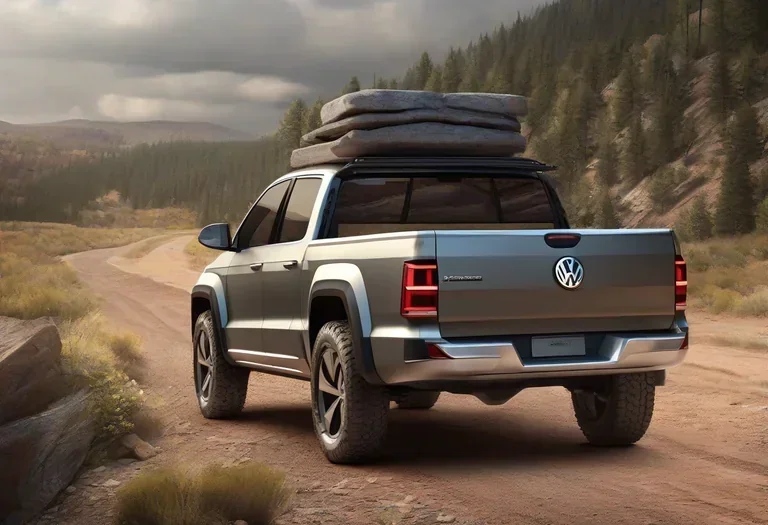
Volkswagen is reportedly planning to build a pickup truck in the United States before the end of the decade.
Key Takeaways
- Volkswagen is reportedly planning a new pickup for the U.S. market as part of a broader strategy to expand its American product lineup.
- A Reuters report says Volkswagen is targeting a U.S.-built pickup before the end of the decade, but the company has not yet publicly confirmed the truck’s final specifications or production program.
- Chattanooga, Tennessee, is being considered as a potential production location, although Volkswagen has not officially confirmed that the pickup will be built there.
- A Ford-based vehicle is one possible path because Volkswagen and Ford already collaborate on several commercial and passenger-vehicle projects, including the Volkswagen Amarok and Ford Ranger relationship in other markets.
- The size, powertrain, platform and design of the proposed U.S. pickup have not been officially announced, so claims that it will definitely be a Ford Ranger-based midsize truck remain speculative.
- Volkswagen ended local ID.4 production in Chattanooga in 2026 and says the plant is shifting toward high-volume internal-combustion models such as the Atlas.
Why Is Volkswagen Considering a Pickup Truck for the U.S.?
Volkswagen is reconsidering its U.S. product strategy as it looks for ways to increase its presence in one of the world’s most competitive automotive markets. A pickup truck is reportedly one of the products being considered because of the importance of trucks to American consumers and the strong financial performance associated with higher-priced utility vehicles.
Reuters reported in August 2026 that Volkswagen is planning a major overhaul of its U.S. strategy centered partly on a new pickup truck. According to the report, the company is targeting a U.S.-produced pickup before the end of the decade. The report was based on information from a company source, so the timing and product details should not be treated as a formal Volkswagen product announcement.
The potential move would represent a major change for the Volkswagen brand in the United States. Volkswagen has sold pickup trucks in other markets, including the Amarok, but it has not offered a modern Volkswagen-badged pickup to U.S. consumers.
Is Volkswagen Definitely Building a U.S. Pickup?
The answer requires some qualification. Volkswagen has reportedly made the pickup part of its U.S. product planning, but the company has not publicly released a complete product announcement confirming the truck’s name, platform, engine lineup, dimensions or final production location.
Volkswagen executives have previously acknowledged that a pickup is among the options being considered for North America. Earlier in 2026, Volkswagen Group of America CEO Kjell Gruner said the company had not ruled out a truck, while other reporting indicated that the project remained under evaluation rather than being a finalized production program.
The latest Reuters report indicates that the proposal has advanced further within Volkswagen’s U.S. strategy. Nevertheless, there is an important difference between a reported internal product plan and an officially announced vehicle. Until Volkswagen releases formal specifications and a production decision, details about the truck should be treated as provisional.
Will Volkswagen’s Pickup Be Based on the Ford Ranger?
A Ford Ranger connection is plausible, but it has not been confirmed for the proposed U.S. pickup.
Volkswagen and Ford already have a substantial commercial relationship. One of the clearest examples is the current Volkswagen Amarok sold in markets outside North America. The latest Amarok was developed in partnership with Ford and shares its underlying architecture and manufacturing relationship with the Ford Ranger.
The partnership gives Volkswagen experience using Ford’s pickup technology, making collaboration a logical possibility for a future U.S. truck. However, it would be inaccurate to state that the upcoming Volkswagen pickup will definitely be a rebadged or modified Ranger.
The final vehicle could use an existing Ford platform, a Volkswagen Group architecture, or a new solution developed specifically for the North American market. No final engineering decision has been publicly confirmed.
What Size Will Volkswagen’s U.S. Pickup Be?
The available reporting points toward a pickup designed for the mainstream U.S. market, but Volkswagen has not announced its dimensions or official market classification.
A midsize pickup would be a logical possibility because the segment includes established competitors such as the Ford Ranger, Chevrolet Colorado and Toyota Tacoma. However, the current evidence does not establish that Volkswagen has definitively selected the midsize segment.
Volkswagen has previously explored multiple pickup concepts that could provide clues about its thinking. The Tanoak concept shown in 2018 was a larger pickup based on the MQB architecture and was designed with the U.S. market in mind. The 2019 Tarok concept was smaller and positioned closer to the compact pickup category.
Those concepts were never put into U.S. production, so neither should be treated as a confirmed preview of the new truck.
Where Could Volkswagen Build the Pickup?
Chattanooga, Tennessee, is one of the locations being considered for the proposed pickup, according to the Reuters report. Volkswagen already operates a major manufacturing facility there, giving the company an established U.S. production base.
However, Chattanooga has not been officially confirmed as the pickup’s production site. Volkswagen’s own 2026 financial and product update says the company has discontinued local ID.4 production and that the Chattanooga plant will focus on high-volume internal-combustion models such as the Atlas. Volkswagen’s official announcement confirms the change in the plant’s product strategy.
The existing facility could nevertheless provide a logical manufacturing base for a future truck. Volkswagen already has the workforce, suppliers and production infrastructure required to build vehicles in Tennessee, although converting the plant for a new pickup would still require engineering and manufacturing investment.
What Happened to Volkswagen’s ID.4 Production in Tennessee?
Volkswagen ended local production of the ID.4 at its Chattanooga plant in 2026. The decision came as the company adjusted its North American product strategy and responded to changing demand for electric vehicles.
Volkswagen said the Chattanooga facility would instead focus on higher-volume internal-combustion models, including the Atlas. That makes the factory’s future capacity relevant to reports about a potential pickup, although Volkswagen has not said that the pickup will replace the ID.4 on the production line.
The Chattanooga plant already has extensive experience building vehicles for the U.S. market. Volkswagen began producing the ID.4 there in 2022 after investing approximately $800 million to prepare the factory for electric-vehicle production. The facility also builds the Atlas and Atlas Cross Sport.
Why Would Local Production Matter?
Building the pickup in the United States could provide Volkswagen with several strategic advantages. Local production would give the company greater control over manufacturing costs and supply chains while allowing the truck to be designed specifically around American customer requirements.
U.S. production could also reduce the exposure to import costs that would apply if the vehicle were shipped into the country from another market. The exact tariff implications would depend on the vehicle’s origin, parts content, trade arrangements and regulations in effect when production begins, so it is too early to assign a specific tariff advantage to the proposed truck.
Local production would also reinforce Volkswagen’s broader strategy of increasing its manufacturing presence in North America. The company has already invested heavily in its U.S. operations and uses Chattanooga as a major production hub.
How Does Volkswagen’s Ford Partnership Fit Into the Plan?
The Volkswagen-Ford partnership could be particularly important if Volkswagen chooses to accelerate development by using existing Ford technology.
The companies have collaborated across several vehicle programs. The Volkswagen Amarok is closely related to the Ford Ranger, while Volkswagen’s European Transporter and Ford Transit are also connected through the companies’ commercial-vehicle partnership.
The relationship has also extended into electric vehicles. Ford has used Volkswagen’s MEB electric-vehicle platform for models sold in Europe, including the Ford Explorer and Capri.
That history demonstrates that the two companies are willing to share platforms and engineering resources. It does not, however, prove that Ford will develop Volkswagen’s upcoming American pickup. Any specific Ford involvement remains unconfirmed unless the companies announce it.
What Would Volkswagen Be Competing Against?
If Volkswagen enters the midsize pickup segment, it would face established competitors with decades of experience in the U.S. market.
- Ford Ranger: A major midsize pickup with rear-wheel-drive and four-wheel-drive configurations and multiple powertrain choices.
- Toyota Tacoma: One of the best-known midsize trucks in the U.S. market, with a strong reputation for off-road capability and durability.
- Chevrolet Colorado: General Motors’ midsize pickup offering, available in several configurations and aimed at both everyday and off-road buyers.
- GMC Canyon: A more premium-oriented midsize truck sharing its basic architecture with the Colorado.
- Honda Ridgeline: A different approach to the segment, using a unibody architecture rather than the traditional body-on-frame layout used by the Ranger, Tacoma and Colorado.
The competitive target would depend heavily on Volkswagen’s engineering decision. A body-on-frame truck based around conventional pickup architecture would compete differently from a unibody model aimed at buyers who use their trucks primarily for transportation, recreation and light-duty utility.
Could Volkswagen Build an Electric Pickup?
It is too early to say. Volkswagen has not confirmed the powertrain of the proposed U.S. pickup.
The company’s earlier U.S. pickup plans under the Scout brand involved all-electric pickups, but Scout Motors is a separate company within the Volkswagen Group structure and is developing its own products and manufacturing strategy. Volkswagen’s current proposal for a Volkswagen-badged pickup should not automatically be equated with a Scout vehicle.
The latest Volkswagen strategy also indicates that the Chattanooga plant is shifting toward high-volume internal-combustion models after ID.4 production ended. That does not rule out electrification in the longer term, but it does mean there is currently no factual basis for claiming that the new Volkswagen pickup will be electric.
What Other Vehicles Could Volkswagen Add in the U.S.?
The pickup is reportedly part of a broader review of Volkswagen’s American product portfolio rather than an isolated project.
Reporting has also pointed to the possibility of a larger SUV positioned above the Atlas. Such a vehicle would fit Volkswagen’s strategy of targeting segments with strong U.S. demand, although it has not been officially confirmed as a production model either.
Volkswagen’s current U.S. strategy is therefore broader than simply adding one truck. The company is attempting to develop products that better match American preferences while making more effective use of its local manufacturing capacity.
When Could Volkswagen’s Pickup Arrive?
According to the Reuters report, Volkswagen is targeting a U.S.-produced pickup before the end of the decade. That points to a potential launch by 2030, but Volkswagen has not announced a firm on-sale date.
The distinction is important because a reported target is not the same as a confirmed launch schedule. The company would still need to finalize the vehicle’s design, engineering, manufacturing location, supplier arrangements and regulatory approvals before production could begin.
There is currently no confirmed information about when customers will be able to place orders, how much the truck will cost or how many units Volkswagen intends to produce.
What Does the Pickup Mean for Volkswagen’s U.S. Strategy?
A pickup could give Volkswagen access to a vehicle category where it currently has no direct competitor. That would potentially broaden the brand’s reach beyond its existing mix of cars, crossovers and SUVs.
The challenge is that the U.S. pickup market is highly competitive. Established manufacturers have strong customer loyalty, extensive dealer networks and decades of experience developing trucks for American buyers.
Volkswagen would therefore need more than a recognizable badge to succeed. The truck would need competitive towing, payload, off-road capability, pricing, reliability and technology while also fitting the expectations of U.S. pickup buyers.
The potential Ford relationship could reduce some of the development burden if Volkswagen chooses to share technology. But until the companies confirm a specific program, the extent of Ford’s involvement remains unknown.
Volkswagen U.S. Pickup Specifications
| Specification | Current Information |
|---|---|
| Vehicle type | Pickup truck |
| Target market | United States |
| Expected market segment | Not officially confirmed; midsize pickup is a reported possibility |
| Production target | Reportedly before the end of the decade |
| Potential production site | Chattanooga, Tennessee, reported as a possibility |
| Platform | Not announced |
| Ford Ranger relationship | Possible, but not confirmed for the U.S. pickup |
| Powertrain | Not announced |
| Horsepower | Not announced |
| Torque | Not announced |
| Pricing | Not announced |
| Production status | Reportedly under development/planning; formal Volkswagen product announcement pending |
Pros and Cons
Pros
- Would give Volkswagen a direct entry into the highly competitive U.S. pickup market
- Could make use of Volkswagen’s existing Chattanooga manufacturing operation
- Potential Ford collaboration could reduce development time and costs
- Local production could better align the truck with U.S. customer requirements
- Would broaden Volkswagen’s American product portfolio beyond its current crossover and SUV lineup
Cons
- The pickup has not yet received a complete public product specification
- Chattanooga production has been reported but not officially confirmed
- A Ford Ranger-based platform remains speculation
- Powertrain and performance details are unknown
- Volkswagen would face deeply established competitors in the U.S. pickup market
- No confirmed pricing, production volume or customer delivery date has been announced
Frequently Asked Questions
Q: Is Volkswagen building a pickup truck for the U.S.?
Volkswagen is reportedly planning a U.S.-market pickup as part of a broader product strategy, according to a Reuters report published in August 2026. However, the company has not yet publicly released complete specifications or a formal production announcement, so some details remain unconfirmed.
Q: Will Volkswagen’s new pickup be based on the Ford Ranger?
It is possible, but there is no official confirmation that the truck will use the Ford Ranger platform. Volkswagen and Ford already collaborate on several vehicles, and the current Volkswagen Amarok shares its underlying architecture with the Ranger in markets where both are sold.
Q: Where will Volkswagen’s U.S. pickup be built?
Chattanooga, Tennessee, has been reported as a possible production location. Volkswagen already operates a major manufacturing facility there, but the company has not officially confirmed that the proposed pickup will be built at the plant.
Q: Will the Volkswagen pickup be a midsize truck?
A midsize pickup is one possibility, but Volkswagen has not officially announced the truck’s dimensions or market classification. Reports have pointed toward the midsize segment, where the Ford Ranger, Toyota Tacoma and Chevrolet Colorado compete.
Q: When will Volkswagen’s U.S. pickup go on sale?
A Reuters report says Volkswagen is targeting a U.S.-produced pickup before the end of the decade. No firm on-sale date has been announced by Volkswagen.
Q: Will the Volkswagen pickup be electric?
There is no confirmed answer. Volkswagen has not announced the powertrain for the proposed truck. The company is pursuing both electric and combustion-powered vehicles in North America, so it would be premature to assume a specific powertrain.
Q: Why is Volkswagen considering a pickup truck?
The pickup is part of a broader effort to strengthen Volkswagen’s position in the U.S. market. Pickups are a major part of American vehicle demand, and entering the segment could give Volkswagen access to customers it does not currently reach with its existing lineup.