9,000-Mile 1977 BMW 320i E21 With Recaro Seats Fails to Sell at $20,000
A 9,000-mile survivor with Recaro seats drew $20,000 and still didn't sell — here's what E21 auction results say about its real value.
Key Takeaways
- This 1977 BMW 320i E21 has just 9,000 miles and reportedly remains in exceptional original condition.
- The car was delivered new in 1977 and reportedly stayed with its first owner, Dr. Warren Valencia, for more than 40 years.
- The U.S.-spec BMW 320i uses a fuel-injected 2.0-liter M10 four-cylinder making 110 horsepower and 112 lb-ft of torque.
- This example retains its Fjord Metallic paint and desirable Recaro sport seats.
- The car reportedly received fresh maintenance before the auction, including cooling-system parts, belts, spark plugs, a battery and tires.
- Bidding reached $20,000 but failed to meet the reserve, so the BMW went unsold.
This 1977 BMW 320i E21 Is the Kind of Car You Don’t See Anymore
There are old cars, and then there are old cars that make you stop scrolling.
This 1977 BMW 320i E21 is one of them.
The car reportedly has only 9,000 miles and spent more than 40 years with its original owner, Dr. Warren Valencia, before being acquired by the current owner in 2024.
That history matters.
I’ve been around cars for 30 years, and I’ve learned not to get too excited about an odometer by itself. A low-mileage car can still be a mess. What you want is low mileage combined with good documentation, originality, proper storage and the right equipment.
This E21 reportedly has all of those ingredients.
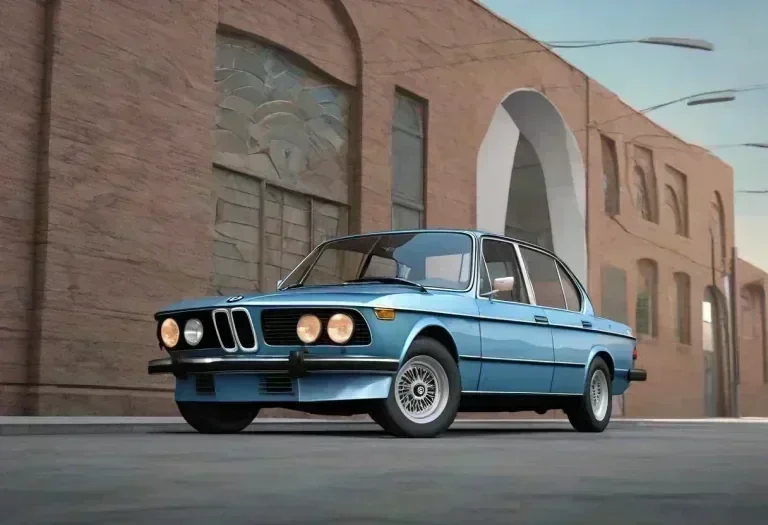
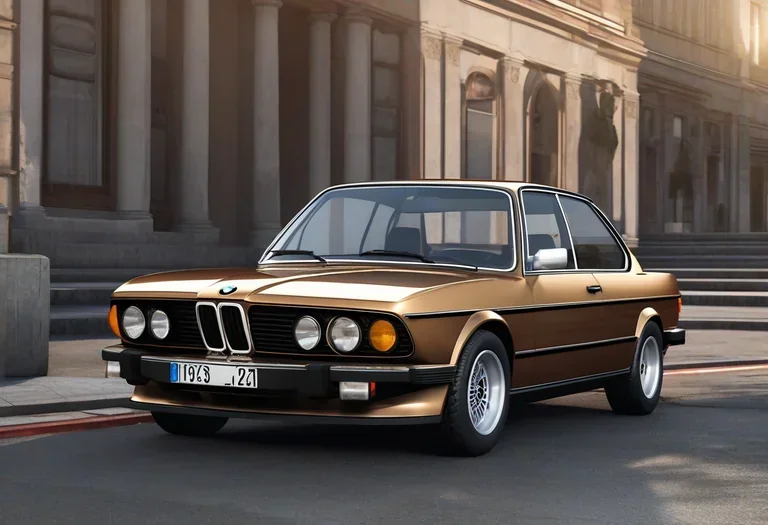
It retains its Fjord Metallic paint, Recaro sport seats and original M10 engine. That’s a much more interesting combination than simply finding an old BMW with a low number on the odometer.
Why the BMW E21 320i Matters
The E21 was the first-generation BMW 3 Series, and the 320i was the model American buyers got for the 1977 model year.
This was BMW’s formula before the company turned performance into a technology showcase: compact dimensions, rear-wheel drive, a four-cylinder engine, a manual transmission and a driver-focused chassis.
The U.S.-spec 1977 BMW 320i used a 2.0-liter M10 four-cylinder with Bosch K-Jetronic fuel injection. Output was 110 horsepower and 112 lb-ft of torque.
That doesn’t sound like much today. It wasn’t a powerhouse even when it was new.
But that’s missing the point of the E21.
BMW wasn’t trying to build a drag car. The 320i was a relatively light, compact sports sedan designed around the driver. You sat low, grabbed a manual shifter and actually had to participate in the process.
There’s a reason the basic 3 Series formula survived for decades.
What’s Under the Hood of the 1977 BMW 320i?
The engine is BMW’s 1,990cc M10 inline-four.
For the U.S. market, the fuel-injected engine produced 110 horsepower at 5,800 rpm and 112 lb-ft of torque at 3,750 rpm. The car uses a four-speed manual transmission and sends power to the rear wheels.
Again, don’t look at those numbers through a 2026 lens.
A modern BMW 3 Series can make more than twice the power while giving you automatic transmissions, turbocharging, electronic driver aids and enough computers to run a small office.
The 1977 320i is the opposite.
It’s simple. There’s an engine, a gearbox, a rear differential, four wheels and a driver in the middle of it all.
That’s exactly why these cars still have an audience.
Fjord Metallic Paint and Recaro Seats Make This E21 More Interesting
The mechanical specification is only part of what makes this particular BMW worth looking at.
The car reportedly retains its original Fjord Metallic paint, and it has the kind of Recaro sport seats that make an old BMW interior considerably more interesting.
For collectors, originality is becoming a bigger deal every year.
There are plenty of E21s that have been modified, repainted, swapped, lowered or otherwise changed over the decades. Some of those cars are great. That’s not the same thing as finding a low-mileage survivor that still represents what the car looked like when it was new.
If the history and originality of this particular car check out, that’s the attraction.
It’s not trying to be a modern interpretation of an E21. It’s an old BMW that apparently survived without getting ruined.
What Maintenance Did This 1977 BMW 320i Receive?
There’s another misconception about low-mileage collector cars: people assume low mileage means no maintenance is required.
It doesn’t.
This BMW is nearly 50 years old. Rubber doesn’t care what the odometer says. Cooling hoses age. Belts deteriorate. Tires get old sitting in a garage. Batteries die. Seals and gaskets don’t become immortal just because the car wasn’t driven very much.
According to the auction information, the car received preparation work before the sale, including a new thermostat, coolant hoses, spark plugs, battery, drive belts and tires.
That’s the sort of maintenance I’d want to see on a low-mileage survivor.
You’re not trying to turn it into a brand-new car. You’re making sure the old parts that have aged out are replaced while preserving the stuff that makes the car special.
What Did a 1977 BMW 320i Cost New?
The original window sticker reportedly showed a selling price of $9,620 in 1977.
That’s a lot more money than it sounds like today.
Adjusted for inflation, $9,620 in 1977 works out to roughly $53,000 in 2026 dollars.
That makes for an interesting comparison with BMW’s current 3 Series.
The 2026 BMW 330i xDrive starts at $50,000 before options. So, in inflation-adjusted terms, the basic BMW 3 Series has remained surprisingly consistent as a premium compact car.
What changed is everything around the engine.
The 1977 320i gave you 110 horsepower, rear-wheel drive and a four-speed manual. Today’s 330i brings turbocharging, 255 horsepower, modern electronics, advanced safety equipment and a level of refinement the old E21 couldn’t come close to matching.
But ask me which one requires less time figuring out a warning light, and the answer is obvious.
Why Didn’t This 9,000-Mile BMW 320i Sell?
This is where the auction result gets interesting.
Bidding reached $20,000 but failed to meet the reserve. That means nobody was willing to hit the seller’s minimum price during the auction. It does not mean the car was only worth $20,000.
Those are two very different things.
The E21 market has a pretty wide spread depending on mileage, originality, rust, modifications, condition and documentation. A high-mileage 320i and a documented 9,000-mile survivor shouldn’t be valued the same way just because they’re both wearing an E21 badge.
And this is where I wouldn’t pretend to know something we don’t know. Unless the seller disclosed the reserve, we don’t know exactly why the car failed to sell. Maybe the reserve was too high. Maybe bidders weren’t comfortable going higher. Maybe the right buyer simply wasn’t watching that day.
Auctions don’t always establish what a car is worth. Sometimes they establish what the bidders on that particular day were willing to pay.
Source: Bring a Trailer — 1977 BMW 320i auction listing
Is a 9,000-Mile E21 320i Worth $20,000?
That’s the question collectors are going to argue about.
I wouldn’t start with the price. I’d start with the car.
Does the 9,000-mile claim have documentation? Is the paint actually original? Has the body ever been repaired? Is there rust? Does the engine match the car? Are the Recaro seats original to the car? Is the ownership history documented?
Those answers matter more than a shiny auction description.
If everything checks out, then you’re looking at something substantially different from the average E21.
That’s the important distinction. A low-mileage survivor with documented history is collectible. An old BMW with a low number on the odometer is not automatically collectible.
1977 BMW 320i E21 Specifications
| Specification | 1977 BMW 320i |
|---|---|
| Generation | E21 |
| Model year | 1977 |
| Engine | 2.0-liter M10 inline-four |
| Displacement | 1,990 cc |
| Fuel system | Bosch K-Jetronic fuel injection |
| Horsepower | 110 hp |
| Torque | 112 lb-ft |
| Transmission | 4-speed manual |
| Drivetrain | Rear-wheel drive |
| Body style | 2-door sedan |
| Reported mileage | 9,000 miles |
| Exterior color | Fjord Metallic |
| Notable equipment | Recaro sport seats |
| Auction high bid | $20,000 |
| Auction result | Unsold; reserve not met |
The Bottom Line on This 1977 BMW 320i
This isn’t a BMW you buy because the horsepower number is impressive.
You buy it because it’s an early E21 320i that reportedly survived nearly five decades with only 9,000 miles, its original Fjord Metallic paint, desirable Recaro seats and a long ownership history.
That’s getting harder to find.
The $20,000 high bid tells us what the auction bidders were willing to put on the table that day. It doesn’t establish the car’s true market value, and without knowing the reserve, there’s no honest way to say whether the seller was asking too much.
What I can say is this: if the mileage, originality, ownership history and condition all hold up under inspection, this is the kind of E21 I’d pay attention to.
Not because it’s fast.
Because they don’t make them like this anymore.
Frequently Asked Questions About the 1977 BMW 320i E21
How much horsepower does a 1977 BMW 320i have?
The U.S.-spec 1977 BMW 320i produces 110 horsepower and 112 lb-ft of torque from its 2.0-liter M10 four-cylinder engine.
What engine is in the 1977 BMW 320i?
The 1977 BMW 320i uses a 1,990cc M10 inline-four with Bosch K-Jetronic fuel injection in U.S. specification.
Is the 1977 BMW 320i rear-wheel drive?
Yes. The E21 BMW 320i is rear-wheel drive, with the four-speed manual transmission sending power to the rear wheels.
How much did a BMW 320i cost in 1977?
The original window sticker for this car reportedly showed $9,620. Adjusted for inflation, that’s roughly $53,000 in 2026 dollars.
How much is a 1977 BMW 320i worth today?
There isn’t one fixed value. E21 prices depend heavily on mileage, originality, rust, modifications, documentation and overall condition. A documented 9,000-mile survivor can command considerably more attention than a high-mileage or heavily modified example.
Why is the E21 BMW 320i collectible?
The E21 was the first-generation BMW 3 Series and established the basic formula that would define the model for decades: compact dimensions, rear-wheel drive and a focus on driving dynamics. For collectors, original low-mileage examples are becoming increasingly difficult to find.
Did this 1977 BMW 320i sell at auction?
No. Bidding reached $20,000, but the reserve was not met, so the car went unsold.