FullGood Motor: The Chinese Cars Inspired by Corvettes and VW Buses
FullGood Motor builds retro-styled cars using modern Chinese technology. Meet the SS Dolphin, Summer and other unusual models from the former Songsan Motors.
Key Takeaways
- FullGood Motor is a Beijing-based Chinese automaker known for modern vehicles with styling inspired by classic American and European cars.
- The company was previously known as Songsan Motors and traces its roots to a motorcycle club and customization business founded in Beijing in 1995.
- FullGood has worked with established Chinese manufacturers, including BYD, to produce vehicles using modern Chinese platforms and powertrains underneath its retro-inspired bodies.
- The SS Dolphin is the company’s best-known Corvette-inspired model, while the FullGood Summer pays tribute to the classic Volkswagen T1 bus.
- FullGood’s current lineup includes plug-in hybrids as well as newer electric models, so describing every FullGood vehicle as a pure EV is inaccurate.
- The company has been displaying its unusual vehicles at major Chinese auto shows, including Auto China 2026 in Beijing, but there is no established U.S. retail sales program.
What Is FullGood Motor?
FullGood Motor is a Chinese automotive company that has built a reputation for doing something most major automakers rarely attempt: putting modern Chinese vehicle technology underneath bodies that look decades old.
The Beijing-based company began in 1995 as the Songsan MC American Motorcycle Club and customization operation. Its early business centered on American-style motorcycles and custom vehicles before the company eventually moved into automobiles.
The brand was previously known internationally as Songsan Motors. More recently, the company has increasingly used the FullGood Motor name as it expands its retro-inspired vehicle lineup.
Its history helps explain the company’s unusual styling philosophy. Rather than designing another anonymous modern crossover, FullGood builds vehicles around nostalgia, using familiar shapes inspired by classic American and European automobiles while combining them with contemporary Chinese powertrain and chassis technology.
Recent coverage of FullGood’s development can be found through the company’s former Songsan Motors website, which remains associated with the brand’s earlier identity.
How Does FullGood Build Its Cars?
FullGood does not operate like a conventional global automaker with a completely independent vehicle-development operation. The company has relied on established Chinese manufacturers and contract manufacturing arrangements to provide the underlying vehicle technology.
One of the most important relationships has been with BYD. FullGood’s earlier SS Dolphin used BYD-supplied underpinnings and plug-in hybrid technology, while FullGood concentrated on creating the distinctive exterior and interior design.
This approach gives a small automaker access to existing engineering, production and vehicle technology without having to develop every component from scratch. It also helps explain why FullGood’s cars can look like rolling tributes to vehicles from the 1950s and 1960s while using relatively modern electrified powertrains.
FullGood’s current vehicles are not all pure electric vehicles, either. The Summer, for example, is offered as a plug-in hybrid with a 1.5-liter turbocharged gasoline engine, electric motor and 15-kWh battery. Current specifications list seven seats, front-wheel drive and approximately 60 kilometers of WLTC electric range.
What Is the FullGood SS Dolphin?
The SS Dolphin is the vehicle that first put FullGood and its former Songsan Motors identity on the international automotive map.
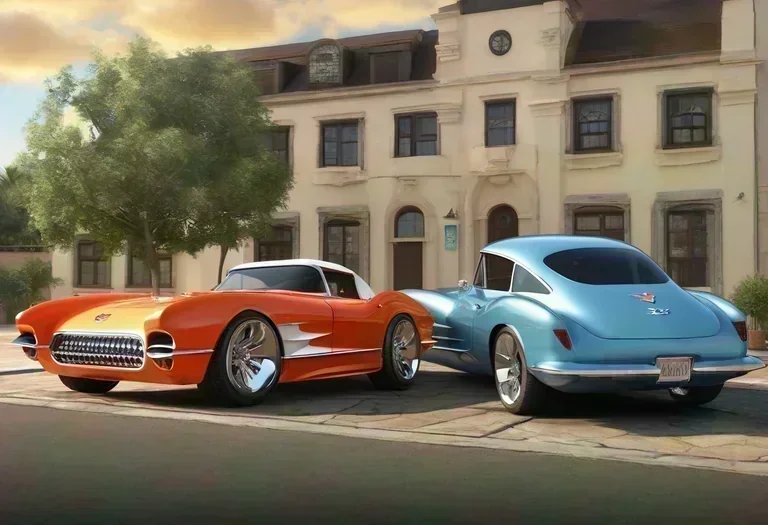
Its styling is heavily inspired by the first-generation Chevrolet Corvette, commonly known as the C1 Corvette. The proportions, rounded bodywork, prominent grille and retro details make the connection obvious, although the car is not an original Chevrolet Corvette.
The SS Dolphin first appeared as a concept and subsequently entered limited production. Rather than restoring an original Corvette or converting a vintage car to electric power, FullGood created a modern vehicle around contemporary Chinese hardware and gave it a body designed to evoke the American sports car.
Earlier versions used BYD plug-in hybrid technology, including a 1.5-liter turbocharged engine and electric motor. That means the SS Dolphin is more accurately described as a Corvette-inspired plug-in hybrid than a pure electric Corvette clone.
What Is the FullGood Summer?
The FullGood Summer takes the company’s retro formula in a completely different direction. Instead of imitating an American sports car, the Summer is a large retro-styled people carrier inspired by the Volkswagen Type 2, particularly the iconic T1-era bus.
The Summer combines a distinctly vintage exterior with modern Chinese vehicle technology and a much more practical interior. Current specifications list seven seats and eight doors, giving the unusual-looking van a genuinely family-oriented purpose.
The powertrain is also different from what the exterior might suggest. The current Summer is a plug-in hybrid rather than a pure EV, using a 1.5-liter turbocharged gasoline engine alongside an electric motor and a 15-kWh LFP battery.
Published specifications list an electric-only range of approximately 60 kilometers under the WLTC testing cycle, while the vehicle’s total powertrain includes a 140-kW electric motor. The combination gives the Summer the ability to operate as an electric vehicle for shorter trips while retaining gasoline power for longer journeys.
FullGood Is Building More Than Corvette and VW Bus Tributes
The SS Dolphin and Summer may be the two FullGood models most recognizable to American enthusiasts, but the company has expanded its retro design portfolio.
Recent appearances at Chinese auto shows have included the FullGood Rocket, a large retro-styled sedan with design cues reminiscent of classic American luxury cars, along with other highly stylized models and concepts.
FullGood has also displayed a three-wheeled vehicle with styling influenced by classic roadsters. The company appears to be using the same basic philosophy across the range: take recognizable vintage design themes and combine them with modern Chinese vehicle technology.
At Auto China 2026 in Beijing, FullGood’s vintage-looking models were among the unusual vehicles on display. Reuters also documented FullGood’s retro-styled vehicles at the 2026 Beijing auto show.
Why Does FullGood Use Retro Styling?
FullGood’s design strategy is essentially built around nostalgia. Modern vehicles tend to share similar proportions because of aerodynamics, safety regulations, packaging requirements and the need to accommodate large batteries and electronic systems.
FullGood takes the opposite approach. Its vehicles are deliberately recognizable and theatrical.
A Corvette-inspired sports car immediately communicates a connection with classic American performance. A Volkswagen-inspired van evokes the culture surrounding vintage camper buses. A large tail-finned sedan can recall the extravagant styling of 1950s American luxury cars.
That gives FullGood something most new-car manufacturers struggle to create: instant visual identity.
Are FullGood Cars Sold in the United States?
FullGood does not have an established mainstream retail sales operation in the United States. American buyers should not assume that seeing a FullGood vehicle at an international auto show means it is available for purchase in the U.S.
Importing a Chinese vehicle into the United States can involve significant regulatory, certification, emissions, safety and tariff issues. A vehicle designed and certified for the Chinese market cannot simply be shipped to an American dealership and sold as a normal new car.
The company’s appearance at international automotive events is therefore better understood as an opportunity to showcase the brand and its designs rather than evidence of an imminent U.S. launch.
For American enthusiasts, the lack of official U.S. availability may ultimately make FullGood’s cars more interesting as automotive curiosities than realistic alternatives to Chevrolet, Ford, Volkswagen or other established brands.
Does FullGood Actually Use BYD Technology?
Yes, at least for some of its vehicles. FullGood’s early relationship with BYD was important to the development of the SS Dolphin, with BYD providing the underlying vehicle technology while FullGood focused on the retro body and design.
However, it would be inaccurate to say that every current FullGood model is simply a BYD vehicle underneath. The company’s newer lineup uses different Chinese engineering and manufacturing relationships depending on the model.
The Summer, for example, has been associated with a different production arrangement and is listed with its own plug-in hybrid specifications. FullGood’s business model is therefore better described as a design-focused automaker working with established Chinese automotive manufacturing and technology partners.
How Expensive Are FullGood Cars?
Pricing varies dramatically between FullGood models, and international pricing should not be confused with a potential U.S. retail price.
The SS Dolphin was produced in a very limited run and has been reported at prices equivalent to well into six figures in some markets. That makes it a very different proposition from an inexpensive Chinese electric vehicle.
The FullGood Summer has appeared in Chinese-market listings at substantially lower prices, but its specifications, equipment and availability depend on the specific version and market.
Any future U.S. price would also be affected by transportation costs, federal certification, taxes, tariffs, dealer costs and other expenses. There is currently no reliable U.S. MSRP to quote for FullGood’s vehicles.
Is FullGood Copying Classic Cars?
FullGood’s vehicles clearly borrow heavily from famous historical designs, but the company presents them as modern interpretations rather than original vintage vehicles.
The SS Dolphin is visually tied to the C1 Corvette, while the Summer draws heavily from the Volkswagen T1. Other FullGood models use recognizable styling cues from classic American cars.
The distinction matters because these are newly manufactured vehicles with modern platforms and powertrains rather than restored examples of the originals. They are designed to deliver the appearance and nostalgia of a classic car while providing contemporary mechanical technology.
Whether buyers view that as clever retro design or imitation is largely subjective. From a business perspective, however, FullGood has clearly identified a niche that many major automakers have largely abandoned.
Could FullGood Cars Come to the U.S.?
There is no established U.S. launch date for FullGood’s vehicles, and American buyers should be cautious about claims suggesting that the cars are about to enter regular U.S. production or dealership sales.
The company has shown an interest in international markets, and its vehicles have attracted attention outside China. But selling a Chinese-built passenger vehicle in the United States requires much more than displaying it at an American auto show.
For now, FullGood remains primarily a Chinese-market and international-show curiosity. Its presence at major auto events demonstrates that the company wants recognition beyond China, but that should not be confused with an official U.S. sales program.
Why FullGood Is Interesting to American Car Enthusiasts
FullGood’s appeal to American enthusiasts is easy to understand. The company is building new cars that reference some of the most recognizable eras in American automotive design at a time when most new vehicles are becoming larger, more technologically complex and visually similar.
A modern Corvette-inspired car, a retro Volkswagen-style van and a 1950s-inspired sedan offer something that mainstream automakers rarely provide: genuinely eccentric styling.
The irony is that these cars are being developed in China while drawing heavily from American and European automotive history. FullGood has effectively turned Western automotive nostalgia into a modern Chinese design product.
Frequently Asked Questions
What is FullGood Motor?
FullGood Motor is a Beijing-based Chinese automaker known for modern vehicles with retro styling inspired by classic American and European cars. The company was previously known as Songsan Motors.
What happened to Songsan Motors?
Songsan Motors increasingly adopted the FullGood Motor identity as the company expanded its retro-styled vehicle lineup. The business traces its roots to a Beijing motorcycle club and customization operation founded in 1995.
What is the FullGood SS Dolphin?
The SS Dolphin is a limited-production sports car inspired heavily by the first-generation Chevrolet Corvette C1. Earlier versions used BYD plug-in hybrid technology rather than being a pure electric vehicle.
Is the FullGood Dolphin an actual Corvette?
No. The SS Dolphin is a separate Chinese-built vehicle designed with styling inspired by the C1 Corvette. It is not a Chevrolet Corvette.
What is the FullGood Summer?
The FullGood Summer is a seven-seat retro-styled MPV inspired by the Volkswagen T1 bus. Current versions use a plug-in hybrid powertrain with a 1.5-liter turbocharged engine, electric motor and 15-kWh battery.
Are FullGood cars electric?
Some FullGood vehicles use electrified powertrains, but not all are pure EVs. The SS Dolphin and Summer have been offered with plug-in hybrid systems, while the company’s newer lineup also includes electric models and concepts.
Are FullGood cars available in the United States?
There is currently no established mainstream U.S. retail sales program for FullGood vehicles. American buyers should not assume that models displayed at international auto shows are certified or available for normal U.S. dealership sales.
Does FullGood use BYD platforms?
FullGood has used BYD technology and manufacturing support for some of its vehicles, most notably the SS Dolphin. The company has also used other Chinese automotive technology and production partners for newer models.
Where is FullGood Motor based?
FullGood Motor is based in Beijing, China. The company’s history goes back to the Songsan motorcycle and customization business established there in 1995.
Bottom Line
FullGood Motor is one of China’s strangest and most visually distinctive automotive companies. Rather than chasing the same futuristic styling used by many EV startups, the company is looking backward, taking inspiration from classic Corvettes, Volkswagen buses and extravagant American automobiles of the 1950s and 1960s.
The result is a lineup that looks old-fashioned on the outside while using modern Chinese automotive technology underneath. Some models are plug-in hybrids, others are electric, and the company has worked with established manufacturers such as BYD to bring its designs into production.
For U.S. car enthusiasts, the biggest limitation is availability. FullGood’s unusual vehicles may attract plenty of attention at international auto shows, but there is no established American retail operation making them easy to buy.
That could change eventually, but for now FullGood remains a fascinating example of how Chinese automakers are experimenting with automotive design. Instead of another anonymous crossover, the company is betting that there is still a market for cars that look like they came from another era.
Specifications
| Specification | FullGood SS Dolphin | FullGood Summer |
|---|---|---|
| Vehicle type | Retro-styled sports car | Retro-styled MPV |
| Design inspiration | Chevrolet Corvette C1 | Volkswagen T1 bus |
| Powertrain | Plug-in hybrid on earlier production versions | Plug-in hybrid |
| Engine | 1.5-liter turbocharged gasoline engine on earlier versions | 1.5-liter turbocharged gasoline engine |
| Electric motor | Up to 110 kW on earlier BYD-based versions | 140 kW |
| Battery | Approximately 16 kWh on earlier BYD-based versions | 15 kWh LFP |
| Seating | 2 seats on the original coupe-style model | 7 seats |
| Electric range | Approximately 100 km on earlier versions | Approximately 60 km WLTC |
| U.S. availability | Not officially sold in the U.S. | Not officially sold in the U.S. |
Sources: Songsan Motors and Reuters coverage of FullGood at Auto China 2026.