JAS Tensei: 420-HP Pininfarina NSX Restomod With a Manual
The JAS Tensei reimagines the first-gen NSX with a 420-hp naturally aspirated V6, six-speed manual, carbon-fiber body and Pininfarina interior.
Key Takeaways
- The JAS Tensei is a limited-production reinterpretation of the first-generation Honda NSX, built from donor cars and extensively re-engineered by JAS Motorsport.
- Pininfarina designed the Tensei’s carbon-fiber body and interior, combining recognizable first-generation NSX cues with modern materials and technology.
- The Tensei keeps a naturally aspirated V6 and six-speed manual transmission instead of switching to turbocharging, hybridization or an automatic gearbox.
- Its re-engineered 3.5-liter V6 produces 420 bhp and 350 Nm of torque, according to the latest official specifications.
- Production is limited to just 35 cars worldwide, with North American distribution handled through Graham Rahal Performance.
- Customers can personalize the car extensively, with multiple finishes, wheel choices, brake colors and other specification options.
What Is the JAS Tensei?
The JAS Tensei is a modern reinterpretation of the first-generation Honda NSX, created by Italian motorsport specialist JAS Motorsport with styling and interior design by Pininfarina.
Rather than being an entirely new car designed from a blank sheet, the Tensei starts with a production first-generation NSX from the early 1990s. JAS then extensively re-engineers the mechanical components while Pininfarina creates a new carbon-fiber body and redesigned cabin.
The name Tensei means “rebirth” in Japanese, which neatly describes the project’s purpose. JAS is not attempting to replace the original NSX with a conventional modern supercar. Instead, it is taking the character of the 1990s icon and rebuilding it around modern performance, materials and engineering.
JAS describes the Tensei as its first road-going high-performance supercar. The company brings more than three decades of motorsport experience to the project, including a long-running relationship with Honda.
What’s New Inside the Tensei?
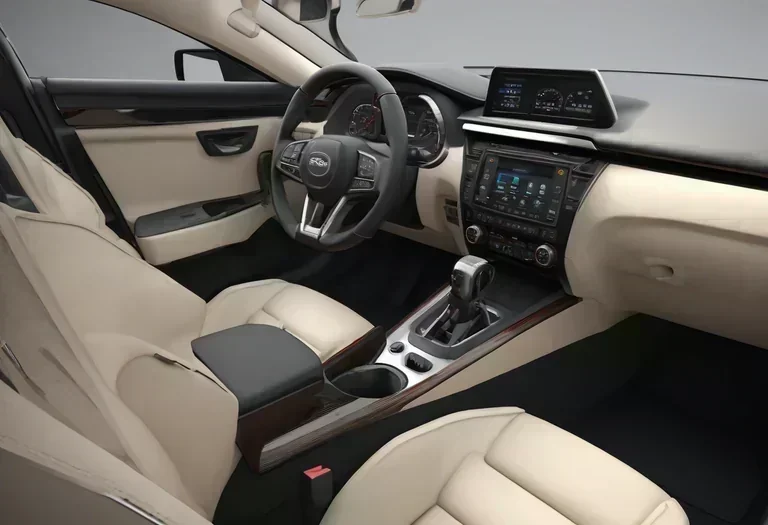
The Tensei’s interior follows the same philosophy as its exterior: preserve the character of the original NSX while replacing the dated components with higher-quality materials and modern technology.
Pininfarina designed the cockpit around the original car’s driver-focused layout and excellent visibility. The dashboard remains low and oriented toward the driver, while the center console is deliberately uncluttered.
The cabin uses carefully selected materials, surfaces and finishes rather than covering the interior in technology for its own sake. JAS says the interior is designed around driver concentration and engagement, with luxury coming from the quality and tactile character of the materials rather than excessive decoration.
The Tensei also retains one of the most important characteristics of the original NSX: a manual gear selector. The six-speed manual transmission is paired with a lightweight flywheel, twin-plate clutch and bespoke limited-slip differential.
That combination makes the Tensei increasingly unusual in the modern supercar market, where dual-clutch transmissions, automatic gearboxes and hybrid systems have become commonplace.
How Does the Tensei Compare With the Original NSX?
The Tensei is immediately recognizable as an evolution of the first-generation NSX, but it is substantially more muscular than the original.
Pininfarina has retained iconic design themes while changing the proportions. The Tensei has a wider track, longer wheelbase, shorter rear overhang and lower ride height than the original car.
The pop-up headlights are retained as a visual reference to the original NSX, while the rear incorporates a modern interpretation of the integrated spoiler. The body itself is constructed entirely from carbon fiber, including the front fenders, rear quarter panels, doors, bumpers, hood and trunk lid.
The carbon construction is not simply decorative. JAS uses the material to reduce weight while allowing the Tensei to adopt substantially wider and more aggressive proportions.
What’s Under the Hood?
The Tensei keeps the naturally aspirated V6 configuration that helped make the original NSX famous, but the engine has been extensively redesigned.
Judd Power re-engineers the original NSX engine architecture with modern components and technology. The latest official specifications list a 3.5-liter naturally aspirated V6 producing 420 bhp and 350 Nm of torque.
The engine receives forged lightweight pistons and connecting rods, a billet crankshaft, updated ignition components, six individual throttle bodies and a revised engine-management system.
The engine also features an 8,500-rpm limiter and an upgraded cooling system. A performance stainless-steel exhaust system with titanium tips completes the powertrain.
There is no turbocharger or electric motor. The Tensei deliberately maintains a naturally aspirated engine and manual gearbox to preserve the direct mechanical character associated with the original NSX.
Does the Tensei Have a Manual Transmission?
Yes. Every Tensei uses a six-speed manual transmission.
JAS has deliberately avoided replacing the manual gearbox with a modern dual-clutch or automatic transmission. The transmission is paired with a lightweight flywheel, twin-plate clutch and limited-slip differential.
The result is a drivetrain designed around driver involvement rather than simply maximizing acceleration numbers.
That approach is one of the Tensei’s biggest differences from contemporary supercars. The car combines modern chassis engineering and carbon construction with an analog powertrain layout that is becoming increasingly rare.
How Much Power Does the JAS Tensei Make?
The latest official JAS specifications list 420 bhp and 350 Nm of torque from the 3.5-liter naturally aspirated V6.
JAS has not positioned the Tensei as a numbers-first hypercar. Instead, the company emphasizes throttle response, balance, lightweight construction and the connection between the driver and the machine.
The engine uses six individual throttle bodies and an 8,500-rpm limit, features that should give the powertrain a very different character from a modern turbocharged supercar.
What Kind of Suspension Does the Tensei Use?
The Tensei receives a substantially re-engineered chassis rather than simply using the suspension from the donor NSX.
JAS fits KW coilover suspension with Dynamic Damping Control, which can be adjusted through the car’s head-up display. There is also a hydraulic front-axle lift system designed to provide additional clearance when negotiating ramps and other obstacles.
The suspension geometry is revised with bespoke control arms, lightweight uprights, enhanced anti-roll bars and reinforced wheel bearings.
The steering system is also bespoke, using an electro-hydraulic steering rack intended to preserve a direct connection between the driver and front axle.
What Brakes Does the Tensei Use?
The Tensei uses a serious braking package designed to match its increased performance.
Standard equipment includes Brembo six-piston front calipers with 380-by-34-mm grooved discs and four-piston rear calipers with 345-by-28-mm grooved discs.
Performance brake pads are fitted front and rear, while carbon-ceramic CCM-R brakes are available as an option.
The braking system also includes ABS and electro-hydraulic braking technology, along with an upgraded brake booster and steel-braided lines.
What Wheels and Tires Does the Tensei Use?
The Tensei uses staggered forged aluminum wheels, with 19-inch wheels at the front and 20-inch wheels at the rear.
The standard configuration uses 245/35 R19 front tires and 285/30 R20 rear tires. Customers can choose between different wheel designs, while forged magnesium wheels are available as an option.
The wheel package reinforces the Tensei’s more aggressive proportions while maintaining the visual connection with the original NSX.
Who Designed the Tensei?
Pininfarina is responsible for the Tensei’s exterior and interior design.
The collaboration has a particularly interesting historical connection to Honda. Pininfarina worked with Honda on the HP-X concept in 1984, a mid-engine sports car concept that helped establish the design and engineering direction that eventually led toward the original NSX.
More than four decades later, Pininfarina is again working on a mid-engine Honda-based performance car, this time transforming an existing NSX into an extensively modernized limited-production supercar.
The connection gives the Tensei more historical significance than a typical aftermarket restomod project.
Who Is Building the Tensei?
JAS Motorsport is responsible for engineering and building the Tensei at its facility in Arluno, near Milan, Italy.
JAS has more than 30 years of international motorsport experience and has worked closely with Honda on racing programs. The company has been involved in touring-car and other competition programs, bringing that motorsport engineering background to its first road-going supercar.
Each Tensei begins with a donor first-generation NSX before JAS carries out the extensive mechanical and structural work required to transform it into the finished car.
How Many JAS Tensei Cars Will Be Built?
Production is limited to just 35 examples worldwide.
That extremely small production run puts the Tensei firmly into the collector-car category. It is not intended to be a mass-market successor to the NSX, and its limited production is a major part of the car’s appeal.
JAS will work directly with customers through the configuration and build process. The company says the cars are intended to offer a highly bespoke ownership experience rather than a fixed specification.
Can You Buy the JAS Tensei in the United States?
Yes. The Tensei is being offered to North American customers through Graham Rahal Performance in the United States, with Pfaff Auto Reserve handling Canada.
This is an important distinction from many one-off NSX restomod projects. The Tensei has an established distribution channel for North American buyers, although its ultra-limited production means availability will be extremely restricted.
JAS lists Graham Rahal Performance as its U.S. dealer and Pfaff Auto Reserve as its Canadian partner.
How Much Does the JAS Tensei Cost?
JAS has not published an official public MSRP for the Tensei.
Given the car’s extremely limited 35-unit production run, carbon-fiber construction, bespoke engineering and extensive customer customization, it occupies the high-end collector-car market rather than the conventional sports-car market.
Potential buyers should contact the official North American distributor for current pricing and availability rather than relying on estimates circulating online.
When Will the Tensei Be Fully Revealed?
The original Tensei was privately shown to selected customers at Fuji Raceway in Japan in November 2025. Additional design details were revealed during 2026, including more information about the carbon-fiber body, engine, chassis and interior philosophy.
JAS currently describes the public launch as taking place during the second half of 2026. That supersedes earlier expectations of a specific Paris Motor Show debut.
For buyers and enthusiasts, the more important development is that the project has moved beyond a design exercise. JAS has published technical specifications and established North American distribution, confirming that the Tensei is being developed as a production vehicle.
How Customizable Is the Tensei?
Customization is a major part of the Tensei ownership experience.
JAS says customers will be supported throughout the configuration, specification and build process. The carbon-fiber body can be specified with exposed carbon or body-colored carbon-look paintwork.
Brake caliper colors are customizable, and buyers can select different wheel designs. Forged magnesium wheels are also available as an option.
With only 35 cars being built, that level of personalization means owners are unlikely to encounter another Tensei with exactly the same specification.
Is the Tensei a New Honda NSX?
No. The Tensei is not a new Honda or Acura production model, and Honda is not manufacturing it as a successor to the NSX.
It is a JAS Motorsport supercar based on first-generation NSX donor vehicles, with Pininfarina responsible for the new body and interior and JAS handling the engineering and production.
The connection to the NSX is therefore fundamental, but the Tensei should be considered a highly developed restomod and coachbuilt reinterpretation rather than an official fourth-generation NSX.
Frequently Asked Questions
What is the JAS Tensei?
The JAS Tensei is a limited-production supercar based on the first-generation Honda NSX. JAS Motorsport extensively re-engineers the donor cars, while Pininfarina designs the carbon-fiber body and interior.
What engine does the JAS Tensei have?
The Tensei uses a 3.5-liter naturally aspirated V6 re-engineered by Judd Power. Official specifications list 420 bhp and 350 Nm of torque.
Does the JAS Tensei have a manual transmission?
Yes. The Tensei uses a six-speed manual transmission with a lightweight flywheel, twin-plate clutch and limited-slip differential.
Is the JAS Tensei turbocharged?
No. The Tensei uses a naturally aspirated V6 and does not use turbochargers or an electric motor.
How many JAS Tensei cars will be built?
Only 35 Tensei cars will be produced worldwide.
Can Americans buy the JAS Tensei?
Yes. JAS lists Graham Rahal Performance as its U.S. distributor. Canadian customers are supported through Pfaff Auto Reserve.
Who designed the JAS Tensei?
Pininfarina designed the Tensei’s exterior and interior. The design reinterprets the proportions and signature details of the first-generation Honda NSX.
How much does the JAS Tensei cost?
JAS has not published an official public MSRP. Buyers should contact the authorized distributor for current pricing and availability.
Is the JAS Tensei an official Honda NSX?
No. It is a JAS Motorsport production based on first-generation NSX donor cars. Honda is not selling the Tensei as a new NSX model.
Pros and Cons
Pros
- 420-hp naturally aspirated V6
- Six-speed manual transmission
- Full carbon-fiber body
- Pininfarina exterior and interior design
- Only 35 examples worldwide
- Extensively re-engineered NSX chassis
- Brembo performance braking system
- KW adjustable suspension
- Available hydraulic front-axle lift
- Extensive customer customization
- Official North American distribution
Cons
- Extremely limited production
- Official pricing has not been publicly announced
- Based on donor first-generation NSX vehicles rather than a clean-sheet chassis
- Not an official Honda or Acura production model
- Extensive customization and carbon construction will make it a very expensive collector car
- Not designed as an affordable alternative to the original NSX
Bottom Line
The JAS Tensei is about as far from a conventional NSX revival as it is possible to get. Rather than asking Honda to resurrect the nameplate, JAS Motorsport has taken genuine first-generation NSX donor cars and rebuilt them into an ultra-limited modern supercar.
Pininfarina’s carbon-fiber body preserves the original NSX’s most recognizable design themes while giving the car wider proportions, a lower stance and significantly more aggressive detailing. Inside, the same philosophy continues with a driver-focused cockpit, modern materials and an intentionally uncluttered layout.
The mechanical package is arguably even more interesting. A 3.5-liter naturally aspirated V6 produces 420 bhp and 350 Nm, while a six-speed manual transmission sends the experience firmly into old-school supercar territory. KW suspension, Brembo brakes, a limited-slip differential and extensive chassis revisions bring the underlying NSX architecture into the modern era.
Only 35 examples will be produced, making the Tensei an exceptionally rare interpretation of one of the most important Japanese sports cars ever built. With official North American distribution now established, U.S. and Canadian collectors also have a formal route to acquiring one.
The Tensei is not a new Honda NSX. It is something considerably more specialized: a Pininfarina-designed, JAS-engineered rebirth of the original, built for buyers who want the character of a 1990s supercar with modern engineering and an almost entirely bespoke ownership experience.
Specifications
| Specification | JAS Tensei |
|---|---|
| Base vehicle | First-generation Honda NSX donor car |
| Production | 35 cars worldwide |
| Engine | 3.5-liter naturally aspirated V6 |
| Engine developer | Judd Power |
| Power | 420 bhp |
| Torque | 350 Nm |
| Redline/limiter | 8,500 rpm |
| Transmission | Six-speed manual |
| Drive | Rear-wheel drive |
| Body | Full carbon fiber |
| Front wheels | 19 x 9 inches |
| Rear wheels | 20 x 10 inches |
| Front tires | 245/35 R19 |
| Rear tires | 285/30 R20 |
| Front brakes | Brembo six-piston, 380 x 34 mm |
| Rear brakes | Brembo four-piston, 345 x 28 mm |
| Optional brakes | CCM-R carbon-ceramic system |
| Suspension | KW coilovers with Dynamic Damping Control |
| Front lift | KW hydraulic front-axle lift system |
| Steering | Bespoke electro-hydraulic steering rack |
| Body designer | Pininfarina |
| Builder | JAS Motorsport, Arluno, Italy |
| U.S. distributor | Graham Rahal Performance |
| Canadian distributor | Pfaff Auto Reserve |
| Public launch | Second half of 2026 |
Official sources: JAS Tensei | JAS Motorsport