Why Some Toyota Land Cruiser 70s Have Fake Taillights
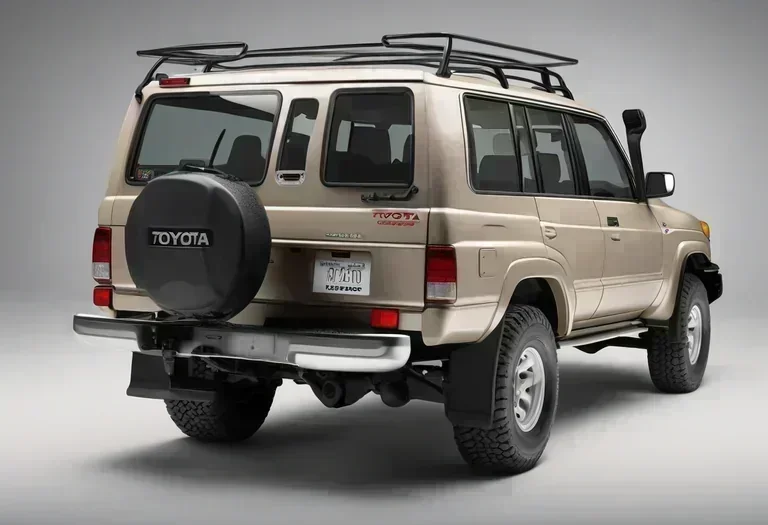
Some Toyota Land Cruiser 70s have body-colored taillight covers while the real lights sit on the bumper. Here's why Toyota uses the unusual design.
Key Takeaways
- Some Toyota Land Cruiser 70 Series models have body-colored or blanked-out upper rear-light housings instead of functioning taillights.
- In affected markets, the working rear combination lamps are positioned lower on the rear bumper to meet local visibility and homologation requirements.
- The spare wheel and rear body configuration are central to the unusual lighting arrangement.
- The 70 Series uses different rear-light configurations depending on the market, which is why Australian and Japanese-spec trucks can look different from one another.
- Some owners and specialist shops have converted the blank upper housings back to functional lamps using genuine Toyota components and additional wiring.
- Any lighting modification should be checked against local roadworthiness and vehicle-equipment laws before being driven on public roads.
Why Does the Toyota Land Cruiser 70 Have Fake Taillight Covers?
The Toyota Land Cruiser 70 Series is famous for keeping its rugged, old-school design while receiving mechanical and safety updates over the decades. One of its stranger modern details can be found at the back of certain versions: what appear to be taillights mounted high in the rear quarter panels are actually non-functional, body-colored or blanked-out panels.
The explanation is not simply styling. Toyota has had to adapt the Land Cruiser 70’s rear lighting to the regulations of individual markets.
The problem comes down to visibility. Rear lamps must remain visible to other road users from prescribed viewing angles. On a vehicle with a side-mounted spare wheel, rear doors and high-mounted lamps, the body and spare tire can potentially obstruct the required lighting area.
Rather than completely redesigning the 70 Series rear body for every market, Toyota has used different lamp configurations to satisfy local homologation requirements while retaining as much of the existing body structure as possible.
Why Are the Working Taillights Mounted on the Bumper?
On versions of the Land Cruiser 70 that use the blank upper lamp locations, the primary rear lighting is moved down to the bumper area.
This puts the functioning lamps in a position where they can meet the required visibility angles despite the vehicle’s spare tire and rear-door arrangement.
The solution looks unusual because the 70 Series body still has the visual architecture associated with the higher-mounted rear lamps. The result is a truck that appears to have taillight housings in the rear quarter panels, even though those housings may simply contain body-colored covers or non-functional components.
It is a good example of how vehicle regulations can influence exterior design. The body may remain almost unchanged while the location of the legally required lighting equipment changes underneath.
Why Do Some Land Cruiser 70s Have Functional Upper Taillights?
The Land Cruiser 70 is sold in numerous markets, and Toyota does not use exactly the same equipment configuration everywhere.
Australian-market versions are a particularly useful comparison because some models use both the upper rear lamp locations and lower bumper-mounted lighting. This creates a very different appearance from versions in markets where the upper quarter-panel lamps are blanked out.
Japanese-market Land Cruiser 70s can also have a different rear-light arrangement from Australian-spec vehicles. These differences are not necessarily evidence of different body shells. In many cases, Toyota can use the same basic body structure while changing the lighting equipment and wiring to meet local requirements.
That is why photos of Land Cruiser 70s from different countries can be confusing. Two trucks can appear nearly identical but have noticeably different rear lighting.
What Does the Spare Tire Have to Do With It?
The spare tire is one of the most important pieces of the puzzle.
The Land Cruiser 70 places its spare wheel on the rear door or tailgate on many configurations. That creates a large obstruction behind the vehicle, particularly when viewed from certain side angles.
Lighting regulations are concerned with whether required lamps can be seen by approaching road users. It is not enough for a taillight to be visible when looking directly at the back of the truck if the vehicle’s equipment blocks it from other required viewing angles.
Moving the primary lamps lower on the bumper provides Toyota with a way to keep the required lighting visible while retaining the 70 Series’ characteristic rear body design.
Can the Upper Land Cruiser 70 Taillights Be Made Functional?
Yes, owners in some markets have converted the blank upper lamp locations to functional lights. The modification has become an interesting aftermarket project because Toyota’s global versions of the Land Cruiser 70 demonstrate that the upper lamp locations can accommodate genuine lighting assemblies.
Specialist shops and owners have used genuine Toyota lamp housings from markets where the upper lights are functional. Additional wiring can then be run from the existing rear-light circuit to the upper quarter-panel assemblies.
The exact procedure depends on the year, body style and market specification of the Land Cruiser 70. Some versions may require different lamp housings, connectors, bulbs or LED assemblies, while others can require changes to the wiring harness.
The modification is therefore not simply a matter of removing a plastic cover and plugging in a new light.
How Does the Taillight Conversion Work?
The basic concept is relatively straightforward. The factory blanking panel is removed and replaced with a genuine lamp assembly designed for the same body location. Wiring is then added so the upper lamps receive the appropriate rear-light signal.
On some conversions, technicians run jumper wires from the existing lower rear-light wiring to the upper quarter-panel lamp locations. The exact wiring arrangement depends on whether the owner wants the upper lamps to function as tail lamps, brake lamps, turn signals or a combination of functions.
A proper conversion should also account for the vehicle’s existing electrical system, connectors, fuse protection and lamp load. On newer versions using LED lighting and electronic body-control systems, simply splicing wires together may not be the correct approach.
Owners considering the modification should also verify local regulations before changing the factory lighting configuration. A modification that is acceptable for an off-road vehicle or show truck may not automatically be legal for public-road use.
Does the Modification Improve the Land Cruiser 70’s Appearance?
For many owners, appearance is the main reason for doing the conversion.
The upper quarter-panel lamps are an important part of the traditional Land Cruiser 70 silhouette. Restoring them can make the rear of a truck look closer to versions sold in markets where those lights remain functional.
It can also reduce the visual dominance of the bumper-mounted lights, which can make the rear design appear more balanced.
For Land Cruiser enthusiasts, the modification is particularly appealing because it uses factory-style components rather than requiring a completely custom body conversion.
Are Other Automakers Using Similar Lighting Designs?
The Land Cruiser 70 is not alone in having to balance exterior styling with lighting regulations.
Compact off-road vehicles with rear-mounted spare tires have faced similar challenges because the wheel can interfere with the visibility of lamps mounted higher on the body.
Suzuki’s Jimny is one example. Different generations and market versions have used different combinations of rear-door, body-mounted and bumper-mounted lighting depending on local regulations and vehicle configuration.
The broader lesson is that seemingly strange automotive design decisions can often be traced back to homologation. A manufacturer may retain a familiar body shape while moving the legally required equipment to another location.
Why Doesn’t Toyota Simply Redesign the Land Cruiser 70?
The Land Cruiser 70 Series has been in continuous production since 1984, and one of its defining characteristics is the preservation of its traditional body architecture.
Toyota has progressively updated the platform with newer engines, safety equipment, emissions technology and interior features, but the company has continued to preserve the basic identity of the 70 Series.
Using market-specific lighting configurations allows Toyota to keep much of that established structure rather than creating completely different rear body panels for every country.
It is an imperfect-looking solution, but it helps explain why the 70 Series can continue to exist in multiple markets despite being based on a design that dates back several decades.
Is the Land Cruiser 70 Still Sold Around the World?
Yes. The Land Cruiser 70 Series remains in production for selected international markets, although availability, engines, body styles and equipment vary substantially by country.
Toyota continues to market the 70 Series as a rugged workhorse rather than as a mainstream family SUV. Depending on the market, buyers can find pickup, wagon and troop-carrier configurations, along with different diesel and gasoline powertrains.
The Toyota Australia LandCruiser 70 Series is one of the clearest examples of the model’s continued availability, with the market receiving regular updates while retaining the 70 Series’ traditional body and chassis architecture.
Frequently Asked Questions
Why does the Land Cruiser 70 have body-colored taillight covers?
On certain market versions, the upper rear lamp locations are blanked out because the vehicle’s required rear lighting is positioned elsewhere. Local visibility and homologation requirements, combined with the spare-tire location, influence the lighting configuration.
Are the upper taillight covers on the Land Cruiser 70 fake?
On affected versions, the upper housings are non-functional or blanked-out rather than serving as the vehicle’s primary rear lamps. Other market versions use functional lamps in the same upper locations.
Why are the working taillights on the bumper?
The lower bumper position allows the required rear lighting to remain visible from the regulatory viewing angles despite the spare tire and rear bodywork.
Can I install functional upper taillights on my Land Cruiser 70?
Some owners have done so using genuine Toyota lamp assemblies and additional wiring. Compatibility depends on the vehicle’s model year, body style and market specification.
Is the Land Cruiser 70 taillight conversion legal?
It depends on local vehicle and lighting regulations. Owners should confirm the requirements with the relevant roadworthiness or vehicle-registration authority before modifying the factory lighting system.
Does Australia have different Land Cruiser 70 taillights?
Yes. Australian-market Land Cruiser 70 models can have a different rear-light configuration from Japanese and other market versions, including functional upper lamps alongside lower bumper-mounted lights on certain versions.
Does the spare tire block the Land Cruiser 70 taillights?
The rear-mounted spare tire is one of the factors that can affect the visibility of higher-mounted lamps from certain angles. This is why the lighting arrangement can vary between markets.
Bottom Line
The strange-looking taillight arrangement on some Toyota Land Cruiser 70 Series models is not simply a styling mistake. It is the result of Toyota adapting a decades-old body design to different lighting and homologation requirements around the world.
In markets where the upper quarter-panel lamps cannot provide the required visibility with the spare tire in place, Toyota moves the functioning lights down to the bumper. The result leaves behind upper lamp-shaped panels that may look like taillights but are not actually doing the job.
Because Toyota sells the 70 Series in different configurations around the world, owners can find examples with functional upper lamps as well as versions with blanked-out panels. That has created an interesting aftermarket opportunity for enthusiasts who want to restore the traditional rear-light appearance.
The conversion can be accomplished with genuine Toyota parts and additional wiring, but owners should treat it as a proper electrical and regulatory modification rather than a simple cosmetic upgrade.
It is another example of why the Land Cruiser 70 remains such a fascinating vehicle. A design that dates back to the 1980s continues to evolve around modern regulations without completely losing the distinctive shape that made it famous.
Specifications
| Specification | Land Cruiser 70 Series |
|---|---|
| Production began | 1984 |
| Rear lighting | Varies by market and model year |
| Upper quarter-panel lamps | Functional on some markets; blanked or non-functional on others |
| Lower bumper lamps | Used as primary rear lighting on certain market versions |
| Rear-mounted spare tire | Available on applicable body styles |
| Taillight conversion | Possible on some versions using market-specific Toyota components |
| U.S. availability | Not currently sold as a new Toyota model in the United States |
Official sources: Toyota Australia LandCruiser 70 Series | Toyota Global History