The Citroën GS Birotor Was So Rare the Company Tried to Destroy It
A rare Citroën GS Birotor and M35 rotary prototype are heading to auction, offering a look at Citroën's unusual Wankel-engine experiment.
Key Takeaways
- Citroën’s GS Birotor was one of the rarest production cars in the company’s history, with only 847 examples built between 1973 and 1975.
- The Birotor used a smooth but thirsty twin-rotor Wankel engine developed through Citroën’s Comotor partnership with NSU.
- Citroën attempted to recover many Birotors after production ended, with returned cars being destroyed rather than supported with a long-term parts supply.
- A 1973 Citroën GS Birotor is scheduled for the 2026 Quail Auction with an estimate of $20,000 to $30,000.
- The earlier Citroën M35 rotary prototype is also going to auction, estimated at $30,000 to $40,000.
- Only 267 M35s were produced, making surviving examples exceptionally rare.
- The two cars represent Citroën’s ambitious attempt to make the Wankel rotary engine a viable alternative to the conventional piston engine.
What Happened to the Citroën GS Birotor?
There are plenty of rare Citroëns, but very few are as fascinating as the GS Birotor. It was an attempt to take one of Citroën’s practical family cars and give it an engine that seemed to belong in a completely different kind of automobile.
Instead of a conventional four-cylinder piston engine, the GS Birotor used a twin-rotor Wankel engine. It was smooth, compact and capable of revving with the sort of enthusiasm that made rotary engines so attractive to engineers during the 1960s and early 1970s.
The problem was timing.
Citroën introduced the GS Birotor just as the 1973 oil crisis was turning fuel consumption into a major concern for European motorists. The Birotor’s rotary engine was not particularly economical, and the car itself was considerably more expensive than a conventional GS.
Production lasted only a short time. Citroën built 847 examples, and the company eventually attempted to buy back many of them after the model was discontinued.
That buyback program is one of the reasons the GS Birotor is so interesting to collectors today. Citroën wasn’t simply trying to clear unsold inventory. Returned cars were destroyed or otherwise removed from normal circulation, leaving today’s surviving examples as unusually rare pieces of the company’s experimental engineering history.
A 1973 GS Birotor now heading to the Broad Arrow Quail Auction in Carmel, California, carries an estimate of $20,000 to $30,000. According to the auction listing, the car was formerly part of the Mullin Automotive Museum collection and is one of very few examples remaining.
Why Did Citroën Build a Rotary-Powered GS?
To understand the Birotor, you have to go back several years before the GS received its rotary engine.
During the 1960s, the Wankel rotary was one of the most promising alternative engine technologies in the automotive industry. The basic attraction was obvious: a rotary engine could produce strong power from a compact package, with relatively few moving parts compared with a conventional piston engine.
Citroën became sufficiently interested to work with NSU, the German manufacturer that had developed significant expertise with the Wankel design. The two companies established Comotor, a joint venture intended to develop rotary engines for automotive use.
Citroën then used the M35 as a real-world test bed.
The M35 was not simply a concept car designed for a motor show. It was a road-going experimental vehicle that allowed Citroën to put rotary technology into the hands of selected customers and gather information from actual use.
The experience gained from that program eventually led to the GS Birotor.
It was a logical engineering progression. The M35 provided valuable information about rotary reliability, maintenance and customer use, while the GS offered a much more practical production-car platform.
The result was an unusually sophisticated family sedan that combined Citroën’s famous hydropneumatic suspension with a compact twin-rotor engine.
How Powerful Was the Citroën GS Birotor?
The Birotor’s engine displaced approximately 2.0 liters under the conventional rotary-equivalent measurement system and produced about 105 horsepower in DIN specification, with some period and reference sources listing approximately 107 hp.
The engine was a development of the Comotor rotary design used in the earlier M35. Unlike a conventional piston engine, the Wankel used rotating triangular-shaped rotors inside an epitrochoidal housing to perform the intake, compression, combustion and exhaust processes.
The result was remarkably smooth power delivery.
There were no conventional pistons moving up and down and no reciprocating connecting rods creating the same vibration characteristics. The rotary engine could also produce its power over a relatively broad and high-revving operating range.
That smoothness suited the GS remarkably well.
Citroën’s hydropneumatic suspension was already famous for providing an unusually soft and controlled ride. Adding a smooth rotary engine created a combination that was distinctly different from the average family car of the period.
The Birotor could reach approximately 175 km/h, or 109 mph, according to Citroën historical specifications.
Power went through a three-speed transmission with a torque converter. There was no conventional clutch pedal, making the car an unusual semi-automatic proposition for its era.
In other words, this wasn’t simply a standard GS with a different engine bolted into the engine bay.
Citroën made substantial changes to the car to accommodate the rotary drivetrain and its performance potential.
What Made the GS Birotor Different From a Normal GS?
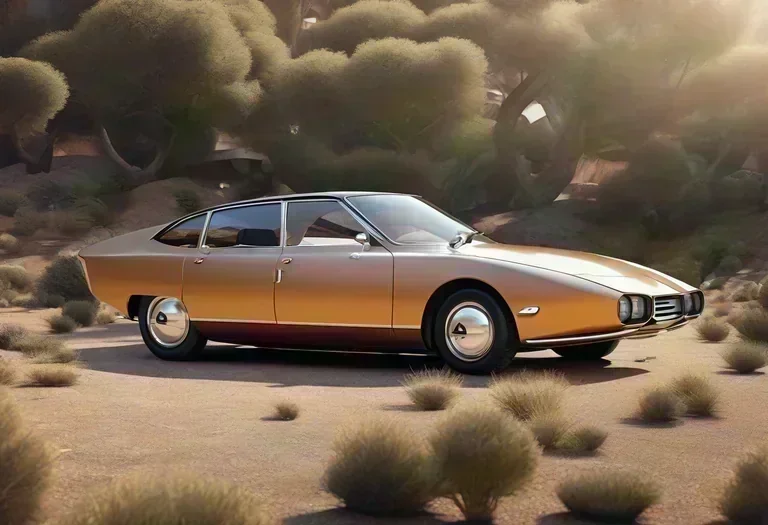
From a distance, the Birotor can look like an ordinary GS. Look closer and the differences become much easier to spot.
The car received flared wheel arches, distinctive wheels and other exterior changes that gave it a wider and more substantial appearance than a standard GS.
It also received more powerful braking hardware, including disc brakes at all four corners, along with other chassis modifications associated with the rotary drivetrain.
The interior was upgraded as well.
Citroën positioned the Birotor above the regular GS in the company’s lineup, and the price reflected that ambition. The car was expensive enough to overlap with the much larger DS range, which made its value proposition difficult even before the fuel crisis arrived.
That is one of the great ironies of the Birotor.
Technically, it was arguably one of the most interesting versions of the GS. Commercially, it appeared at almost exactly the wrong moment.
Why Did the 1973 Oil Crisis Hurt the Birotor?
The Wankel engine’s biggest problem was not that it lacked sophistication.
It was fuel consumption.
Rotary engines have several inherent characteristics that can make them less efficient than comparable piston engines, particularly in the areas of combustion efficiency and sealing. The Birotor’s fuel consumption was high enough to become a serious problem once fuel prices surged.
That would have been unfortunate at any time.
In late 1973, it was disastrous.
The Arab oil embargo caused fuel prices to rise sharply and created widespread concern about fuel availability. Suddenly, buyers who might previously have been willing to pay for a smooth and technologically unusual car had a very different set of priorities.
Fuel economy became a major selling point.
A relatively expensive family car with a thirsty rotary engine was suddenly an extremely difficult product to sell.
Citroën therefore found itself trying to establish a new technology at exactly the moment when the market was becoming hostile to one of its biggest disadvantages.
The Birotor’s production run ended after only 847 examples.
The company ultimately abandoned its rotary passenger-car program, and the Birotor became a fascinating dead end in Citroën’s history.
Why Did Citroën Try to Buy Back the Birotors?
This is the part of the story that turns the Birotor from merely rare into genuinely unusual.
After production ended, Citroën did not simply leave the remaining cars in the hands of their owners and continue supporting them like any other discontinued model.
The company offered owners incentives to return their cars, and many were subsequently destroyed.
There was a practical reason for doing this.
Supporting a tiny fleet of vehicles with a unique engine and drivetrain would have been expensive. Spare parts would have had to be manufactured and stocked for a model with only a few hundred surviving examples, while technicians would have needed specialized knowledge of the rotary engine.
Citroën also had little reason to continue promoting a technology it had decided to abandon.
Some owners refused to cooperate, however.
Those cars became the survivors.
That history explains why a car that was never intended to be a major collector vehicle is now one of the more interesting Citroën rarities. The manufacturer itself helped make the surviving examples scarce.
Estimates vary regarding exactly how many Birotors remain, but the surviving population is tiny compared with the 847 cars originally produced.
The Citromuseum’s documentation of surviving Birotors describes the model as a particularly rare piece of Citroën history and records the original car’s 2.0-liter twin-rotor engine, 107-hp output and three-speed torque-converter transmission.
The Citromuseum’s GS Birotor archive provides additional historical and technical information on the model.
What Is the 1970 Citroën M35?
If the GS Birotor is the production car that brought Citroën’s rotary experiment to the public, the M35 is the laboratory that came before it.
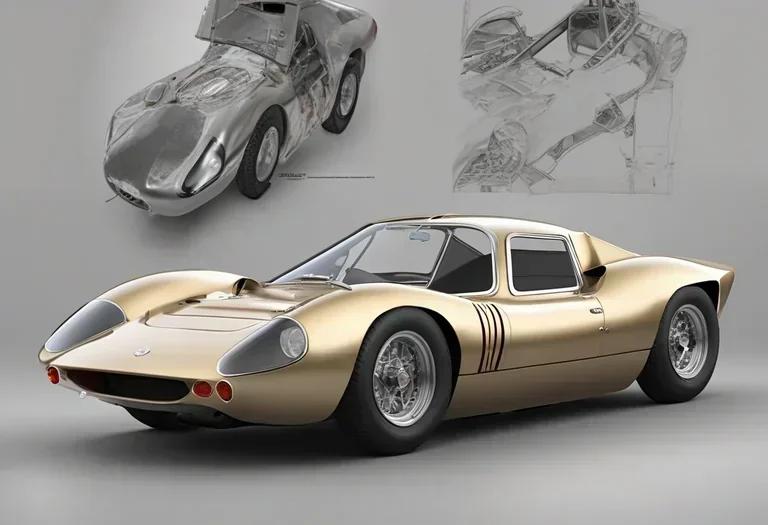
The M35 was developed as a road-going experimental vehicle based largely on the Citroën Ami platform. It used a single-rotor Wankel engine and Citroën’s hydropneumatic suspension, creating a combination that was far removed from anything else in the company’s lineup.
The body was distinctive, too.
Rather than simply putting the rotary engine into a normal Ami body, Citroën commissioned a dedicated fastback-style coupe body from French coachbuilder Heuliez.
The result looked like a small production sports coupe but was actually part of an extended customer testing program.
Citroën originally planned to produce 500 M35s. Only 267 were ultimately built.
The cars were offered to selected long-distance Citroën customers, allowing the company to collect real-world information about rotary-engine operation.
That made the M35 an unusually ambitious experiment.
Citroën wasn’t merely asking engineers to drive prototypes around a test track. It was putting experimental rotary cars into the hands of ordinary customers and monitoring their use.
The information gathered from those cars helped shape the development of the later GS Birotor.
Why Is the M35 Even Rarer Than the GS Birotor?
Production numbers alone make the M35 rare, but its survival story makes it even more significant.
Only 267 M35s were built, and Citroën subsequently tried to recover many of them.
The company had little incentive to maintain a substantial spare-parts inventory for a tiny fleet of experimental cars that had never been intended for conventional series production.
Many returned M35s were therefore scrapped.
Only a small number escaped the destruction program and survived into the modern collector-car market.
That makes the M35 more than simply an early Citroën with an unusual engine.
It is a physical record of the company’s attempt to make rotary power practical in a normal road car.
The 1970 M35 heading to the 2026 Quail Auction is listed as one of just 267 produced and is being offered with an estimate of $30,000 to $40,000.
It is also notable because examples like this rarely appear outside specialist collections or major automotive museums.
How Does the M35 Compare With the GS Birotor?
The two cars are closely related in engineering philosophy but very different in execution.
The M35 was essentially a rolling development program. Its single-rotor engine produced relatively modest power, and its primary purpose was to gather information about how a rotary engine behaved in the hands of customers over extended mileage.
The GS Birotor was the attempt to turn that research into a genuine production automobile.
It used two rotors, significantly more power and a more sophisticated drivetrain. The GS platform also provided considerably more space and practicality than the M35.
Both cars retained Citroën’s distinctive hydropneumatic suspension, which was one of the company’s defining technologies.
The combination of rotary power and hydraulic suspension is what makes these cars so fascinating today.
Neither was simply an engineering curiosity. Citroën was trying to combine two unconventional technologies into something customers could actually use.
What Are the Auction Estimates for the Citroën Rotary Cars?
The 1973 GS Birotor is scheduled to cross the block at Broad Arrow’s Quail Auction in Carmel during Monterey Car Week 2026.
The current estimate is $20,000 to $30,000.
The 1970 M35 is being offered as Lot R0086 with an estimate of $30,000 to $40,000, while the GS Birotor is Lot R0087 with its $20,000 to $30,000 estimate.
The auction estimates are notable because both cars are extremely rare, yet neither carries the sort of headline price normally associated with exotic European collector cars.
That could make them particularly interesting to specialists.
Of course, the purchase price is only one part of the equation.
Owning a 50-year-old Citroën with a discontinued rotary engine is very different from owning a conventional classic car with an established parts network. Mechanical work can be complicated, original components can be difficult to source and specialists familiar with the technology are limited.
For the right collector, however, that is precisely the attraction.
These are not cars that can be replaced by another example sitting at a local dealership.
The Broad Arrow Quail Auction listing includes the current catalog of cars scheduled for the 2026 event, including both Citroën rotary models.
Why Are These Citroëns Important Today?
It is easy to look back at the Birotor and M35 and conclude that Citroën simply made an unreliable car with a thirsty engine.
That misses the point.
The Wankel rotary was once considered a serious candidate for the future of the automobile. NSU committed to it. Mazda built an entire performance identity around it. General Motors invested heavily in rotary development. Citroën went as far as establishing a joint venture with NSU to develop the technology.
The Birotor and M35 are evidence of that period.
They show what manufacturers were willing to attempt before the industry settled overwhelmingly on the piston engine.
They also demonstrate how quickly external events can destroy an engineering strategy.
If the Birotor had arrived during a period of cheap fuel and strong consumer demand for technological novelty, its history might have been very different.
Instead, it arrived just as the oil crisis made fuel consumption a critical purchasing consideration.
The car never had much of a chance.
Could the Citroën GS Birotor Have Succeeded?
That is impossible to answer with certainty, but the Birotor had several disadvantages working against it.
Its price was high, its fuel consumption was high and its rotary engine had a reputation for reliability concerns.
At the same time, Citroën was facing its own financial problems and could not afford to continue pouring resources into a technology that was struggling to find customers.
The Birotor also faced an awkward position within the Citroën lineup. It was based on the relatively affordable GS but priced close to much more prestigious models.
That made it difficult to explain to buyers.
For a customer who wanted an economical family car, the conventional GS made more sense. For someone seeking luxury and status, the larger DS offered a more obvious proposition.
The Birotor sat awkwardly between the two.
Today, that awkwardness is part of its charm.
Why These Two Cars Matter to Collectors
Collectors increasingly value cars that tell a story, and few stories are stranger than Citroën’s rotary experiment.
The M35 represents the beginning of the customer-testing phase. The GS Birotor represents the moment when Citroën attempted to turn that experiment into a production car.
Both were ultimately failures from a commercial perspective.
Both are now valuable precisely because they failed.
Their limited production numbers, unusual mechanical layouts and destruction programs mean that surviving examples have become historical artifacts.
And unlike many concept cars, they were actually driven on public roads by ordinary customers.
That makes them far more useful for understanding what Citroën was trying to accomplish.
When the M35 and GS Birotor appear together, the story becomes even clearer: Citroën genuinely believed the rotary engine could become part of the company’s future.
The oil crisis, engineering difficulties and economics ultimately proved otherwise.
Specifications
| Specification | Citroën GS Birotor | Citroën M35 |
|---|---|---|
| Model Year | 1973 | 1970 |
| Engine | Twin-rotor Wankel | Single-rotor Wankel |
| Engine Capacity | Approximately 2.0 liters | Approximately 498 cc |
| Power | Approximately 105-107 hp | Approximately 49 hp |
| Transmission | Three-speed semi-automatic with torque converter | Four-speed manual |
| Suspension | Hydropneumatic | Hydropneumatic |
| Production | 847 examples | 267 examples |
| Original Production Period | 1973-1975 | 1969-1971 |
| 2026 Auction Estimate | $20,000-$30,000 | $30,000-$40,000 |
Frequently Asked Questions
Q: How many Citroën GS Birotors were produced?
A: Citroën produced only 847 GS Birotors between 1973 and 1975. The short production run and subsequent destruction of many cars make surviving examples exceptionally rare.
Q: Why did Citroën stop making the GS Birotor?
A: The Birotor was expensive and had high fuel consumption, while its rotary engine also faced reliability concerns. Its launch coincided with the 1973 oil crisis, which made a thirsty family car particularly difficult to sell.
Q: Did Citroën really try to destroy the GS Birotor?
A: Yes. Citroën attempted to recover many Birotors after production ended, and returned cars were destroyed rather than maintained as part of a normal long-term parts and service program. Some owners refused to return their cars, allowing a small number to survive.
Q: What engine does the GS Birotor use?
A: The GS Birotor uses a twin-rotor Wankel engine developed through the Citroën-NSU Comotor partnership. The engine produces approximately 105-107 horsepower and drives through a three-speed transmission with a torque converter.
Q: What was the Citroën M35?
A: The M35 was a road-going experimental Citroën developed to test rotary-engine technology in real-world conditions. It used a single-rotor Wankel engine, hydropneumatic suspension and a distinctive two-door fastback body produced by Heuliez.
Q: How many Citroën M35s were built?
A: Citroën built 267 M35s, despite originally planning to produce 500. Many were later recovered and destroyed, leaving only a small number of survivors.
Q: How much is the 1973 Citroën GS Birotor expected to sell for?
A: The 1973 GS Birotor scheduled for the 2026 Quail Auction carries an estimate of $20,000 to $30,000.
Q: How much is the 1970 Citroën M35 expected to sell for?
A: The 1970 Citroën M35 is estimated at $30,000 to $40,000 at the 2026 Quail Auction.