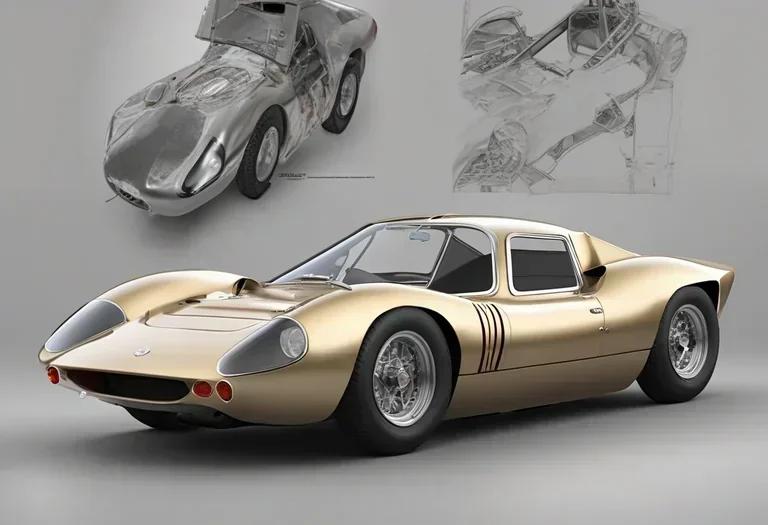
This Mazda Miata Might Be The Best Ferrari You Can Own
This 2017 Mazda MX-5 Miata RF gets hand-formed carbon-fiber bodywork inspired by the Ferrari 250 GTO while keeping its 2.0-liter engine and manual gearbox.
Key Takeaways
- This 2017 Mazda MX-5 Miata RF has been transformed with hand-formed carbon-fiber bodywork inspired by the legendary Ferrari 250 GTO.
- The custom build keeps the Miata’s original 2.0-liter Skyactiv-G four-cylinder, six-speed manual transmission and rear-wheel drive.
- The body conversion includes custom front and rear sections, door skins, quarter panels and a bespoke trunk lid.
- Unlike a genuine Ferrari 250 GTO, the Miata retains modern features such as airbags, ABS, stability control, air conditioning and a retractable hardtop.
- The finished car is a tribute rather than an exact replica, with some proportions and details clearly revealing its Mazda MX-5 origins.
- The project demonstrates how coachbuilding can turn an inexpensive sports car into a highly distinctive one-off without sacrificing everyday usability.
What Makes This Mazda Miata Look Like a Ferrari 250 GTO?
Few cars have a more recognizable shape than the Ferrari 250 GTO, and this Mazda MX-5 Miata RF attempts to capture some of that magic without pretending to be the real thing.
Instead of using a simple fiberglass body kit, the project received extensive custom bodywork. The original Mazda panels were replaced or modified with hand-formed carbon-fiber components, including new front and rear clips, door skins, quarter panels and a custom trunk lid.
The result is a low, rounded sports car with classic Ferrari-inspired proportions while retaining the fundamental dimensions and architecture of the fourth-generation MX-5 underneath.
Is This Miata a Perfect Ferrari 250 GTO Replica?
No, and that is probably the most important thing to understand about the build.
The car clearly takes inspiration from the 250 GTO, but it is not intended to be an exact replica. The windshield, roofline, doors and overall cabin proportions reveal its MX-5 origins. The front end also has a more modern appearance than the long, low nose of an original 250 GTO.
The rear is similarly compact compared with the elongated proportions of Ferrari’s early-1960s GT racer.
Rather than being judged as a counterfeit Ferrari, the car makes more sense as a coachbuilt interpretation. It takes familiar styling cues from one of the world’s most valuable classic cars and applies them to a lightweight modern roadster.
What Engine Does the Ferrari-Inspired Miata Have?
Underneath the custom bodywork is still a Mazda MX-5 RF powertrain. The car uses the naturally aspirated 2.0-liter Skyactiv-G four-cylinder engine paired with a six-speed manual transmission and rear-wheel drive.
That means the driving experience remains fundamentally Miata rather than Ferrari. The 2017 MX-5 RF’s 2.0-liter engine was rated at 155 horsepower and 148 lb-ft of torque, according to Mazda’s original specifications.
The car also retains a Borla exhaust, giving the four-cylinder a sportier exhaust note without replacing the factory engine with a high-output powerplant.
Mazda’s official 2017 MX-5 RF specifications confirm the original 2.0-liter Skyactiv-G engine, six-speed manual transmission and rear-wheel-drive configuration: Mazda 2017 MX-5 RF Fact Sheet.
How Much Carbon Fiber Was Used?
The transformation goes well beyond cosmetic add-ons. The build incorporates hand-formed carbon-fiber body panels throughout the exterior.
The custom work includes the front and rear clips, door skins, quarter panels and trunk lid. This gives the car a much more cohesive appearance than a conventional bolt-on replica kit.
Carbon fiber is particularly appropriate for a Miata-based project because the MX-5’s lightweight construction is one of the model’s defining characteristics. The original 2017 MX-5 RF weighed approximately 2,445 pounds with the manual transmission, according to Mazda.
The additional bodywork inevitably changes the car’s weight and balance, however, and there is no reason to assume the completed custom vehicle weighs exactly the same as a factory MX-5 RF.
Does the Miata Still Have Its Retractable Hardtop?
Yes. The car remains based on the MX-5 RF, Mazda’s Retractable Fastback version of the fourth-generation Miata.
The RF’s electrically operated roof is one of the features that separates it from the conventional MX-5 soft top. Mazda designed the roof to open or close in approximately 13 seconds, allowing the car to retain a coupe-like appearance while providing an open-air driving experience.
That feature also makes the Ferrari-inspired build considerably more practical than a period-correct 250 GTO replica with a completely different roof and chassis arrangement.
What Modern Features Does the Miata Keep?
One of the most interesting aspects of this build is that the custom exterior does not turn the car into a bare-bones vintage-style machine.
The underlying Mazda retains modern safety and convenience equipment. Depending on its original trim and equipment, the 2017 MX-5 RF could be equipped with dual front and side airbags, stability control, ABS, blind-spot monitoring, rear cross-traffic alert, lane-departure warning and other driver-assistance technology.
It also retains features such as air conditioning, Bluetooth connectivity, Mazda Connect infotainment and a backup camera on appropriately equipped versions.
That combination creates a strange but appealing contrast: a car that looks decades older than it actually is while retaining the convenience and safety technology of a modern sports car.
How Does It Compare With a Real Ferrari 250 GTO?
The two cars are fundamentally different machines.
The original Ferrari 250 GTO was a purpose-built front-engine competition-derived GT powered by a 3.0-liter V12. One example sold by Mecum in 2026 for $38.5 million, illustrating the extraordinary values attached to genuine 250 GTOs.
That Ferrari also used a five-speed manual transmission and produced around 300 horsepower in the specification listed by Mecum.
By comparison, this Mazda has a four-cylinder engine, modern suspension and safety systems, and the compact proportions of an MX-5. It is not remotely equivalent in performance, provenance or collectibility.
But that distinction is precisely what makes the Miata interesting. A genuine 250 GTO is an irreplaceable piece of automotive history. This Mazda is something you can actually drive without treating every trip around town like a preservation exercise.
Why Use a Miata as the Starting Point?
The MX-5 makes a surprisingly logical foundation for a classic-inspired sports car. It is compact, lightweight, rear-wheel drive and available with a manual transmission.
Those characteristics give a custom builder a strong foundation for a car intended to emphasize styling and driving enjoyment rather than outright power.
The Miata also has a much simpler mechanical package than an exotic supercar. Parts availability, maintenance requirements and operating costs are considerably more approachable than those associated with a genuine vintage Ferrari.
Is This a Better Daily Driver Than a Ferrari 250 GTO?
For ordinary road use, the Mazda-based build has several obvious advantages.
It has modern brakes, electronic stability systems, airbags, air conditioning and contemporary infotainment. The RF roof also provides more weather protection than the open cockpit of many classic sports cars.
Most importantly, the car’s underlying mechanical package is based on a mass-produced Mazda rather than a rare competition-derived Ferrari.
That does not make it equivalent to a 250 GTO. It simply means the Miata is better suited to someone who wants to enjoy a classic-inspired design without owning an irreplaceable multimillion-dollar collector car.
Where Was the Ferrari-Inspired Miata Offered?
The completed Miata was offered through Mecum Auctions, which has handled a wide range of unusual custom and collector vehicles.
The auction listing is the appropriate place to check for the vehicle’s sale information, photographs and final auction status: Mecum Auctions.
Because auction listings can change after a sale, buyers should rely on the auction house’s current listing and inspection information rather than assuming that an older advertised price or estimate remains valid.
What Makes This Build So Appealing?
The appeal is less about fooling people into thinking it is a Ferrari and more about combining two very different automotive ideas.
The 250 GTO represents one of the most valuable and historically significant sports cars ever built, while the Miata represents accessible driving enjoyment. Putting the former’s styling philosophy onto the latter’s mechanical foundation creates a car that is unusual without being completely impractical.
The carbon-fiber construction also gives the project a level of craftsmanship that separates it from inexpensive replica kits.
What We Know About the Ferrari-Inspired Miata
| Specification | Details |
|---|---|
| Base vehicle | 2017 Mazda MX-5 Miata RF |
| Design inspiration | Ferrari 250 GTO |
| Engine | 2.0-liter Skyactiv-G naturally aspirated four-cylinder |
| Original factory output | 155 hp / 148 lb-ft |
| Transmission | 6-speed manual |
| Drive type | Rear-wheel drive |
| Body material | Hand-formed carbon fiber |
| Custom bodywork | Front and rear clips, door skins, quarter panels and trunk lid |
| Exhaust | Borla |
| Roof | Retractable hardtop |
| Original RF curb weight | Approximately 2,445 lb with manual transmission |
Frequently Asked Questions
What car is this Ferrari 250 GTO tribute based on?
The car is based on a 2017 Mazda MX-5 Miata RF, the retractable-hardtop version of the fourth-generation MX-5.
Does this Miata have a Ferrari engine?
No. It retains Mazda’s naturally aspirated 2.0-liter Skyactiv-G four-cylinder engine.
Does the Ferrari-inspired Miata have a manual transmission?
Yes. The car retains a six-speed manual transmission and rear-wheel drive.
Is this a real Ferrari 250 GTO?
No. It is a custom Mazda MX-5 RF with carbon-fiber bodywork inspired by the Ferrari 250 GTO.
How much horsepower does the Miata make?
The original 2017 MX-5 RF’s 2.0-liter engine was rated at 155 horsepower and 148 lb-ft of torque by Mazda. The custom car retains that engine, although the completed vehicle’s final specifications should be verified with its auction documentation.
Is the body made from carbon fiber?
Yes. The custom build uses hand-formed carbon-fiber bodywork, including the front and rear clips, door skins, quarter panels and custom trunk lid.
Does it retain the Mazda RF retractable roof?
Yes. The build remains based on the MX-5 RF and retains its retractable hardtop architecture.
How much is a real Ferrari 250 GTO worth?
Values vary substantially by car and provenance. For perspective, a 1962 Ferrari 250 GTO sold through Mecum in 2026 for $38.5 million.
Pros and Cons
Pros
- Distinctive Ferrari-inspired styling
- Extensive hand-formed carbon-fiber bodywork
- Lightweight rear-wheel-drive sports-car platform
- Six-speed manual transmission
- Modern Mazda safety and convenience features
- Retractable RF hardtop
- Much easier to use and maintain than a genuine vintage Ferrari
Cons
- Not a genuine Ferrari
- Does not perfectly reproduce 250 GTO proportions
- Retains modest four-cylinder performance
- Custom bodywork may make replacement and repair more complicated
- Final weight and performance of the modified car are not fully documented
- Its value depends heavily on the quality and provenance of the custom work
Official Sources
Mazda USA – 2017 MX-5 RF Fact Sheet | Mecum Auctions – Ferrari 250 GTO