America’s Oldest New Vehicle On Sale Today Is Getting A Color Touchscreen
2027 Chevrolet Express adds a 7-inch touchscreen, Bluetooth and 5G Wi-Fi while retaining its decades-old commercial van platform.
Key Takeaways
- The Chevrolet Express enters the 2027 model year with essentially the same basic vehicle architecture that dates to its 1996 introduction.
- For 2027, the Express gains Chevrolet Infotainment 3 with a 7-inch HD color touchscreen, Bluetooth audio streaming and 5G Wi-Fi.
- The new touchscreen represents a meaningful technology upgrade for a van whose basic design has remained in production for decades.
- Apple CarPlay and Android Auto should not be listed as confirmed 2027 Express features unless Chevrolet provides model-year-specific confirmation.
- The Express received a major mid-cycle update for 2003, but it has not undergone a clean-sheet redesign since the model debuted for 1996.
- The van continues to be offered in cargo and passenger configurations, with 2500 and 3500 series models and available 4.3-liter V6 and 6.6-liter V8 engines.
What’s New for the 2027 Chevrolet Express?
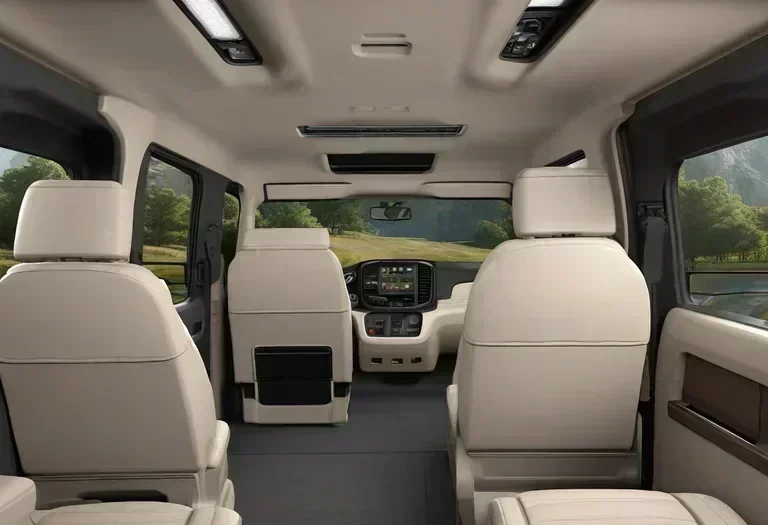
The biggest technology change for the 2027 Chevrolet Express is inside the cabin. The full-size commercial van gets Chevrolet Infotainment 3 with a 7-inch HD color touchscreen, Bluetooth audio streaming and 5G Wi-Fi.
That may sound like a modest update compared with the large displays found in newer Chevrolet vehicles, but it is a significant change for the Express. The van’s basic design dates back to the 1996 model year, and its latest major exterior and structural update arrived for 2003.
Current 2027 specification information lists the Chevrolet Infotainment 3 system with the 7-inch touchscreen, AM/FM stereo, Bluetooth audio streaming and 5G Wi-Fi as standard equipment. The system is therefore more than simply a larger display replacing an old radio; it adds contemporary connectivity to a commercial van whose priorities remain utility and durability.
How Does the New Infotainment System Compare With the Old Setup?
The 7-inch display is a substantial usability improvement over a conventional audio system because it provides a graphical interface for controlling entertainment and vehicle functions.
Bluetooth audio streaming is particularly useful for commercial customers who may spend long hours in the van. Drivers can connect compatible devices without relying on the older methods of playing music through an AM/FM radio or portable media player.
The addition of 5G Wi-Fi also gives the Express a more modern connectivity package. Chevrolet’s infotainment systems vary considerably between models, however, so the 2027 Express should not be assumed to have the same software, applications or display capabilities as newer Chevrolet vehicles with larger infotainment systems.
Chevrolet’s own infotainment documentation notes that system functionality varies by vehicle, which is important when comparing the Express with other models in the brand’s lineup.
Does the 2027 Express Have Apple CarPlay and Android Auto?
Apple CarPlay and Android Auto should not be treated as confirmed features of the 2027 Express based solely on the availability of the Chevrolet Infotainment 3 system.
Chevrolet offers Apple CarPlay and Android Auto on numerous vehicles and infotainment systems, but availability is vehicle-specific. The manufacturer’s general infotainment documentation explicitly says that certain functionality is available only on certain Chevrolet vehicles.
Unless Chevrolet’s final 2027 Express equipment documentation specifically lists Apple CarPlay and Android Auto for the vehicle, the safest description is that their availability has not been confirmed for the 2027 Express.
Why Does the Chevrolet Express Look So Old?
The Express looks familiar because its basic body and architecture have been around for an unusually long time. Chevrolet introduced the Express for the 1996 model year as the successor to the previous generation of GM full-size vans.
The van received a substantial update for 2003. Chevrolet revised the front-end styling, strengthened the frame, introduced new powertrain choices and added features including available all-wheel drive on certain versions. The 2003 update also brought changes to the interior and safety equipment.
Despite those improvements, the Express has never received a completely new generation. The result is a commercial van whose fundamental proportions and overall design can be traced to the 1990s.
Is the Express Really America’s Oldest New Vehicle?
The Chevrolet Express is one of the oldest continuously produced vehicle designs still sold new in the United States, but calling it definitively “America’s oldest new vehicle†depends on how vehicle age is measured.
The Express was introduced for the 1996 model year and has remained in production ever since, with the 2003 update serving as its most significant redesign. That makes its underlying design more than 30 years old as the 2027 model year approaches.
It is more accurate to describe the Express as one of the oldest vehicle designs still available new in the U.S. rather than treating “oldest†as an official Chevrolet designation.
Why Has Chevrolet Kept the Express in Production?
The answer is largely about what commercial-van buyers need. The Express is not designed primarily to compete with modern family SUVs or technology-heavy passenger vehicles. It is a work vehicle offered in cargo and passenger configurations, with multiple wheelbases, engine choices and upfit possibilities.
For businesses, a proven platform can have advantages. Fleets may value familiar mechanical components, straightforward packaging, available payload and the ability to configure the van for specific jobs.
Chevrolet’s current Express lineup reflects that philosophy. The company offers 2500 and 3500 cargo and passenger vans, two wheelbase choices and available engines including the 4.3-liter V6 and 6.6-liter V8. The 2026 Express, which carries over into the 2027 model year in broad terms, is marketed specifically around commercial capability and upfit flexibility.
What Engines Does the Express Have?
The Express continues with conventional gasoline powertrains rather than adopting the newer electrified architecture found in many modern passenger vehicles.
The 4.3-liter V6 produces 276 horsepower and 298 lb-ft of torque. It is paired with an eight-speed automatic transmission and is standard on the Express 2500 and 3500.
A 6.6-liter V8 is also available on those series. It produces 401 horsepower and 464 lb-ft of torque and is paired with the same eight-speed automatic transmission.
Chevrolet lists maximum available trailering capacity of up to 9,600 pounds for properly equipped Express models. Actual towing and payload limits depend on configuration and equipment, so the maximum figure should not be applied to every Express van.
What Kind of Van Is the Express?
The Express is a full-size body-on-frame commercial van available primarily as either a cargo van or passenger van. Its configuration can be tailored to different commercial and transportation needs.
The Express 2500 and 3500 are available with 135-inch and 155-inch wheelbases. Passenger versions can be configured for up to 15 occupants, while cargo versions provide a large enclosed load area that can be further modified by commercial upfitters.
Chevrolet also offers different gross vehicle weight and payload capabilities depending on the series and configuration. The heavier-duty Express 3500 can reach a gross vehicle weight rating of up to 9,900 pounds, while the Express 2500 is rated at up to 8,600 pounds in the configurations listed by Chevrolet.
Is the 2027 Express a New Generation?
No. The 2027 Express is not a clean-sheet redesign.
The current vehicle traces its roots to the 1996 Express, while the most significant revision came for the 2003 model year. The 2027 model year instead represents another continuation of the established platform, with technology and equipment changes helping keep the van current enough for today’s commercial market.
This is why the addition of a 7-inch touchscreen is notable. Chevrolet is updating selected areas of the vehicle without replacing the underlying commercial-van architecture.
What Does the 2027 Express Offer for Commercial Buyers?
The Express remains focused on practical commercial use rather than passenger-car refinement. Cargo versions can be configured with equipment packages and aftermarket upfits for businesses such as contractors, electricians and plumbers.
Passenger models are aimed at transporting people and can accommodate up to 15 occupants depending on configuration. Chevrolet also offers features such as rear air conditioning on passenger vans and a range of commercial equipment options.
The combination of a traditional body-on-frame design, multiple wheelbases, two gasoline engines and extensive upfit potential is a major reason the Express remains relevant despite its age.
How Does the Express Compare With Newer Commercial Vans?
The Express occupies a different position from newer commercial vans such as the Ford Transit and Mercedes-Benz Sprinter. Those competitors have received more extensive modernizations and offer newer architectures, technology and powertrain strategies.
The Express’s advantage is not technological leadership. Instead, it continues to offer a familiar platform with conventional gasoline engines, substantial payload and towing capability, and a wide range of commercial configurations.
That makes the 2027 Express an unusual combination of old-school commercial-van engineering and a small amount of modern connectivity. The new touchscreen improves the daily experience, but it does not transform the vehicle into a modern clean-sheet van.
Will Chevrolet Redesign the Express?
Chevrolet has not announced a new-generation Express for the 2027 model year. The available information points to continued production of the existing vehicle rather than an imminent clean-sheet replacement.
It is therefore not possible to give a confirmed date for an eventual Express redesign. Any claim that Chevrolet will discontinue the van or replace it with a specific new model should be treated as speculation unless General Motors makes an official announcement.
For now, the strategy is clear: Chevrolet continues to update the Express selectively while retaining the established commercial platform that has served the company since the 1990s.
2027 Chevrolet Express Specifications
| Specification | 2027 Express |
|---|---|
| Vehicle type | Full-size commercial van |
| Model lineage | Introduced for the 1996 model year |
| Major redesign | 2003 mid-cycle revision; no clean-sheet generation announced for 2027 |
| Infotainment | Chevrolet Infotainment 3 |
| Touchscreen | 7-inch HD color touchscreen |
| Bluetooth | Bluetooth audio streaming |
| Wi-Fi | 5G Wi-Fi |
| Apple CarPlay | Not confirmed for the 2027 Express |
| Android Auto | Not confirmed for the 2027 Express |
| Standard engine | 4.3-liter V6 |
| V6 output | 276 hp and 298 lb-ft |
| Available engine | 6.6-liter V8 |
| V8 output | 401 hp and 464 lb-ft |
| Transmission | 8-speed automatic |
| Wheelbases | 135 inches and 155 inches |
| Configurations | Cargo and passenger vans |
| Maximum passenger capacity | Up to 15 passengers, depending on configuration |
Pros and Cons
Pros
- New 7-inch color touchscreen modernizes the cabin
- Bluetooth audio streaming adds useful smartphone connectivity
- 5G Wi-Fi adds another modern connectivity option
- Proven commercial-van platform
- Available 4.3-liter V6 and 6.6-liter V8 engines
- Multiple wheelbases and cargo/passenger configurations
- Strong towing and payload capability in properly equipped versions
- Extensive potential for commercial upfits
Cons
- Underlying design dates to the 1996 model year
- Major exterior and structural update dates to 2003
- Infotainment screen is small by modern vehicle standards
- Apple CarPlay and Android Auto are not confirmed for the 2027 Express
- No clean-sheet redesign for the 2027 model year
- Conventional gasoline powertrains remain the focus
- Interior technology is less advanced than that of newer commercial vans
Frequently Asked Questions
Q: What’s new for the 2027 Chevrolet Express?
The major confirmed technology update is Chevrolet Infotainment 3 with a 7-inch HD color touchscreen, Bluetooth audio streaming and 5G Wi-Fi. The Express otherwise continues the established commercial-van design and architecture.
Q: How old is the Chevrolet Express design?
The Express was introduced for the 1996 model year. It received a substantial update for 2003, but Chevrolet has not introduced a clean-sheet replacement for the current generation.
Q: Does the 2027 Chevrolet Express have Apple CarPlay?
Apple CarPlay has not been confirmed as a 2027 Express feature in the information currently available. Chevrolet offers CarPlay on various vehicles, but its general infotainment documentation makes clear that functionality varies by model.
Q: Does the 2027 Chevrolet Express have Android Auto?
Android Auto has not been confirmed for the 2027 Express based on the currently available model-specific information. It should not be assumed to be included simply because the van uses Chevrolet Infotainment 3.
Q: What engines are available in the Chevrolet Express?
The Express uses a 4.3-liter V6 producing 276 horsepower and 298 lb-ft of torque, while a 6.6-liter V8 producing 401 horsepower and 464 lb-ft is available. Both are paired with an eight-speed automatic transmission.
Q: How many people can the Chevrolet Express carry?
The Express Passenger Van can be configured to carry up to 15 passengers, depending on the specific configuration.
Q: Is the 2027 Chevrolet Express a new generation?
No. The 2027 Express continues the long-running commercial-van platform introduced for 1996. The vehicle received a major revision for 2003, but no new clean-sheet generation has been announced for 2027.
Q: Why is Chevrolet still selling the Express?
The Express continues to serve commercial customers that prioritize cargo capacity, payload, towing capability, multiple configurations and upfit potential. Its long-running platform also provides a familiar foundation for fleet and business use.