Lucid Air Sapphire Beats Corvette ZR1X to 200 MPH and Back
Lucid's Air Sapphire sedan outperforms the Corvette ZR1X in a 0-200-0 mph test
Key Takeaways
- The Lucid Air Sapphire completed a 0-200-0 mph test in just 25.7 seconds, beating every other car in the comparison.
- The 1,250-hp Chevrolet Corvette ZR1X finished in 31.8 seconds, 6.1 seconds behind the Lucid.
- The McLaren 750S needed 37.7 seconds to complete the run.
- The Porsche 911 Turbo S reached 199.3 mph but did not quite hit the 200-mph target.
- The Lucid’s 1,234-hp tri-motor electric powertrain gives it exceptional acceleration, while its low-drag shape helps it continue building speed at higher velocities.
- The test demonstrates how modern electric performance cars can combine supercar-level acceleration with enough high-speed performance to challenge purpose-built combustion-powered machines.
How Fast Is the Lucid Air Sapphire in a 0-200-0 Test?
The Lucid Air Sapphire delivered the quickest result in the latest 0-200-0 mph comparison, completing the full acceleration and braking run in 25.7 seconds.
That means the Sapphire had to accelerate from a standstill to 200 mph, then bring itself back to zero as quickly as possible. The result is particularly significant because a test like this rewards more than straight-line acceleration. A car needs enough power to reach 200 mph quickly and enough braking capability, tire grip, and chassis control to shed that speed efficiently.
Lucid officially rates the Air Sapphire at 1,234 horsepower, with a manufacturer-quoted 0-60 mph time of 1.89 seconds and a 205-mph top speed. The car uses a three-motor all-wheel-drive powertrain with two motors at the rear and one at the front.
The test result therefore puts the Sapphire’s acceleration and high-speed capability into a broader context: it is not simply a quick electric sedan off the line, but a car capable of sustaining extremely rapid acceleration deep into triple-digit speeds.
How Did the Corvette ZR1X Compare?
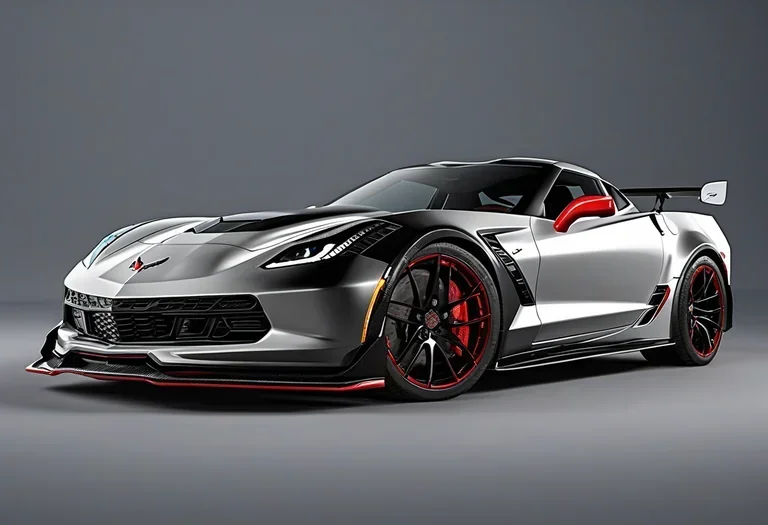
The 2026 Chevrolet Corvette ZR1X finished the 0-200-0 mph test in 31.8 seconds, placing it 6.1 seconds behind the Lucid Air Sapphire.
That is an impressive result in its own right. The ZR1X combines a twin-turbocharged 5.5-liter LT7 V8 with a front-mounted electric drive unit for a total of 1,250 horsepower. Its electrified all-wheel-drive system is specifically designed to improve traction and acceleration.
Chevrolet quotes a 1.89-second 0-60 mph time and an available 8.99-second quarter-mile time at 157 mph. The company has also recorded a 1.68-second 0-60 mph run and an 8.675-second quarter-mile during closed-course testing.
Despite having slightly more peak power than the Lucid, the Corvette did not match the Sapphire over the complete 0-200-0 mph cycle. That difference illustrates why horsepower alone does not determine performance in a test that combines acceleration, aerodynamics, traction, and braking.
How Did the McLaren 750S Perform?
The McLaren 750S completed the same test in 37.7 seconds. That left the lightweight British supercar 12 seconds behind the Lucid and 5.9 seconds behind the Corvette ZR1X.
The 750S takes a fundamentally different approach to performance. It uses a twin-turbocharged 4.0-liter V8 rather than an electric powertrain, and its relatively low weight gives it an exceptional power-to-weight ratio.
The McLaren’s strengths become particularly apparent under braking. In separate 0-150-0 mph testing, the 750S demonstrated extremely strong stopping performance, helped by its carbon-ceramic brakes, high-performance tires, and low mass.
The 0-200-0 result nevertheless favors the electric Lucid because the Sapphire can deploy enormous amounts of instant torque while continuing to accelerate hard at high speed.
Why Didn’t the Porsche 911 Turbo S Complete the 200-Mph Run?
The Porsche 911 Turbo S was unable to reach the 200-mph target during the comparison. Its recorded maximum was 199.3 mph, leaving it just 0.7 mph short of the benchmark.
That means the Porsche could not produce a complete 0-200-0 result under the conditions of this particular test. It is an important distinction because a failure to reach the target does not necessarily mean the 911 Turbo S is inherently incapable of 200 mph; test conditions, gearing, vehicle configuration, and the specific limiter or calibration can all affect the result.
The Porsche’s near miss does, however, show how demanding the 200-mph portion of the test is. At these speeds, aerodynamic drag increases dramatically, requiring substantially more power to gain each additional mile per hour.
| Vehicle | Power | 0-200-0 mph | Test Result |
|---|---|---|---|
| Lucid Air Sapphire | 1,234 hp | 25.7 sec | Completed |
| Chevrolet Corvette ZR1X | 1,250 hp | 31.8 sec | Completed |
| McLaren 750S | 740 hp | 37.7 sec | Completed |
| Porsche 911 Turbo S | Not listed for this comparison | Not completed | 199.3 mph maximum |
What Makes the Lucid Air Sapphire So Quick?
The Sapphire’s performance comes from the combination of 1,234 horsepower, three electric motors, all-wheel drive, sophisticated torque management, and aerodynamic efficiency.
Unlike a conventional combustion engine, an electric motor can deliver substantial torque almost immediately. The Sapphire uses three motors to distribute power between the axles, giving its traction-control system a large amount of control over how that power reaches the road.
Lucid says the Sapphire’s two rear motors can independently control torque at the rear wheels. This allows the car to combine extreme straight-line acceleration with sophisticated handling characteristics rather than simply overwhelming the tires with power.
The car is also capable of continuing to accelerate at speeds where aerodynamic drag becomes a major obstacle. Lucid lists a 205-mph top speed for the Air Sapphire, meaning the 200-mph target is within its designed performance envelope.
Does Low Drag Matter at 200 mph?
Yes. Aerodynamic drag becomes increasingly important as speed rises, which means a car needs substantially more power to accelerate from 150 to 200 mph than it does to cover the same speed increase at lower velocities.
The Air Sapphire’s streamlined sedan body helps it maintain its acceleration as speed climbs. Its performance therefore does not depend solely on its initial launch. The car combines strong low-speed acceleration with the aerodynamic efficiency needed to keep pushing toward its 205-mph top speed.
This is one reason the 0-200-0 result is more revealing than a simple 0-60 mph measurement. A car can be exceptionally quick from a standstill yet lose much of its advantage as aerodynamic resistance increases. The Sapphire maintained enough acceleration at high speed to build a substantial lead before braking.
What About the Lucid’s Braking Performance?
The Air Sapphire’s biggest advantage in this comparison comes during acceleration, but braking remains a crucial part of the 0-200-0 test.
The Sapphire uses high-performance carbon-ceramic brakes and specially developed performance tires. Its braking system has to dissipate an enormous amount of kinetic energy after the car reaches 200 mph.
The vehicle’s relatively high mass compared with a lightweight supercar can work against it during braking. A heavier vehicle carries more kinetic energy at the same speed, placing greater demands on its brakes and tires.
That makes the Sapphire’s overall 25.7-second result even more notable. It did not simply win by reaching 200 mph first; it also completed the braking portion quickly enough to preserve a substantial advantage over the other cars.
How Does the Corvette ZR1X’s Hybrid Powertrain Change the Equation?
The ZR1X shows that hybrid technology can also be extremely effective in a high-performance combustion car. Its 1,250-hp powertrain combines Chevrolet’s 1,064-hp twin-turbocharged LT7 V8 with a 186-hp electric front drive unit.
The front electric motor provides additional traction and instant power during acceleration. Unlike a rear-drive ZR1, the ZR1X can use electrified all-wheel drive to put its enormous output onto the pavement more effectively.
Chevrolet designed the system to blend the V8 and electric drive unit continuously according to vehicle conditions and driver inputs. That gives the ZR1X a very different performance profile from a traditional rear-wheel-drive Corvette.
Even so, the 31.8-second 0-200-0 result shows that the Lucid’s three-motor electric architecture can still have a major advantage in an all-out acceleration test.
What Does the 0-200-0 Test Say About EV Performance?
The result demonstrates that modern EVs are no longer limited to winning short acceleration contests. The Air Sapphire can combine instant electric torque with high-speed aerodynamic efficiency and a 205-mph top speed.
That does not mean electric cars will dominate every performance test. Weight, thermal management, tire performance, braking, battery state of charge, and sustained power delivery can all influence results. Lightweight combustion-powered cars can also have significant advantages when braking and changing direction.
What the Sapphire shows is that an electric performance sedan can compete with and, in this case, substantially outperform exotic sports cars in a test extending all the way to 200 mph and back to zero.
Lucid Air Sapphire vs. Corvette ZR1X: Key Specifications
| Specification | Lucid Air Sapphire | 2026 Chevrolet Corvette ZR1X |
|---|---|---|
| Powertrain | Three-motor electric | Twin-turbo V8 + front electric motor |
| Drive system | All-wheel drive | Electrified all-wheel drive |
| Combined power | 1,234 hp | 1,250 hp |
| 0-60 mph | 1.89 sec | 1.89 sec available |
| Top speed | 205 mph | Not specified here |
| 0-200-0 mph | 25.7 sec | 31.8 sec |
Frequently Asked Questions
What was the Lucid Air Sapphire’s 0-200-0 mph time?
The Lucid Air Sapphire completed the 0-200-0 mph test in 25.7 seconds.
How fast was the Corvette ZR1X in the 0-200-0 test?
The 2026 Chevrolet Corvette ZR1X completed the test in 31.8 seconds, 6.1 seconds slower than the Lucid Air Sapphire.
How did the McLaren 750S perform in the 0-200-0 test?
The McLaren 750S completed the 0-200-0 mph run in 37.7 seconds.
Did the Porsche 911 Turbo S reach 200 mph?
No. The Porsche 911 Turbo S reached 199.3 mph during the test and therefore did not complete the 200-mph target.
How much horsepower does the Lucid Air Sapphire have?
The Lucid Air Sapphire produces 1,234 horsepower from its three-motor electric powertrain.
How fast is the Lucid Air Sapphire from 0-60 mph?
Lucid quotes a 1.89-second 0-60 mph time for the Air Sapphire.
What is the top speed of the Lucid Air Sapphire?
Lucid lists a 205-mph top speed for the Air Sapphire.
How much horsepower does the Corvette ZR1X have?
The 2026 Corvette ZR1X produces a combined 1,250 horsepower from its 5.5-liter twin-turbocharged LT7 V8 and front electric drive unit.
Why was the Lucid Air Sapphire faster than the Corvette ZR1X?
The Sapphire’s advantage comes from its 1,234-hp three-motor electric powertrain, all-wheel drive, immediate torque delivery, traction management, and aerodynamic efficiency. The Corvette has more peak power at 1,250 hp, but horsepower alone does not determine the outcome of a 0-200-0 test.