BMW's Button-Less Future Sparks Debate Among Rivals
BMW's decision to remove buttons from its dashboard sparks a debate among rivals, with some restoring physical controls and others embracing touchscreens and voice assistants.
Key Takeaways
- BMW is moving more vehicle functions to touchscreens and voice controls with its new Panoramic iDrive system.
- The 2027 BMW iX3 is not completely button-free, retaining physical controls for important functions such as indicators, wipers, the gear selector and hazard lights.
- BMW says its next-generation interface was developed using customer feedback, connected-vehicle data and usability studies.
- Other automakers have been restoring physical controls after customers criticized touchscreen-heavy interiors.
- China’s new vehicle standards are putting greater emphasis on safe human-machine interaction as advanced digital systems become more common.
Is the Button-Free Dashboard Really the Future of Luxury Cars?
BMW is making a major push toward digital vehicle controls, but the company’s latest interiors are not actually abandoning physical buttons altogether. The new BMW iX3 uses Panoramic iDrive to move more functions into displays, touch controls and voice commands while retaining physical controls for several frequently used driving functions.
That distinction matters because the debate over buttons versus touchscreens has become one of the biggest interior-design arguments in the modern automotive industry. Carmakers want cleaner, software-driven cabins that can be updated over time, while drivers often prefer controls that can be located and operated by feel.
BMW’s solution is essentially a hybrid. The company is reducing the number of conventional switches without eliminating physical controls where it believes tactile feedback and quick access remain important.
Why Is BMW Moving More Functions to Touchscreens and Voice Control?
BMW believes vehicle interfaces should reflect how people increasingly interact with technology outside the car. Smartphones, smart-home devices and digital assistants have made touch and voice commands familiar to many drivers, and BMW is using those habits as a foundation for its next-generation cabin technology.
The company’s Neue Klasse vehicles introduce a new software architecture built around BMW Operating System X and Panoramic iDrive. BMW says the development process incorporated customer feedback, data from more than 10 million connected vehicles and usability studies involving more than 3,000 customers.
BMW is also expanding its voice-assistant technology. The latest system is designed to support more natural conversations and can operate vehicle functions while also providing information. The company has also been developing AI-powered capabilities for its Intelligent Personal Assistant.
Is the New BMW iX3 Completely Buttonless?
No. Calling the new BMW iX3 a completely buttonless car would be inaccurate.
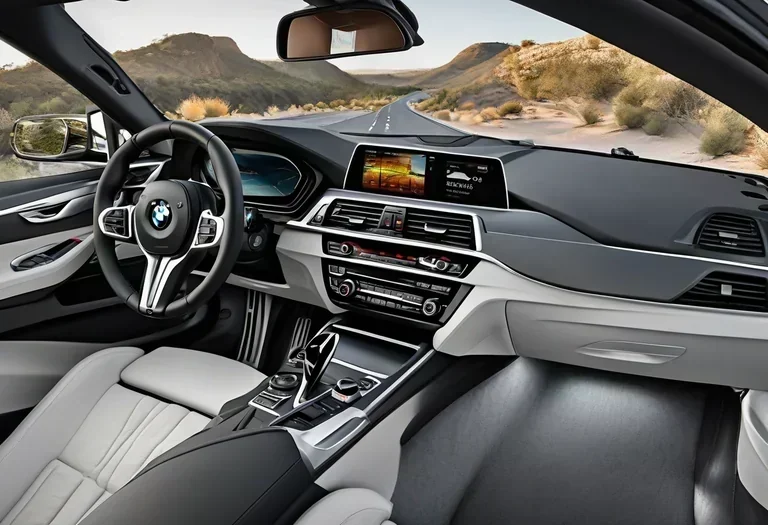
BMW has retained physical controls for the windshield wipers, turn signals, exterior mirrors, volume, gear selection, parking brake, hazard warning lights and rear-window heating and defrosting. The multifunction steering wheel also remains a major physical control point.
Other functions are increasingly handled through the central display, BMW Panoramic Vision, voice commands or steering-wheel controls. Navigation, media, personalization, assisted-driving functions and many vehicle settings can therefore be accessed without a traditional button for every individual feature.
The result is a cabin that looks significantly more digital without forcing every important driving function onto a touchscreen.
How Does BMW Panoramic iDrive Work?
BMW Panoramic iDrive combines several interfaces instead of relying on one giant touchscreen. The system incorporates BMW Panoramic Vision, a central display, an available 3D head-up display and a multifunction steering wheel.
BMW Panoramic Vision places information across the lower portion of the windshield, allowing selected information to appear closer to the driver’s natural field of view. The central display handles more detailed interaction, while the steering wheel provides physical controls and tactile feedback.
BMW describes the approach as a balance between digital and physical elements rather than a complete transition to touchscreen operation. That is important because the company is trying to improve digital functionality without abandoning the idea that some controls should remain immediately accessible.
BMW provides more detail on the system through its official BMW Panoramic Vision information, including how the display works with the rest of the iDrive interface.
Why Are Physical Buttons Making a Comeback?
The push toward touchscreens has produced increasingly strong criticism from drivers and automotive reviewers. A touchscreen can consolidate dozens of functions into one interface, but it can also require visual attention when the driver needs to locate a virtual control.
Physical controls offer a different advantage. Their location remains consistent, they provide tactile feedback and they can often be operated without looking away from the road. Those characteristics are particularly useful for functions such as indicators, wipers, climate controls and hazard lights.
Several manufacturers have therefore started moving toward hybrid interiors after previously embracing screen-heavy designs. Hyundai and Volkswagen are among the manufacturers that have restored more physical controls on newer models as customer feedback has pushed the industry to reconsider how much functionality should be hidden inside menus.
The result is not necessarily a rejection of touchscreens. Instead, automakers are increasingly trying to determine which functions benefit from digital flexibility and which are better served by dedicated hardware.
Could China’s New Vehicle Rules Affect Dashboard Design?
China is also placing greater emphasis on how drivers interact with advanced vehicle systems. New Chinese vehicle standards covering driver-assistance and automated-driving systems are scheduled to introduce additional requirements from 2027.
The regulatory direction highlights a broader issue facing automakers: digital interfaces must remain understandable and usable when the driver needs to respond quickly.
This does not mean China is simply banning touchscreen dashboards. Instead, the focus is on ensuring that critical vehicle functions and driver-assistance systems can be operated safely and that drivers remain capable of taking control when required.
For manufacturers selling vehicles globally, developments in China could influence future cabin design beyond the Chinese market, particularly as software-defined vehicles and advanced driver-assistance systems become more widespread.
Touchscreen vs. Physical Controls: Which Is Better?
Neither approach is universally better. Touchscreens are extremely flexible and allow manufacturers to add functions, redesign menus and deliver software updates without changing the physical dashboard. They can also create a cleaner interior with fewer switches.
Physical controls, however, provide tactile feedback and predictable operation. A driver can learn the position of a physical switch and eventually operate it without looking, whereas a touchscreen interface may require visual confirmation of where a control is located.
| Control Type | Advantages | Drawbacks |
|---|---|---|
| Physical buttons and switches | Tactile feedback, consistent location and easier operation by feel | Take up space and are less flexible than software controls |
| Touchscreen controls | Flexible interface, software updates and cleaner dashboard design | Can require visual attention and menu navigation |
| Voice controls | Hands-free operation and natural-language interaction | Can be affected by recognition errors, noise and unclear commands |
| Hybrid systems | Combines tactile controls with digital flexibility | Can be more complex to learn than a single control method |
What Does This Mean for Future Car Interiors?
The future of car dashboards is unlikely to be completely button-free. BMW’s latest approach suggests that automakers are instead moving toward a more selective use of physical controls, with dedicated switches retained for functions that benefit most from tactile operation.
At the same time, touchscreens and voice assistants will continue to handle a growing number of secondary functions. Software-defined vehicles make it possible for automakers to change interfaces, add features and personalize the cabin without redesigning the physical hardware.
BMW’s Panoramic iDrive therefore represents less of a war on buttons than a shift in where buttons are considered necessary. The emerging formula is a digital-first cabin with physical controls reserved for key driving functions, while voice assistants and touch interfaces take care of the rest.
Frequently Asked Questions
Q: Is the BMW iX3 completely buttonless?
No. The BMW iX3 retains physical controls for functions including the windshield wipers, turn signals, exterior mirrors, volume, gear selector, parking brake, hazard warning lights and rear-window heating and defrosting.
Q: Why is BMW using more touchscreen and voice controls?
BMW says vehicle interfaces should reflect the growing familiarity consumers have with touchscreens and voice assistants. The company also used customer feedback, connected-vehicle data and usability studies when developing its Panoramic iDrive system.
Q: What is BMW Panoramic iDrive?
BMW Panoramic iDrive is the company’s next-generation vehicle interface used in the new BMW iX3. It combines BMW Panoramic Vision, a central display, an available 3D head-up display, voice interaction and physical steering-wheel and cabin controls.
Q: Why are automakers bringing physical controls back?
Physical controls can be easier to locate and operate by feel, reducing the need for drivers to look at a touchscreen. Customer feedback has encouraged some automakers to restore dedicated controls for frequently used functions.
Q: Will touchscreens disappear from future cars?
No. Touchscreens are likely to remain an important part of future vehicle interiors because they provide flexibility and can be updated through software. The industry is increasingly moving toward a combination of touchscreens, voice assistants and physical controls rather than relying exclusively on one method.