Jeep’s New Chinese EVs Will Run On Dongfeng Batteries, And They’re Not Staying Home
Jeep will build cars in China again through a $1.2 billion venture with Dongfeng, focusing on EVs that will be exported internationally.
Key Takeaways
- Jeep is set to return to local vehicle production in China through an expanded partnership between Stellantis and Dongfeng.
- The plan calls for two new Jeep-branded off-road new-energy vehicles to be produced at the Dongfeng Peugeot Citroën Automobile (DPCA) plant in Wuhan from 2027.
- The new Jeep models are intended for global markets, meaning vehicles built in China will not be limited to Chinese customers.
- The project represents a major change from Jeep’s 2022 decision to end local production in China and switch to an import-focused strategy.
- Stellantis and Dongfeng’s broader project involves more than 8 billion yuan of combined investment, approximately €1 billion, with Stellantis expected to contribute about €130 million.
- Dongfeng will contribute its intelligent electric-vehicle technology and local manufacturing expertise, while Stellantis will bring its global brands, engineering capabilities and international distribution network.
What’s Behind Jeep’s Return to China?
Jeep is preparing to return to local production in China after Stellantis and Dongfeng announced a new strategic cooperation agreement that will expand their long-standing partnership. Under the plan announced in May 2026, the two companies will use the existing Dongfeng Peugeot Citroën Automobile, or DPCA, joint venture in Wuhan to produce new Jeep-branded vehicles for China and international markets.
The agreement represents a significant reversal of Jeep’s recent strategy in the Chinese market. Stellantis announced in July 2022 that it would end local Jeep production through its GAC-Stellantis joint venture and instead focus on selling imported Jeep vehicles in China. The GAC-FCA joint venture subsequently moved toward bankruptcy after local production ended.
The new arrangement with Dongfeng is different from Jeep’s previous manufacturing relationship with GAC. Rather than rebuilding the old GAC-Stellantis operation, Stellantis will use its existing relationship with Dongfeng through DPCA, the joint venture that has historically produced Peugeot and Citroën vehicles in China.
Stellantis and Dongfeng announced on May 15, 2026, that the strengthened partnership will initially cover two new Peugeot new-energy vehicles and two new Jeep-branded off-road new-energy vehicles. Production of the Jeep models is expected to begin at the Wuhan plant in 2027, subject to required approvals and the completion of implementation agreements.
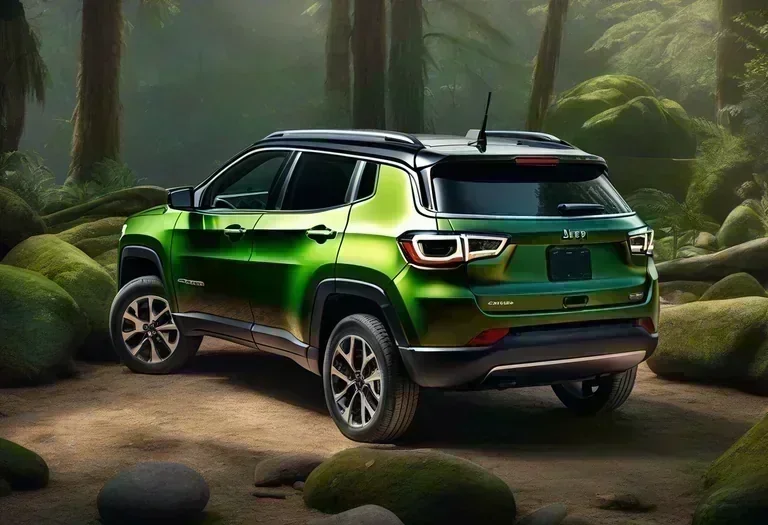
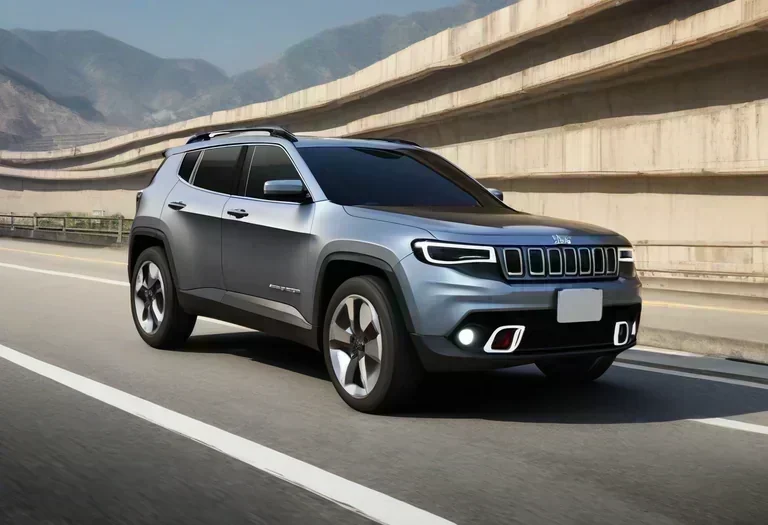
The companies have not yet revealed the names, dimensions, prices or detailed specifications of the two Jeep models. They have, however, confirmed that the Jeep vehicles will be new-energy products and that they are intended for global markets.
The official Stellantis announcement on the Dongfeng partnership confirms the planned Wuhan production and 2027 start date. Stellantis’ earlier announcement ending local Jeep production with GAC provides the background for why the new agreement represents a return to Chinese manufacturing.
Why Is Jeep Partnering With Dongfeng?
The partnership gives Stellantis access to Dongfeng’s established manufacturing infrastructure and expertise in China’s rapidly developing electric-vehicle market. Dongfeng has specifically said it will contribute intelligent electric-vehicle technologies to the renewed cooperation, while Stellantis can contribute its global brands and international automotive expertise.
This arrangement also allows Stellantis to pursue a more asset-light strategy than building an entirely new manufacturing operation for Jeep in China. The DPCA joint venture already has an established presence in Wuhan, giving the companies an existing industrial base from which to develop and manufacture the new vehicles.
The financial structure illustrates the approach. Stellantis says the broader project represents a combined investment of more than 8 billion Chinese yuan, equivalent to approximately €1 billion. Stellantis is expected to contribute about €130 million, with much of the investment supported through the existing Chinese joint-venture structure.
Stellantis later described the Dongfeng relationship as one of several partnerships intended to improve manufacturing efficiency, expand access to competitive technologies and support international growth. At its 2026 investor presentation, the company said the two Jeep and two Peugeot models developed with Dongfeng would be sold around the world.
That global focus is particularly important for Jeep. The company is not simply returning to China to rebuild its previous domestic manufacturing business. The new strategy is designed around using China’s manufacturing and electric-vehicle capabilities to create products that can be sold in multiple international markets.
What Happened to Jeep’s Previous Chinese Production?
Jeep’s previous manufacturing operation in China was tied to the GAC-Stellantis joint venture. The partnership produced several Jeep models for the Chinese market, including the Cherokee, Renegade, Compass and Grand Commander.
By 2022, however, Stellantis had decided that the existing structure was no longer working effectively. In January of that year, Stellantis announced plans to increase its ownership in the GAC-Stellantis joint venture from 50 percent to 75 percent. The plan did not progress, and in July 2022 the company announced that it would pursue an orderly termination of the local Jeep manufacturing operation.
Stellantis instead adopted what it called an asset-light approach, concentrating on imported Jeep vehicles and Chinese dealers. The company said the decision was intended to allow Jeep to continue serving Chinese customers without maintaining the previous local manufacturing structure.
The GAC-FCA joint venture later received shareholder approval to file for bankruptcy in October 2022. Stellantis said the operation had been loss-making and that it had fully impaired its investment in the joint venture and related assets in its first-half 2022 financial results.
The new Dongfeng agreement therefore does not simply restart the old Jeep factory program. It represents a different manufacturing strategy, using DPCA in Wuhan and combining Stellantis’ global product ambitions with Dongfeng’s Chinese technology and industrial capabilities.
What Will Jeep Build in China?
Stellantis has confirmed that DPCA is expected to produce two new Jeep-branded off-road new-energy vehicles in Wuhan beginning in 2027. The company has not yet disclosed whether the vehicles will be SUVs, crossovers or other off-road-oriented body styles, and it has not announced their names.
What is known is that both vehicles are being developed as new-energy models. Stellantis’ investor materials describe the Jeep and Peugeot program as covering both battery-electric and plug-in-hybrid vehicles, although the company has not publicly assigned a specific powertrain type to each individual Jeep model.
This distinction is important because the original claim that the partnership will develop specific plug-in-hybrid and battery-electric Jeep versions is more precise than the information Stellantis has officially released. The company has confirmed two Jeep new-energy models, but final powertrain details for each model have not yet been announced.
The vehicles are also being developed for markets beyond China. Stellantis has explicitly stated that the two Jeep models will be produced in Wuhan for global markets, making international exports a central part of the program rather than a secondary possibility.
That could allow Jeep to use China’s highly competitive electric-vehicle supply chain to reduce development and manufacturing costs. It also gives the brand an opportunity to introduce electrified products into markets where it may not be economical to manufacture them locally.
How Important Is Dongfeng’s EV Technology?
Dongfeng’s role is particularly significant because the Chinese automotive industry has developed extensive expertise in electric powertrains, battery technology, vehicle software and connected-car systems. Stellantis is seeking to use that ecosystem while maintaining control of its own brands and global distribution strategy.
The companies have described the partnership as a combination of complementary strengths. Dongfeng brings local industrial capabilities and intelligent electric-vehicle technology, while Stellantis brings global brands, international market access and automotive engineering expertise.
For Jeep, this could accelerate the development of new electric and plug-in-hybrid vehicles without requiring the brand to create every component and manufacturing process independently.
The approach also fits into Stellantis’ broader strategy of working with external technology and manufacturing partners. The company’s 2026 strategic plan highlights partnerships as a way to improve cost competitiveness, increase manufacturing capacity utilization and broaden technology options.
For consumers, the practical result could be a new generation of Jeep vehicles that combines the brand’s traditional focus on SUVs and off-road capability with powertrain and software technologies developed for the modern Chinese market.
What Is the Current State of Jeep in China?
Jeep’s Chinese business has changed dramatically since its locally produced lineup was discontinued. Stellantis moved toward imported vehicles after deciding to terminate the GAC-Stellantis manufacturing operation in 2022.
The earlier strategy reflected the difficulties Jeep faced in the Chinese market as competition intensified and consumer preferences shifted toward newer domestic brands and electrified vehicles. Stellantis acknowledged at the time that the termination of local production could adversely affect the development of the Jeep brand in China.
The new Dongfeng partnership gives Jeep a chance to address some of those challenges with a fundamentally different product strategy. Instead of relying primarily on imported versions of established Jeep models, the company will develop new-energy vehicles with production located inside China.
The decision also gives Jeep a potentially stronger position within China’s increasingly competitive EV ecosystem. Local production can help manufacturers access regional suppliers, reduce logistics costs and adapt vehicles more quickly to local technological standards.
However, Jeep’s ultimate success will depend on the competitiveness of the finished products. China is one of the world’s most crowded automotive markets, particularly in electric SUVs and crossovers. A Jeep badge alone will not guarantee success against established Chinese EV manufacturers.
What’s Next for Jeep in China?
The next major milestone is expected to be the development and launch of the two new Jeep models at the DPCA plant in Wuhan. Stellantis currently targets production beginning in 2027, although the company has emphasized that the plan remains subject to necessary approvals and final implementation agreements.
Much of the important information is still unknown. Jeep has not announced the vehicles’ names, pricing, battery capacities, electric ranges, charging capabilities or performance specifications. It has also not identified the first export markets for the Chinese-built Jeeps.
Stellantis has nevertheless made clear that international exports are part of the plan. This means the program could have implications well beyond the Chinese market, particularly if the new models offer competitive pricing and specifications.
Europe and other Asian markets could eventually become potential destinations, but those markets should not be presented as confirmed launch locations until Stellantis announces them. The company has only confirmed that the vehicles are intended for global markets.
The partnership also gives Jeep an opportunity to rebuild its presence in China around electrification rather than attempting to revive the previous locally produced gasoline-focused lineup. That could be a more suitable strategy for a market where battery-electric and plug-in-hybrid vehicles have become increasingly important.
For Stellantis, the project is about more than simply bringing Jeep production back to China. The company is attempting to combine Dongfeng’s Chinese manufacturing and EV expertise with Stellantis’ global brands and distribution network. If the program delivers competitive vehicles, Wuhan could become an important production base for Jeep’s next generation of electrified SUVs.
Frequently Asked Questions
Q: Is Jeep returning to manufacturing cars in China?
A: Yes. Stellantis and Dongfeng have announced plans for the DPCA joint venture to produce two new Jeep-branded off-road new-energy vehicles at its Wuhan plant starting in 2027, subject to required approvals and final implementation agreements. This follows Stellantis’ decision to end local Jeep production through its previous GAC joint venture in 2022.
Q: How much is Stellantis and Dongfeng’s China project worth?
A: Stellantis says the broader project involves more than 8 billion Chinese yuan, approximately €1 billion, in combined investment. Stellantis is expected to contribute approximately €130 million. The commonly reported $1.2 billion figure does not match the amount stated in Stellantis’ official announcement, so it should not be used as the confirmed investment figure.
Q: What Jeep models will be built in China?
A: Stellantis has confirmed that two new Jeep-branded off-road new-energy vehicles will be produced in Wuhan. The company has not yet announced their names, detailed specifications or final body styles.
Q: Will the Chinese-built Jeep models be exported?
A: Yes. Stellantis has explicitly said the two new Jeep models produced at the DPCA Wuhan plant are intended for global markets. However, the company has not yet identified the specific countries or regions that will receive them.
Q: When will Jeep start producing the new vehicles in China?
A: Production is expected to begin in 2027, according to Stellantis’ May 2026 strategic cooperation announcement. The plan remains subject to the required approvals and completion of the relevant implementation agreements.
Q: Why did Jeep stop producing vehicles in China?
A: Stellantis announced in July 2022 that it would pursue an orderly termination of its GAC-Stellantis joint venture and shift Jeep toward an asset-light strategy based on imported vehicles. The decision followed a lack of progress on a proposed increase in Stellantis’ ownership of the joint venture, which had been loss-making.
Q: What role will Dongfeng play in the new Jeep partnership?
A: Dongfeng will contribute its Chinese manufacturing capabilities and intelligent electric-vehicle technologies through the strengthened DPCA partnership. Stellantis will contribute its global brands, engineering expertise and international market reach.
Q: Are the new Chinese-built Jeeps confirmed to be fully electric?
A: Not specifically. Stellantis has confirmed that the two Jeep vehicles will be new-energy vehicles, while its investor materials describe the broader Jeep and Peugeot program as involving battery-electric and plug-in-hybrid vehicles. The company has not yet confirmed which powertrain each Jeep model will use.