Honda Won't Rule Out A US Return Of The Fit
Honda considers bringing back the Fit to the US market, citing customer interest and demand for affordable vehicles.
Key Takeaways
- Honda has not confirmed a U.S. return for the Fit, but American Honda sales executive Lance Woelfer says the company is considering additional affordable products and has not ruled the hatchback out.
- The Honda Fit ended U.S. sales after the 2020 model year following years of declining demand for small hatchbacks.
- Honda replaced the Fit’s role in its U.S. lineup largely with the HR-V and Civic, with the HR-V becoming the brand’s primary small crossover alternative.
- The current-generation Fit continues in Japan and received a minor model update in July 2026, but Honda has not announced plans to bring that version to North America.
- Honda says its U.S. Civic and HR-V models are already facing strong demand, which could make production capacity a more immediate priority than adding another small vehicle.
- A future U.S.-market Fit would face a very different small-car market from the one that existed when Honda discontinued the model, with American buyers increasingly favoring crossovers and SUVs.
Why Did Honda Discontinue the Fit in the US?
The Honda Fit was discontinued in the United States after the 2020 model year, ending a run that began with the 2007 model year. Honda’s decision came as demand for small passenger cars declined and buyers increasingly moved toward crossovers such as the HR-V.
The decline was substantial. Honda sold 35,414 Fits in the United States in 2019, while the HR-V recorded 99,104 sales that same year. By the first half of 2020, Fit sales had fallen further, with 13,887 units sold through June, down 19 percent from the comparable period.
Honda subsequently decided not to bring the fourth-generation Fit, which had debuted internationally at the 2019 Tokyo Motor Show, to the American market. Instead, the company increased HR-V production to help fill the space left by the Fit.
The decision was consistent with a broader change in the U.S. automotive market. Subcompact hatchbacks had become increasingly difficult to sell in meaningful volumes, while small crossovers offered buyers a higher seating position, greater perceived versatility and a body style that was becoming much more popular.
Honda’s own 2020 U.S. Fit documentation confirms that the 2020 model was still offered with a 1.5-liter four-cylinder engine and either a six-speed manual transmission or CVT, making it the final U.S.-market Fit.
The end of the Fit was therefore not caused by a single product problem. The car remained highly practical and efficient, but its segment was shrinking. Honda ultimately decided that the HR-V and Civic were better positioned to attract the customers it wanted in the entry-level portion of its American lineup.
Will the Honda Fit Return to the US Market?
Honda has opened the door to a possible Fit return, but there is no confirmed U.S. model or launch date. The latest comments came from Lance Woelfer, an American Honda sales executive, during a media roundtable in August 2026.
When asked about the possibility of bringing the Fit back, Woelfer indicated that it was something Honda could consider. He also pointed to broader customer interest in additional products from American Honda, particularly as affordability becomes a more important consideration for buyers.
That is meaningful, but it should not be interpreted as confirmation that the Honda Fit is coming back. Honda has not announced a North American version of the current Fit, nor has it announced a production program for a new U.S.-market subcompact hatchback.
Woelfer’s comments instead indicate that Honda recognizes there is still demand for affordable vehicles and is evaluating its product strategy accordingly. The distinction is important because the company already has products occupying much of the space the Fit once filled.
The official Honda Japan Fit page shows that the nameplate remains an active product outside the United States. Honda updated the Japanese Fit in July 2026, with the lineup continuing to include versions such as the e:HEV RS, e:HEV CROSSTAR and e:HEV HOME. However, the existence of the global model does not mean Honda has decided to certify or manufacture it for the United States.
What Did Honda’s Executive Actually Say About the Fit?
Woelfer’s comments are more cautious than the idea that Honda is actively preparing a Fit comeback. He acknowledged that there is an opportunity to consider additional products, while emphasizing that the Civic and HR-V already give Honda strong entry-level offerings.
He also noted that Honda’s existing products are in demand and that the company could increase production capacity. That is an important part of the equation because Honda does not necessarily need another small model if it cannot produce enough of the vehicles already selling well.
The comments suggest that Honda’s immediate focus is on satisfying demand for existing products rather than rushing to revive a discontinued nameplate. If the company determines that there is a sufficiently large market for a smaller, less expensive vehicle, however, the Fit could potentially become part of that discussion.
There is also a strategic question surrounding the name itself. The current global Fit is already several years removed from the fourth-generation model introduced in 2019, and the Japanese version has evolved with hybrid technology and additional updates. Bringing it to the U.S. would therefore require more than simply shipping the Japanese car to American dealers.
Honda would need to address U.S. certification requirements, safety equipment, emissions regulations, pricing, production sourcing and dealer economics. Those considerations could make a direct return of the current Fit more complicated than the recent comments might suggest.
How Does the HR-V Compare to the Fit?
The HR-V has effectively become Honda’s answer to the customers who might once have considered a Fit. It is larger, taller and built around the crossover format that has become dominant among American consumers.
When Honda discontinued the Fit, it explicitly pointed to the HR-V and Civic as the new gateway products for the brand. The company also planned to increase HR-V production to compensate for the Fit’s departure.
The HR-V does not duplicate everything that made the Fit attractive. The Fit’s greatest strengths were its compact exterior dimensions, highly configurable interior and efficient use of space. Its second-row Magic Seat system allowed the small hatchback to carry surprisingly large or awkward objects.
The HR-V provides more crossover-style packaging and a larger footprint, which makes it easier to market to today’s American buyers. It also benefits from the continuing popularity of SUVs and crossovers, a trend that has made small hatchbacks increasingly difficult to justify in the U.S.
Woelfer essentially made this point when discussing the possibility of a Fit return. In his view, the HR-V fulfills the needs of most customers who might previously have purchased a Fit, even though he acknowledged that the Fit was a strong product for its time.
That does not mean the two vehicles are interchangeable. A future Fit could appeal to customers who prioritize low purchase prices, small exterior dimensions, fuel economy and easy urban maneuverability. Those characteristics are difficult to replicate with a crossover without increasing size, weight and cost.
What Is the Current Honda Fit Like in Japan?
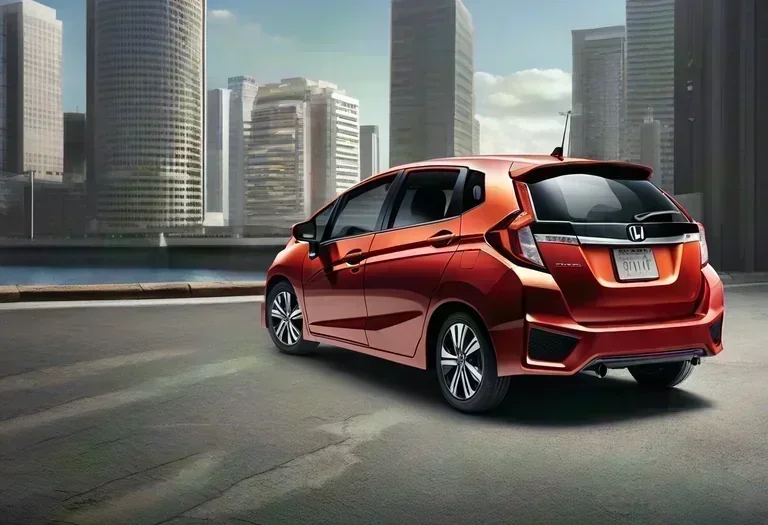
The Honda Fit continues to be sold in Japan, where it is offered in several configurations including gasoline and e:HEV hybrid versions. Honda gave the model another minor update in July 2026, demonstrating that the nameplate remains part of its Japanese-market strategy.
The latest Japanese Fit lineup includes models such as the e:HEV HOME, e:HEV RS, CROSSTAR and LUXE. Honda’s official Japanese specifications list the current lineup from ¥1,806,200 to ¥2,955,700, depending on version and equipment.
That means the frequently repeated claim that the current Japanese Fit has an approximately $11,000 starting price should not be treated as an accurate current MSRP. Currency conversions can vary, but the official Japanese price is the more useful figure when describing the vehicle’s actual market positioning.
The current Fit also reflects how the model has evolved since the last U.S.-market generation. Honda offers e:HEV hybrid versions using its two-motor hybrid system, and the current car has been updated with newer styling, technology and safety equipment.
Honda’s official Japanese information describes the e:HEV system as using multiple operating modes, allowing the vehicle to rely primarily on electric-motor propulsion in many everyday situations while using the gasoline engine for generation or direct drive under appropriate conditions.
If Honda ever brings the Fit back to America, an electrified version would therefore be a more logical candidate than simply reviving the old U.S.-spec gasoline model. However, Honda has not confirmed that this will happen.
Why Could a Fit Return Make Sense for Honda?
The strongest argument for a Fit comeback is the growing importance of vehicle affordability. New-car prices in the United States have risen significantly compared with the era when the Fit was sold for well under $20,000, leaving fewer choices for buyers looking for a genuinely small and inexpensive new car.
A compact hatchback could give Honda a way to reach buyers who find the Civic or HR-V too expensive or simply do not want a crossover. The Fit’s small footprint could also make it attractive in dense urban markets where maneuverability and parking are more important than cargo volume or ground clearance.
Honda could potentially use hybrid technology to give a future Fit strong fuel economy while retaining the model’s practical packaging. That would make the vehicle more relevant to current buyers than a simple reintroduction of the previous-generation Fit.
There is also brand value in having a small, affordable entry point. The Fit historically introduced buyers to Honda through a vehicle that emphasized efficiency, reliability and clever interior packaging. A modern replacement could play a similar role if Honda can produce it at a competitive price.
What Could Prevent a Honda Fit Return?
The biggest obstacle is likely economics. The U.S. market has moved sharply toward crossovers, while the number of buyers seeking traditional subcompact hatchbacks has declined. Honda would need enough sales volume to justify the cost of bringing a small hatchback to the United States.
Production capacity is another issue. Woelfer’s comments indicate that Honda already sees strong demand for the Civic and HR-V and could increase capacity for those vehicles. Allocating manufacturing resources to a new Fit could therefore mean giving up capacity for products that are already selling successfully.
There is also the question of pricing. A modern Fit would need to be inexpensive enough to fill the affordability gap, but adding advanced safety technology, hybrid hardware and U.S.-specific certification could make that difficult.
The current Japanese Fit also cannot simply be assumed to become the next U.S. Fit. Honda would have to determine whether the business case works for the American market, and there has been no announcement indicating that the Japanese model is being prepared for U.S. sale.
For those reasons, the most accurate description of the Fit’s status is that Honda has left the door open, not that the car is returning.
What’s Next for Honda?
Honda’s immediate priority appears to be expanding its ability to supply vehicles that already have strong demand in the United States. The Civic and HR-V are filling much of the role previously occupied by the Fit, and Honda has indicated that additional production capacity could be useful.
At the same time, the company’s acknowledgment of customer interest in additional affordable products shows that the entry-level market has not been ignored. If Honda sees enough demand for a smaller vehicle, a Fit successor could become a possibility.
For now, however, there is no confirmed Honda Fit return to the United States. The current global Fit remains an active model in Japan, where Honda continues to update it, but American buyers should not assume that the Japanese-market car is headed for U.S. dealerships.
The more likely near-term scenario is that Honda continues to rely on the Civic and HR-V while monitoring demand for less expensive vehicles. A future Fit or Fit successor would need to offer a compelling combination of price, efficiency, practicality and technology to justify its place in the American lineup.
That leaves the Honda Fit in an unusual position. It is neither officially returning nor completely ruled out. Honda executives have acknowledged the opportunity, but the company has not committed to a U.S. launch. Until Honda announces a North American product, production plan or launch timing, the Fit’s American comeback remains a possibility rather than a confirmed model.
Frequently Asked Questions
Q: Is the Honda Fit coming back to the United States?
A: Honda has not confirmed a U.S. return for the Fit. American Honda sales executive Lance Woelfer said the company can consider additional products and acknowledged customer interest in more affordable vehicles, but there is currently no announced U.S.-market Fit, launch date or production plan.
Q: Why was the Honda Fit discontinued in the U.S.?
A: Honda ended Fit sales after the 2020 model year primarily because sales of small passenger cars had declined. The company shifted its entry-level focus toward the HR-V and Civic, while increasing HR-V production to help replace the Fit.
Q: Is the Honda Fit still sold in other countries?
A: Yes. The Fit remains an active model in Japan and is also known as the Jazz in several international markets. Honda updated the Japanese Fit in July 2026 and continues to offer gasoline and e:HEV hybrid versions.
Q: How much does the current Honda Fit cost in Japan?
A: Honda’s official Japanese website currently lists the Fit from ¥1,806,200, with higher trims and versions reaching ¥2,955,700. The exact price depends on the model and equipment. The previously cited $11,000 starting price should not be treated as the current official Japanese MSRP.
Q: Could the current Japanese Honda Fit come to the U.S.?
A: It is possible in theory, but Honda has not announced that the current Japanese Fit will be sold in the United States. A U.S. launch would require additional certification, regulatory work, pricing decisions and a viable production and distribution strategy.
Q: What replaced the Honda Fit in the U.S.?
A: The Honda HR-V became the primary crossover alternative to the Fit, while the Civic also served as an entry point into Honda’s passenger-car lineup. Honda increased HR-V production after deciding to discontinue the Fit.
Q: Why might Honda bring back the Fit?
A: Affordability is the main potential reason. Honda executives have acknowledged customer interest in additional products, while the U.S. market has fewer inexpensive new-car choices than it did when the Fit was last sold. A small, efficient hatchback could address some of that demand, although Honda has not committed to producing one for America.