Renault Kwid Facelift Debuts in Brazil with Modern Design and Huge Price Gap with India
Renault has updated the Kwid urban hatchback in Brazil with a new front end, larger screens, and a more modern design, but the price starts at $16,000, more than triple its price in India.
Key Takeaways
- Renault has introduced a comprehensive facelift for the Kwid in South America, with Brazil receiving the updated hatchback.
- The facelift brings a redesigned front end, revised lighting details, larger displays and updated interior trim.
- The Brazilian-market Renault Kwid starts at around $16,000, making it substantially more expensive than the model sold in India.
- The Kwid continues to use the CMF-A platform that originally debuted in 2015.
- Brazilian versions retain a naturally aspirated 1.0-liter three-cylinder flex-fuel engine and a five-speed manual transmission.
- The engine produces 68 hp (51 kW / 69 PS) on gasoline and 71 hp (53 kW / 72 PS) on ethanol.
- The top-spec Outsider adds SUV-inspired exterior details, roof rails and two-tone 14-inch alloy wheels.
- The significant price difference between Brazilian and Indian Kwid models reflects differences in manufacturing, taxation, specifications, currencies and local market conditions.
What’s New in the Renault Kwid Facelift?
The Renault Kwid facelift brings a substantial visual and equipment update to one of Renault’s smallest global-market models. Developed with South American buyers in mind, the refreshed city hatchback adopts a more contemporary appearance while retaining the basic mechanical package that has underpinned the Kwid since its introduction.
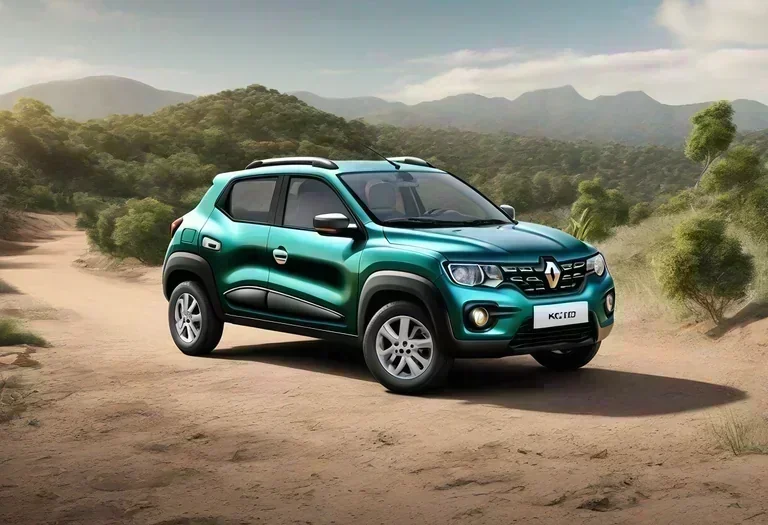
The most obvious changes are concentrated at the front. Renault has redesigned the front bumper and incorporated a slimmer grille treatment, giving the Kwid a more modern appearance that is closer to the company’s latest design language. A revised skid plate also reinforces the crossover-inspired styling that has always been part of the Kwid’s identity.
The facelift is evolutionary rather than revolutionary. The basic silhouette remains familiar, and the doors, roofline and overall proportions have not been dramatically altered. At the rear, the changes are similarly restrained, with updated taillight graphics providing one of the main visual differences.
Renault has also used trim levels to create greater visual separation within the range. The flagship Kwid Outsider receives additional body-side cladding, roof rails and two-tone 14-inch alloy wheels, giving it a more rugged appearance than the entry-level versions.
The result is a Kwid that looks considerably fresher without requiring Renault to redesign the entire vehicle.
How Does the Updated Kwid Look Different?
The facelift gives the Renault Kwid a more sophisticated front-end appearance. The redesigned bumper and grille are the most noticeable changes, while the new skid plate contributes to the model’s crossover-inspired styling.
That approach is consistent with the Kwid’s long-standing positioning. Although it is fundamentally a small urban hatchback, Renault has traditionally used increased visual ground clearance, protective-looking cladding and SUV-inspired details to differentiate it from conventional city cars.
The updated Outsider trim takes that strategy further. Roof rails and additional side cladding make the top version look more adventurous, while the two-tone 14-inch alloy wheels provide a more premium appearance.
At the rear, the changes are less extensive. The overall shape remains essentially the same, but revised taillight graphics help distinguish the facelift from the previous model.
For Renault, this is a relatively efficient way of extending the Kwid’s life cycle. Instead of developing a completely new body, the company has concentrated its investment on the areas customers notice most.
What Has Changed Inside the Renault Kwid?
The cabin receives more meaningful technology upgrades than the exterior.
Higher-spec versions of the Brazilian-market Kwid now feature a 10.1-inch touchscreen infotainment display paired with a 7-inch digital instrument cluster. Those screens give the small hatchback a significantly more modern dashboard experience than its relatively basic predecessor.
The dashboard itself has also been revised, including redesigned climate-control vents and a new steering wheel carrying Renault’s current diamond emblem.
Equipment varies considerably depending on the trim level. The entry-level Kwid Evolution does not receive the same touchscreen treatment. Instead, the dashboard uses a plastic cover in the area where the larger infotainment display is fitted on higher trims.
The mid-range Techno and range-topping Outsider receive additional color accents, helping create a stronger distinction between the different versions.
These changes are particularly relevant in the budget-car segment. Buyers in this class increasingly expect large smartphone-style displays, digital instrumentation and modern connectivity even when purchasing an inexpensive city car.
By increasing the screen sizes without fundamentally redesigning the cabin, Renault can make the Kwid feel considerably newer without the expense of developing an entirely new interior architecture.
What Engine Does the Renault Kwid Use?
Despite the extensive visual and interior updates, the Brazilian-spec Renault Kwid retains its existing powertrain.
The hatchback continues with a naturally aspirated 1.0-liter three-cylinder engine featuring flex-fuel capability. In Brazil, the engine can run on either gasoline or ethanol, with output varying depending on the fuel used.
On gasoline, the engine produces 68 hp (51 kW / 69 PS). Ethanol increases output slightly to 71 hp (53 kW / 72 PS).
Power is sent exclusively to the front wheels through a five-speed manual transmission.
That configuration reflects the Kwid’s fundamental mission. It is designed primarily as an affordable urban vehicle, where low running costs, compact dimensions and mechanical simplicity are more important than outright performance.
The absence of a turbocharger also keeps the powertrain relatively straightforward. However, compared with newer small-car engines and increasingly electrified competitors, the Kwid’s naturally aspirated three-cylinder configuration is beginning to show its age.
How Old Is the Renault Kwid Platform?
The Renault Kwid continues to use the CMF-A platform, which dates back to the model’s original introduction in 2015.
The platform was developed specifically for affordable small vehicles and has been used across Renault and associated-market products. Its compact dimensions and relatively low manufacturing cost made it well suited to the Kwid’s original mission of providing inexpensive personal transportation.
More than a decade after the platform’s debut, however, automotive technology has moved forward considerably.
Modern small cars increasingly offer turbocharged engines, automated transmissions, hybrid systems, advanced driver-assistance features and larger infotainment systems. The facelift helps the Kwid compete on appearance and technology, but the underlying architecture remains from an earlier generation of vehicle development.
That does not automatically make the CMF-A platform unsuitable. A mature platform can be cost-effective and reliable when properly maintained. For an entry-level vehicle, controlling manufacturing costs can be just as important as having the newest architecture.
The trade-off is that Renault has to extract additional life from a platform originally designed around a much more basic market proposition.
Why Is the Brazilian Renault Kwid So Expensive?
One of the most striking aspects of the updated Kwid is its price difference between major global markets.
The Brazilian-market model starts at approximately $16,000, while the equivalent Indian-market Kwid starts at roughly $4,700 based on the figures associated with the two markets.
That means the Brazilian Kwid costs more than three times as much when the prices are converted into U.S. dollars.
The difference should not be interpreted as Renault simply charging three times as much for the same vehicle.
Automobile prices vary significantly between countries because of taxation, labor costs, manufacturing arrangements, import content, safety regulations, emissions requirements, equipment levels, currency exchange rates, dealer costs and local competition.
The Indian Kwid is manufactured locally at Renault’s Chennai production facility, giving the company access to a large domestic manufacturing base and a cost structure designed around India’s highly price-sensitive small-car market.
Brazil has a very different automotive industry and tax environment. Local production, regulatory requirements, component costs and the structure of the Brazilian vehicle market all influence the final price paid by consumers.
Consequently, comparing the converted sticker prices of the Indian and Brazilian Kwid provides useful context, but it does not represent a direct comparison of Renault’s profit margin in the two countries.
Is the Brazilian Kwid the Same as the Indian Kwid?
The Brazilian and Indian Kwid models share the same fundamental nameplate and basic design philosophy, but they are not necessarily identical vehicles in every specification.
Renault has adapted the Kwid for different regional requirements over its life cycle. Local regulations, customer preferences, equipment expectations and powertrain requirements can all result in differences between markets.
The Brazilian model’s flex-fuel engine is a particularly important example. Brazil has a large ethanol-fuel market, so flex-fuel capability is highly relevant to vehicles sold there.
India’s Kwid follows a different powertrain and market strategy, reflecting the requirements of the Indian automotive market.
This means the two vehicles should be viewed as regional versions of the same global small-car concept rather than completely identical products sold with different prices.
What Is the Renault Kwid Outsider?
The Renault Kwid Outsider is the range-topping version of the Brazilian-market hatchback and uses additional styling features to emphasize the car’s crossover-inspired personality.
Its equipment includes roof rails, extra body-side cladding and two-tone 14-inch alloy wheels.
The Outsider is not a serious off-road model. The rugged styling is primarily visual, and the Kwid remains a small front-wheel-drive urban hatchback. Nevertheless, the treatment helps distinguish the highest trim from the more basic versions.
This type of styling has become increasingly common among small hatchbacks and crossovers. Consumers often prefer vehicles that look more rugged, even when their primary use is commuting in cities.
For Renault, the Outsider trim provides a relatively inexpensive way to give the Kwid a more aspirational appearance without changing its underlying mechanical configuration.
Does the Renault Kwid Have an Automatic Transmission?
The Brazilian-spec facelift described here uses a five-speed manual transmission as its sole reported transmission.
The engine sends its power to the front wheels, maintaining the Kwid’s straightforward front-wheel-drive layout.
The lack of an automatic option could limit the model’s appeal to some urban buyers, particularly as automatic transmissions become increasingly common even in smaller vehicles. However, a manual gearbox remains an effective way to keep costs under control in an entry-level hatchback.
Whether Renault eventually expands the Brazilian Kwid’s transmission range would depend on demand, costs and the company’s product strategy.
What Does the Kwid Facelift Mean for Renault?
The facelift is important because the Kwid occupies a specific role in Renault’s global strategy. It is not intended to compete with premium hatchbacks or high-performance cars. Instead, it serves buyers looking for affordable, compact transportation with modern styling and basic technology.
Refreshing the Kwid allows Renault to extend the model’s relevance without the enormous investment associated with an all-new vehicle.
The updated design also gives Renault an opportunity to bring the Kwid’s appearance closer to its newer models. That can make a substantial difference in showrooms, where exterior design and infotainment displays strongly influence customers’ first impressions.
At the same time, retaining the existing platform and engine keeps development and production costs under control.
The strategy therefore reflects a familiar automotive formula: update the parts customers can see and interact with while retaining proven mechanical components underneath.
How Competitive Is the Updated Renault Kwid?
The Kwid continues to have several advantages in its target segment. Its compact dimensions make it well suited to congested cities, while the small engine should keep fuel consumption and running costs relatively manageable.
The updated infotainment system and digital instrument cluster also help the car appear more modern than its age might suggest.
However, the aging CMF-A platform and naturally aspirated engine could become increasingly difficult to hide as competitors adopt newer technology.
Buyers are also becoming more demanding about safety, connectivity and convenience equipment. The most important question for Renault will therefore be whether the facelift gives the Kwid enough perceived value to remain competitive without pushing its price beyond what budget-car customers are willing to pay.
Will the Renault Kwid Get a New Platform?
There is no confirmed information indicating that the current facelift introduces a new platform. The Brazilian-market Kwid continues to be based on the CMF-A architecture.
That means a genuinely new-generation Kwid would require a much more significant engineering program than the current facelift.
A new platform could potentially improve structural performance, packaging, efficiency, electrification capability and technology integration. However, developing an entirely new architecture for an inexpensive city car would also require substantial investment.
For now, Renault appears to have chosen a lower-cost strategy by updating the existing vehicle instead.
Renault Kwid Global Market Strategy
The Kwid has historically been an important example of Renault’s strategy for emerging markets. The vehicle was designed around affordability and adapted for different regions rather than being developed exclusively for the most mature automotive markets.
That global approach helps explain why the Kwid can appear radically different in value proposition depending on where it is sold.
In India, affordability is central to the vehicle’s identity. In Brazil, the Kwid competes in a different economic and regulatory environment and therefore carries a much higher nominal price.
Nevertheless, the underlying idea remains similar: a small, stylish hatchback with SUV-inspired visual cues, low operating costs and enough technology to appeal to modern urban buyers.
Renault Kwid Facelift Specifications
| Specification | Brazilian-Market Value |
|---|---|
| Model | Renault Kwid facelift |
| Vehicle Type | City hatchback |
| Platform | CMF-A |
| Engine | 1.0-liter naturally aspirated three-cylinder |
| Fuel Type | Flex-fuel gasoline/ethanol |
| Power on Gasoline | 68 hp (51 kW / 69 PS) |
| Power on Ethanol | 71 hp (53 kW / 72 PS) |
| Transmission | Five-speed manual |
| Drive Type | Front-wheel drive |
| Infotainment Display | 10.1-inch touchscreen on higher trims |
| Digital Instrument Cluster | 7-inch display on higher trims |
| Top Trim | Outsider |
| Top-Trim Wheels | 14-inch two-tone alloy wheels |
| Brazil Starting Price | Approximately $16,000 |
| Indian Starting Price | Approximately $4,700 |
Conclusion
The Renault Kwid facelift gives the small hatchback a significantly more modern appearance and a more technology-focused cabin without fundamentally changing the vehicle underneath.
The redesigned front end, updated rear lighting, larger touchscreen, digital instrument cluster and improved trim details help extend the Kwid’s appeal in a competitive global small-car market. The range-topping Outsider adds further visual differentiation through roof rails, body cladding and two-tone alloy wheels.
Underneath, however, the formula remains familiar. The Brazilian-market Kwid continues with the CMF-A platform, a naturally aspirated 1.0-liter three-cylinder flex-fuel engine and a five-speed manual transmission.
The enormous price difference between the Brazilian and Indian versions is also worth highlighting, but it should not be interpreted as a simple apples-to-apples comparison. Local manufacturing, taxation, regulations, specifications, currency values and market conditions all contribute to the different prices.
Ultimately, the facelift appears designed to buy the Kwid more time. Renault has modernized the parts of the car that customers see and interact with while retaining a proven platform and powertrain underneath. Whether that will be enough to keep the Kwid competitive against newer small cars will depend on how quickly the entry-level market continues to evolve.
Frequently Asked Questions
Q: What’s new in the Renault Kwid facelift?
The Renault Kwid facelift receives a redesigned front end, revised rear lighting graphics, larger displays and an updated dashboard. Higher trims feature a 10.1-inch touchscreen and 7-inch digital instrument cluster.
Q: Where is the facelifted Renault Kwid sold?
The facelift discussed here is for the South American market, with Brazil being the key market for the updated version. Specifications and equipment can differ between global markets.
Q: How much does the Renault Kwid cost in Brazil?
The Brazilian-spec Renault Kwid starts at approximately $16,000 when converted to U.S. dollars, although the actual local-market price is determined in Brazilian reais and can vary with exchange rates.
Q: Why is the Renault Kwid much more expensive in Brazil than in India?
The price difference reflects different manufacturing costs, taxation, regulations, equipment levels, currencies and market conditions. The Indian Kwid is locally manufactured in Chennai for a highly price-sensitive market, while Brazil has a different automotive cost structure.
Q: What engine does the Brazilian Renault Kwid use?
The Brazilian-market Kwid uses a naturally aspirated 1.0-liter three-cylinder flex-fuel engine. It produces 68 hp (51 kW / 69 PS) on gasoline and 71 hp (53 kW / 72 PS) on ethanol.
Q: Is the Renault Kwid turbocharged?
No. The Brazilian-spec model described here uses a naturally aspirated 1.0-liter three-cylinder engine rather than a turbocharged powertrain.
Q: Does the Renault Kwid have an automatic transmission?
The Brazilian facelift uses a five-speed manual transmission and front-wheel drive in the specification described here.
Q: What is the Renault Kwid Outsider?
The Kwid Outsider is the range-topping trim in Brazil. It adds SUV-inspired styling features including roof rails, additional body-side cladding and two-tone 14-inch alloy wheels.
Q: What platform does the Renault Kwid use?
The Renault Kwid continues to use the CMF-A platform, an architecture that dates back to the model’s original introduction in 2015.
Q: Is the facelifted Renault Kwid a new generation?
No. The facelift updates the existing Kwid rather than introducing an entirely new generation. The underlying CMF-A platform and core powertrain remain in use.
Q: Is the Renault Kwid available globally?
The Kwid is primarily associated with emerging and developing automotive markets, and its specifications vary by region. It is not a single globally identical vehicle, with local versions adapted for different regulations, fuels and customer requirements.