Unifor Approves GM Deal, Will Build Next-Gen Trucks In Canada
Unifor members approve new contract with General Motors, securing investments and jobs in Canada
Key Takeaways
- Unifor members have approved a new collective agreement with General Motors covering the automaker’s Canadian operations.
- GM will invest $144 million CAD ($104 million USD) at Oshawa Assembly to build the next-generation GMC Sierra HD alongside the Chevrolet Silverado HD.
- St. Catharines Propulsion will receive a further $215 million CAD ($155 million USD) investment to build a next-generation transmission beginning in 2029.
- The agreement provides GM’s Canadian blue-collar workers with 3% annual wage increases for the next three years.
- Full-rate production employees are expected to reach $50.20 CAD ($36.22 USD) per hour, while skilled trades workers will reach $62.71 CAD ($45.25 USD) per hour.
- Eligible workers will receive a $10,000 CAD ($7,214 USD) productivity and quality bonus in October, with some employees also receiving a $2,000 CAD ($1,443 USD) payment in December.
- Temporary part-time employees will see their hourly wage rise from $31.16 CAD ($22.48 USD) to $36.14 CAD ($26.08 USD) over the agreement.
- The future of GM’s CAMI Assembly plant remains uncertain, although GM has committed in writing to not close or sell the facility while it examines potential future opportunities.
What Does the New GM Contract Mean for Canadian Workers?
General Motors’ new labor agreement with Unifor provides significant wage increases, bonuses and new investment commitments for the automaker’s Canadian workforce.
Blue-collar employees covered by the agreement will receive 3% annual wage increases for three consecutive years. At the end of the agreement, full-rate production employees are expected to earn $50.20 CAD ($36.22 USD) per hour, while skilled trades workers will reach $62.71 CAD ($45.25 USD) per hour.
The agreement also provides immediate financial incentives. Eligible employees will receive a $10,000 CAD ($7,214 USD) productivity and quality bonus in October. Some employees will also receive an additional $2,000 CAD ($1,443 USD) payment in December.
For Canadian autoworkers, the significance of the agreement extends beyond wages. The contract ties GM’s continued Canadian manufacturing presence to new vehicle and powertrain investments, providing a degree of longer-term production security at several facilities.
The most important commitments involve Oshawa Assembly and St. Catharines Propulsion, where GM plans to manufacture future-generation products rather than simply continue existing programs.
How Much Will GM Workers in Canada Earn?
The new agreement establishes a clear path for higher hourly wages across several employee groups.
Full-rate production workers will eventually earn $50.20 CAD per hour, equivalent to approximately $36.22 USD based on the stated conversion. Skilled trades employees will reach $62.71 CAD per hour, or approximately $45.25 USD.
The increases are structured at 3% per year for three years, meaning employees will receive compounding increases rather than a single adjustment at the end of the agreement.
Temporary part-time workers are also included in the agreement. Their hourly wage is set to increase from $31.16 CAD ($22.48 USD) to $36.14 CAD ($26.08 USD) over the life of the contract.
That represents a significant increase for employees who do not hold full-time production positions, while the additional bonuses provide short-term financial benefits alongside the longer-term wage improvements.
What Bonuses Will GM Employees Receive?
Wage increases are only part of the compensation package.
Eligible GM workers will receive a $10,000 CAD productivity and quality bonus in October. At the stated exchange rate, that is approximately $7,214 USD.
Some employees will also receive another $2,000 CAD bonus in December, equivalent to approximately $1,443 USD.
These payments are separate from the scheduled annual wage increases. That makes the new contract particularly significant in the short term, because workers receive both immediate financial benefits and higher base wages over the following three years.
The productivity and quality component also links part of the compensation package to GM’s manufacturing performance, emphasizing the importance of maintaining competitive production standards at Canadian facilities.
Where Will the Next-Generation GMC Sierra HD Be Built?
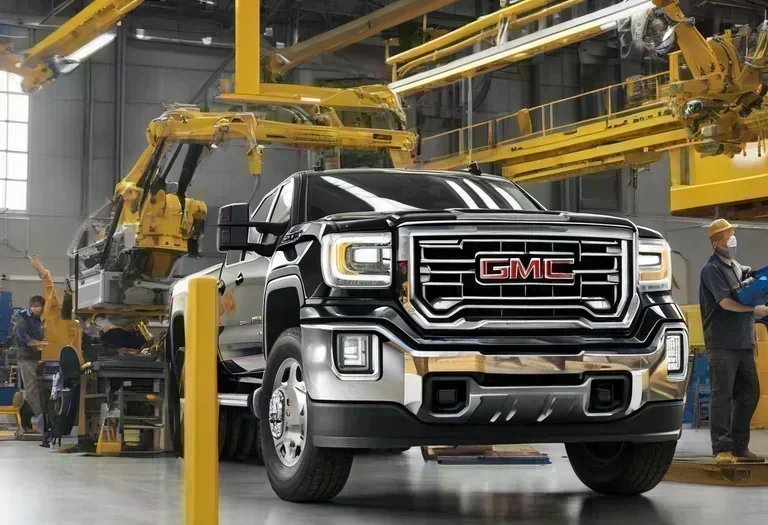
One of the most important provisions in the agreement is GM’s commitment to build the next-generation GMC Sierra HD at Oshawa Assembly in Ontario.
GM plans to invest $144 million CAD ($104 million USD) in the facility to support production of the future heavy-duty pickup.
The Sierra HD will be built alongside the Chevrolet Silverado HD, allowing GM to continue using Oshawa as an important manufacturing location for its full-size heavy-duty truck portfolio.
The decision is significant because heavy-duty pickups are among the most important products in GM’s North American portfolio. They serve commercial customers, contractors, agricultural businesses and consumers who require substantial towing and payload capabilities.
Assigning next-generation truck production to Oshawa therefore gives the Canadian facility an important role in GM’s future North American manufacturing strategy.
What Is Happening at St. Catharines Propulsion?
GM’s St. Catharines Propulsion facility will receive an even larger investment under the new agreement.
The automaker plans to invest $215 million CAD ($155 million USD) to produce a next-generation transmission at the Ontario plant.
Details about the new gearbox remain limited. GM has not publicly provided a comprehensive specification sheet covering the transmission’s number of gears, application or precise technology.
What makes the agreement particularly important is that the transmission is expected to be exclusive to the St. Catharines plant. Work is anticipated to begin in late 2029.
The investment is also expected to create approximately 250 new jobs, strengthening the facility’s long-term role within GM’s North American powertrain manufacturing network.
The commitment gives St. Catharines a future product beyond its current manufacturing programs and provides an important signal that GM intends to maintain advanced powertrain production in Canada.
Why Is the Oshawa Sierra HD Investment Important?
The return of next-generation heavy-duty GMC Sierra production to Oshawa is strategically important for both GM and the Canadian automotive industry.
Oshawa has a long history of producing GM vehicles, but the plant’s future has changed considerably over the years as the automaker has adjusted its North American manufacturing footprint.
Assigning the next-generation Sierra HD to the facility provides a clearer long-term product commitment. The fact that the Sierra HD will be produced alongside the Chevrolet Silverado HD also creates manufacturing efficiencies because the two trucks share much of their underlying engineering and production architecture.
Heavy-duty pickup demand remains particularly important in North America. Unlike many passenger vehicles, heavy-duty trucks are purchased extensively by commercial and professional users, making their production volumes and profitability strategically significant.
For Oshawa workers, securing the next generation of the truck is therefore more meaningful than simply receiving an extension of an existing production program.
What Is the Future of CAMI Assembly?
The future of CAMI Assembly remains less certain.
The facility in Ingersoll, Ontario, previously produced BrightDrop electric delivery vans. Production ended in 2025, resulting in layoffs and leaving questions about how the plant would be used going forward.
Under the new labor agreement, GM has provided a written commitment stating its intent to not close or sell the plant. The automaker is also studying potential opportunities for the facility.
That does not amount to a confirmed new vehicle program. CAMI does not yet have the same level of product certainty as Oshawa or St. Catharines.
However, the commitment gives the plant a degree of protection while GM evaluates possible future uses.
One particularly unusual provision designates CAMI as the “plant of first consideration” for Canadian Armed Forces defense work if such work is awarded to General Motors.
The arrangement could potentially create a future role for the facility beyond traditional vehicle assembly, although no defense production program has been confirmed as part of the agreement.
What Does the Contract Mean for the Canadian Auto Industry?
The new GM-Unifor agreement comes at a critical time for Canada’s automotive manufacturing sector.
Canadian plants face pressure from changing vehicle demand, supply-chain restructuring, electrification, global competition and shifting trade policies. Maintaining high-volume vehicle and powertrain production is therefore a major priority for both workers and the broader Canadian auto industry.
According to Unifor National President Lana Payne, the agreement commits more than $1 billion CAD in investments to GM’s Canadian facilities when the various commitments are considered together.
The investments span vehicle assembly and powertrain manufacturing, creating a broader industrial footprint than a contract focused exclusively on wages.
Oshawa gains a future heavy-duty truck program, while St. Catharines receives a next-generation transmission program. CAMI, meanwhile, receives a commitment against closure or sale while GM explores potential uses.
For Canada, those commitments matter because automotive manufacturing supports not only direct assembly jobs but also suppliers, logistics companies, engineering operations and other businesses connected to the manufacturing ecosystem.
How Does the Agreement Affect GM’s North American Strategy?
GM’s Canadian investments should be viewed within the context of its broader North American manufacturing network.
The company continues to operate major assembly and powertrain facilities across the United States, Canada and Mexico. Production decisions are influenced by labor costs, trade rules, vehicle demand, supply chains and access to skilled workers.
The decision to assign the next-generation Sierra HD to Oshawa suggests GM sees a continuing role for Canadian production in its full-size truck strategy.
Likewise, the St. Catharines transmission investment indicates that Canada can remain important for advanced component manufacturing even as the automotive industry shifts toward electrification.
The future powertrain mix remains uncertain, but the agreement shows that GM is still prepared to make substantial long-term investments in Canadian manufacturing.
Will the New GMC Sierra HD Be Built Only in Canada?
No. The Oshawa investment does not mean the next-generation GMC Sierra HD or Chevrolet Silverado HD will necessarily be produced exclusively in Canada.
GM operates multiple manufacturing facilities across North America, and large pickup trucks are typically produced at more than one plant to serve regional demand and maintain manufacturing flexibility.
The significance of the agreement is that Oshawa will have a confirmed role in producing the next-generation GMC Sierra HD.
GM has not provided all future production allocations, volumes or detailed manufacturing schedules, so it would be premature to assume the Canadian plant will handle a specific percentage of global or North American Sierra HD production.
When Will the New GM Transmission Enter Production?
The new St. Catharines transmission is expected to enter the manufacturing process later this decade.
The current agreement states that work is anticipated to begin in late 2029. GM has not yet disclosed the full technical specifications of the transmission or announced every vehicle application that will use it.
The timing is notable because it places the program well into a period when the automotive industry’s powertrain mix is expected to look significantly different from today’s market.
The fact that GM is planning a new transmission program for 2029 suggests the company continues to see a role for advanced transmissions in its future product portfolio, potentially alongside increasingly sophisticated hybrid and electrified systems.
What Happens to Temporary Part-Time GM Employees?
Temporary part-time employees will receive wage increases under the agreement as well.
Their hourly rate will increase from $31.16 CAD ($22.48 USD) to $36.14 CAD ($26.08 USD) over the life of the contract.
They will also receive a $2,000 CAD ($1,443 USD) bonus.
The inclusion of temporary part-time employees is significant because these workers can provide manufacturing facilities with additional labor flexibility during periods of changing production demand. Higher wages and bonuses can also make these positions more competitive in local labor markets.
Why Is the CAMI Commitment Important?
CAMI is one of the most uncertain pieces of GM’s Canadian manufacturing footprint following the end of BrightDrop production.
The written commitment not to close or sell the plant does not guarantee that the facility will immediately receive a new vehicle or component program. However, it prevents the most severe outcomes while GM examines alternatives.
The potential defense-work designation adds another possible path. If General Motors receives Canadian Armed Forces-related manufacturing work, CAMI will be considered first for allocation of that work.
That could give the facility an opportunity to diversify beyond conventional automotive production, although the timing and scope of any such work remain unknown.
What Are the Biggest Investments in the New GM Contract?
| Facility | Investment | Future Program | Expected Impact |
|---|---|---|---|
| Oshawa Assembly | $144 million CAD ($104 million USD) | Next-generation GMC Sierra HD and Chevrolet Silverado HD | Continued heavy-duty truck production |
| St. Catharines Propulsion | $215 million CAD ($155 million USD) | Next-generation transmission | Approximately 250 new jobs expected |
| CAMI Assembly | Future opportunity under evaluation | Potential vehicle, manufacturing or defense work | GM intends not to close or sell the facility |
| Woodstock Parts Distribution Center | Not separately specified | Parts distribution | Expected to remain operational for the agreement’s duration |
GM Canada Contract: Key Specifications
| Specification | Value |
|---|---|
| Contract | New GM Canada-Unifor collective agreement |
| Annual Wage Increase | 3% for three years |
| Full-Rate Production Pay | $50.20 CAD ($36.22 USD) per hour |
| Skilled Trades Pay | $62.71 CAD ($45.25 USD) per hour |
| Temporary Part-Time Pay | $36.14 CAD ($26.08 USD) at the end of the agreement |
| Productivity and Quality Bonus | $10,000 CAD ($7,214 USD) in October |
| Additional December Bonus | $2,000 CAD ($1,443 USD) for eligible employees |
| Oshawa Investment | $144 million CAD ($104 million USD) |
| Oshawa Future Product | Next-generation GMC Sierra HD and Chevrolet Silverado HD |
| St. Catharines Investment | $215 million CAD ($155 million USD) |
| St. Catharines Future Product | Next-generation transmission |
| Transmission Program Timing | Work anticipated to begin in late 2029 |
| Expected New Jobs | Approximately 250 at St. Catharines |
| CAMI Commitment | GM intends not to close or sell the plant |
Conclusion
The new General Motors and Unifor agreement provides Canadian autoworkers with substantial wage increases and bonuses while also securing important future manufacturing investments.
For workers, the agreement includes 3% annual wage increases for three years, bringing full-rate production wages to $50.20 CAD per hour and skilled trades wages to $62.71 CAD per hour. Additional productivity, quality and other bonuses provide further short-term financial benefits.
For Canada’s automotive industry, the manufacturing commitments may be even more significant.
GM will invest $144 million CAD in Oshawa Assembly to produce the next-generation GMC Sierra HD alongside the Chevrolet Silverado HD. St. Catharines Propulsion will receive $215 million CAD to manufacture a next-generation transmission, with work expected to begin in late 2029 and approximately 250 new jobs anticipated.
CAMI’s future remains less certain, but GM’s written commitment not to close or sell the plant gives the facility additional time to find a new role. Its designation as the plant of first consideration for potential Canadian Armed Forces defense work could also provide another avenue for future production.
Taken together, the agreement represents more than a wage settlement. It establishes a significant set of commitments for GM’s Canadian manufacturing footprint at a time when the global automotive industry is undergoing major changes.
Frequently Asked Questions
Q: What did Unifor members approve with General Motors?
Unifor members approved a new collective agreement covering GM’s Canadian operations. The agreement includes wage increases, bonuses and more than $1 billion CAD in announced investments across GM’s Canadian facilities.
Q: How much will GM production workers earn under the new contract?
Full-rate production employees are expected to reach $50.20 CAD ($36.22 USD) per hour after the scheduled 3% annual wage increases over three years.
Q: How much will skilled trades workers earn?
Skilled trades workers are expected to reach $62.71 CAD ($45.25 USD) per hour at the end of the three-year wage progression.
Q: How much is the GM worker bonus?
Eligible employees will receive a $10,000 CAD ($7,214 USD) productivity and quality bonus in October. Some employees will also receive a separate $2,000 CAD ($1,443 USD) bonus in December.
Q: Where will the next-generation GMC Sierra HD be built?
GM has committed to building the next-generation GMC Sierra HD at Oshawa Assembly in Ontario. The truck will be produced alongside the Chevrolet Silverado HD.
Q: How much is GM investing in Oshawa?
General Motors will invest $144 million CAD ($104 million USD) at Oshawa Assembly to support production of the next-generation GMC Sierra HD and Chevrolet Silverado HD.
Q: What will GM build at St. Catharines?
GM plans to invest $215 million CAD ($155 million USD) at St. Catharines Propulsion to produce a next-generation transmission. Work is anticipated to begin in late 2029.
Q: How many jobs could the St. Catharines investment create?
The investment is expected to create approximately 250 new jobs at the St. Catharines Propulsion facility.
Q: What is happening to CAMI Assembly?
CAMI Assembly’s future product allocation remains uncertain. GM has provided a written commitment of its intent not to close or sell the facility and is studying potential opportunities for its future use.
Q: Could CAMI Assembly build defense products?
CAMI has been designated as the plant of first consideration for Canadian Armed Forces defense work if such work is awarded to General Motors. No specific defense production program has been confirmed.
Q: What happens to temporary part-time GM employees?
Temporary part-time employees will see their hourly wage increase from $31.16 CAD ($22.48 USD) to $36.14 CAD ($26.08 USD) over the life of the agreement. They will also receive a $2,000 CAD ($1,443 USD) bonus.
Q: How important is the new GM contract to Canada’s auto industry?
The agreement is significant because it combines higher worker compensation with major manufacturing investments. Oshawa receives a future heavy-duty truck program, St. Catharines receives a next-generation transmission program, and CAMI receives a commitment against closure or sale while GM evaluates future opportunities.