Your Car Already Has the Hardware to Stop You Speeding, But It's Not Allowed Yet
Modern cars contain the necessary hardware for future geofenced speed limiter systems, but the technology is not yet enabled.
Key Takeaways
- Geofenced speed control is technically possible because modern vehicles can combine location data, digital maps, cameras and electronic vehicle controls.
- The European Union already requires Intelligent Speed Assistance (ISA) on new vehicles, but current EU rules do not require cars to physically prevent drivers from exceeding a detected speed limit.
- ISA can use road-sign recognition, infrastructure signals and electronic map data to identify applicable speed limits and provide warnings or other feedback to the driver.
- Current ISA systems can be overridden by the driver, meaning they are not the same as a permanently locked geofenced speed limiter.
- Researchers and transport experts, including University of Amsterdam professor Marco te Brömmelstroet, have discussed using technology to automatically limit vehicle speeds in specific locations such as school zones.
- A future system could potentially combine geofencing with electronic powertrain controls to impose a speed ceiling in defined areas, but widespread mandatory use of such a system has not been adopted.
- The main debate is no longer whether the basic technology can exist, but how accurate, reliable, enforceable and publicly acceptable automated speed control should be.
What Is Geofenced Speed Limiting?
Geofenced speed limiting is the concept of automatically restricting a vehicle’s speed according to its location. Instead of applying one fixed maximum speed everywhere, the vehicle would determine where it is and use digital information about that location to establish the applicable speed limit.
For example, a vehicle could theoretically be programmed to recognize that it has entered a 30-km/h urban zone, school area or other designated low-speed zone. The vehicle could then limit its acceleration or otherwise prevent the driver from exceeding the programmed threshold while the car remains inside the defined area.
This is different from a conventional speed limiter. A normal limiter is selected by the driver and generally remains at the speed chosen by that driver. A geofenced system would instead use location-dependent information to determine when a particular speed restriction should apply.
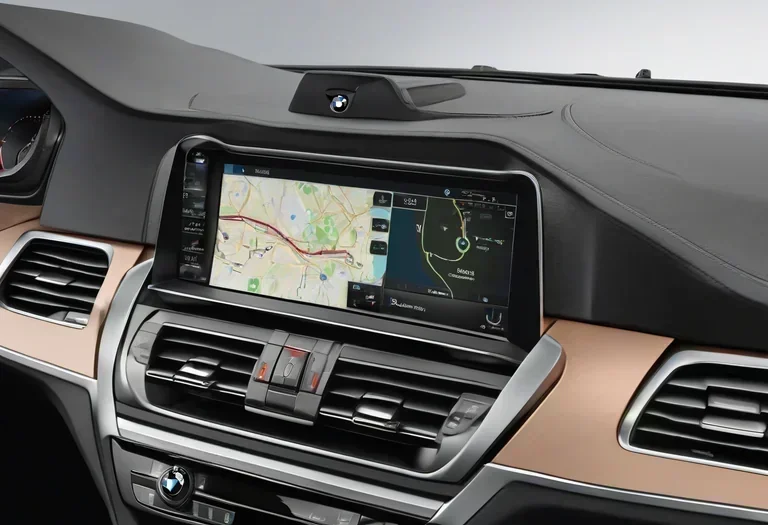
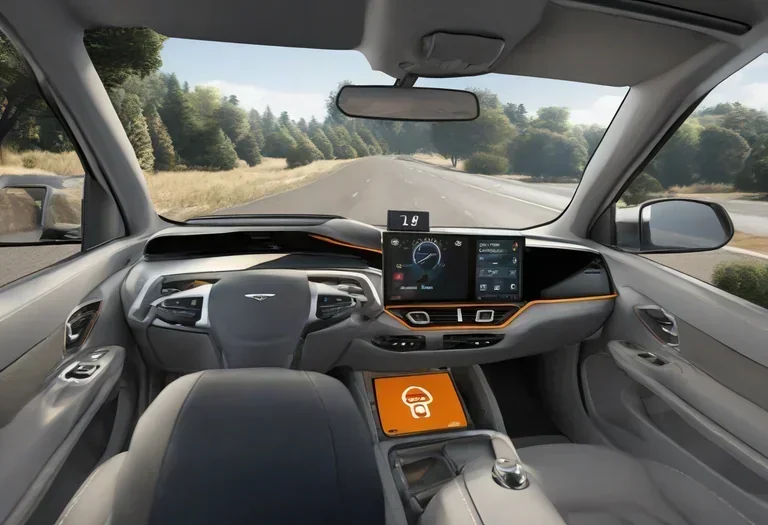
The underlying technology is not particularly futuristic. Modern vehicles already use GPS or other positioning systems, digital maps, cameras, radar and electronically controlled powertrains for navigation, driver assistance and other functions. The more difficult question is how those systems should be combined to enforce a speed limit automatically.
How Would a Geofenced Speed Limiter Work?
A fully automated system would need several components working together. First, the vehicle would need to determine its location accurately enough to identify the relevant road or restricted zone. It would then need reliable information about the applicable speed limit.
That information could come from several sources, including digital map databases, recognized road signs, infrastructure signals or connected services. The vehicle’s electronic control systems could then use that information to modify the driver’s available acceleration or maximum speed.
A simplified version of the process would look like this:
- Locate the vehicle: GPS and other positioning technologies determine where the vehicle is traveling.
- Identify the applicable limit: The vehicle obtains speed-limit information from cameras, digital maps, infrastructure signals or a combination of sources.
- Match the vehicle to the road: The system determines which speed limit applies to the vehicle’s current lane and direction of travel.
- Provide feedback or intervene: Depending on the system, the vehicle can warn the driver, make the accelerator pedal harder to press, or automatically reduce speed.
- Restore normal operation: Once the vehicle leaves the restricted area, the location-specific intervention can end.
The critical distinction is that today’s mandated Intelligent Speed Assistance systems are designed to assist the driver rather than permanently take control of the vehicle’s maximum speed.
Does Intelligent Speed Assistance Actually Stop Cars From Speeding?
No. This is one of the most important distinctions when discussing speed-control technology.
Under current EU rules, Intelligent Speed Assistance is intended to help drivers maintain an appropriate speed by providing dedicated feedback. The system can use information obtained from road signs, infrastructure signals and electronic map data. Crucially, the regulation states that the system must not prevent the driver from exceeding the prompted speed and must be capable of being switched off. The EU’s official Regulation 2019/2144 sets out these requirements for ISA.
That means it is inaccurate to describe today’s European ISA requirement as a mandatory hard speed limiter. The technology can encourage the driver to slow down, but the driver remains able to override it.
Depending on the implementation, feedback can include visual warnings, audible or vibrating alerts, accelerator-pedal feedback or a speed-control function that gently reduces speed. Even where the vehicle actively reduces speed, the driver can override the intervention by applying additional accelerator input.
When Did Intelligent Speed Assistance Become Mandatory in Europe?
The European Union introduced ISA as part of its General Safety Regulation. The requirement applied to new vehicle types from July 2022 and to all new vehicles covered by the regulation from July 7, 2024.
The European Commission says Intelligent Speed Assistance is one of several advanced safety systems required on new motor vehicles sold in the EU. Other measures include reversing detection, driver drowsiness and attention warnings, event data recorders and emergency stop signals. The European Commission’s vehicle-safety guidance confirms the July 7, 2024 application date for all new vehicles.
The introduction of ISA is significant because it establishes a regulatory framework for vehicles to identify speed limits electronically and provide automated assistance. It does not, however, establish a European requirement for permanent geofenced speed enforcement.
What Is the Difference Between ISA and a Geofenced Speed Limiter?
| Feature | Intelligent Speed Assistance | Hard Geofenced Speed Limiter |
|---|---|---|
| Identifies speed limits | Yes | Yes |
| Can use cameras and map data | Yes | Potentially |
| Provides driver warnings | Yes | Potentially |
| Can automatically reduce speed | Yes, depending on implementation | Yes |
| Driver can override the system | Yes, under current EU requirements | Not necessarily |
| Required to prevent speeding | No | No, not under current EU rules |
| Location-dependent speed restriction | Can use location-related information | Core function |
The distinction matters because discussions about the future of speed enforcement sometimes describe ISA, geofencing and hard speed limiting as though they were the same technology. They are not.
ISA is currently an assistance system. A hard geofenced limiter would go further by making the vehicle’s maximum permitted speed dependent on its location and potentially preventing the driver from overriding that restriction.
Could Cars Eventually Be Prevented From Speeding in Cities?
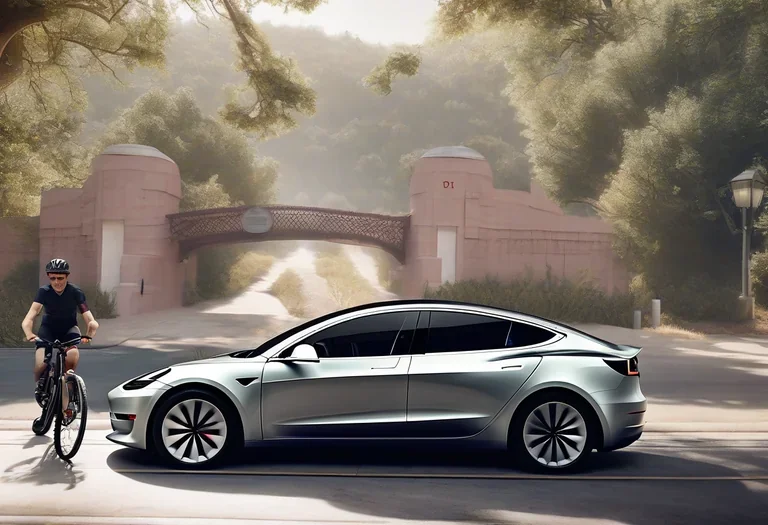
Technically, a future vehicle could be designed to restrict its speed automatically in defined areas. The necessary building blocks already exist in modern vehicles, including location services, digital mapping, cameras and electronic powertrain controls.
What has not been established is a universal requirement that passenger vehicles must operate this way.
The technology would also have to deal with practical problems. Digital maps can contain outdated information, road signs can change temporarily, GPS positioning is not perfect, and road layouts can be complicated. A vehicle would need to determine not merely where it is, but which speed limit actually applies to its lane and direction of travel.
Those issues become particularly important if the system is allowed to physically restrict the vehicle. A mistaken speed-limit reading that merely produces a warning is inconvenient. A mistaken reading that prevents a vehicle from accelerating could create a much more serious problem.
What Has Marco te Brömmelstroet Said About Speed Limiters?
University of Amsterdam professor Marco te Brömmelstroet has publicly argued for using technology to help enforce lower vehicle speeds in urban environments. His comments should be understood as an expert’s position and proposal, not as evidence that governments have approved mandatory hard geofenced speed limiters.
In a 2025 discussion about Intelligent Speed Assistance, te Brömmelstroet argued that ISA could enable cities to move toward lower speed limits without relying entirely on physical road reconstruction. He specifically discussed the possibility of vehicles being limited to a particular speed at certain times and locations, such as around schools. A report on the EIT Urban Mobility ISA event documents those comments.
He has also argued that technology could play a larger role in enforcing urban speed limits. That position represents part of an ongoing policy debate rather than an announced change to current vehicle regulations.
Could Geofencing Be Used Around Schools?
School zones are one of the clearest examples of where location-based speed control could theoretically be useful. A vehicle could recognize a designated school zone and apply a lower maximum speed during specified hours.
This could be more precise than imposing the same speed restriction throughout an entire city. A system could potentially account for both location and time, allowing a vehicle to operate normally outside the zone and apply a lower limit only when the relevant restriction is active.
However, this approach would require highly accurate information about the boundaries and operating times of each zone. Temporary changes, roadworks, special events and emergency situations would also need to be communicated to vehicles reliably.
Are Automakers Already Using Location-Based Vehicle Controls?
Yes, but this needs to be described carefully. Automakers have used geofencing and location-aware systems for specific vehicle functions, including features that can change vehicle behavior in defined areas. These applications demonstrate that location-based vehicle control is technically feasible.
However, that does not mean Mercedes-Benz, BMW, Toyota or other automakers currently use geofencing to impose a universal, government-defined hard speed limit on all of their vehicles. Specific implementations vary by manufacturer, vehicle and market, and many location-aware systems are designed for purposes other than speed enforcement.
The broader technology is therefore already present in the automotive industry, while the idea of a mandatory location-based speed ceiling remains a separate policy and engineering question.
What Are the Biggest Problems With Geofenced Speed Limiters?
The technical concept is relatively straightforward. Making it reliable enough for mandatory enforcement is considerably more complicated.
- Map accuracy: A vehicle needs current and accurate speed-limit information. Incorrect map data could result in an incorrect intervention.
- Temporary restrictions: Roadworks, school schedules, emergency operations and temporary traffic controls can change speed limits without permanently changing a digital map.
- Positioning accuracy: GPS and other positioning systems can experience errors, particularly in dense urban areas, tunnels and locations surrounded by tall buildings.
- Road complexity: Nearby roads can have different speed limits, meaning the vehicle must identify the correct road and direction rather than relying solely on geographic proximity.
- Driver control: A hard limiter would represent a much greater intervention in driving than today’s warning-based ISA systems.
- Data governance: Location-based vehicle systems raise questions about who maintains speed-limit databases and how vehicles receive updates.
- Public acceptance: Drivers may be willing to accept warnings but may object more strongly to technology that physically prevents them from exceeding a limit.
- Exceptional circumstances: Emergency situations or other unusual circumstances could create difficult questions about when a driver should be allowed to exceed a programmed limit.
Would Geofencing Replace Speed Cameras and Police Enforcement?
Not necessarily. A geofenced speed limiter would be a form of vehicle-based intervention, while speed cameras and police enforcement operate externally. They address speeding in different ways.
A hard limiter could theoretically prevent some violations before they happen, while cameras can detect violations by vehicles that are not subject to such restrictions. Police enforcement would still have a role in situations that cannot be addressed through automated speed control.
There is also a fundamental difference between assisting compliance and enforcing compliance. Today’s ISA system is designed to help drivers follow speed limits. A mandatory hard limiter would move toward directly controlling vehicle behavior.
Could a Driver Turn Off a Future Geofenced Limiter?
That would depend entirely on future legislation and system design.
Under the EU’s current ISA rules, the driver must be able to switch off the system, and the system must not prevent the driver from exceeding the prompted speed. A future hard geofenced limiter would require different technical and regulatory requirements if authorities wanted it to be non-overridable.
There is currently no EU-wide rule requiring private passenger vehicles to use a non-overridable geofenced speed limiter. It would therefore be misleading to say that European drivers are already being forced to use such a system.
What Does the Future of Vehicle Speed Control Look Like?
The most likely near-term development is greater integration of speed-limit recognition, digital maps and driver assistance rather than an immediate transition to permanently locked speed limits.
As vehicles become increasingly software-defined, manufacturers have more ability to change how the accelerator, powertrain and driver-assistance systems respond to information about the road environment. That creates a technical pathway toward more sophisticated location-based speed control.
Whether that pathway leads to mandatory hard geofencing is ultimately a policy decision. Governments would have to determine whether the potential road-safety benefits justify the loss of driver discretion, while manufacturers would need to demonstrate that the systems can identify speed limits accurately and respond reliably.
Geofencing and Intelligent Speed Assistance Specifications
| Specification | Current Status |
|---|---|
| Intelligent Speed Assistance | Required on new vehicles covered by EU rules from July 7, 2024 |
| Speed-limit recognition | Can use road signs, infrastructure signals and electronic map data |
| Driver warnings | Required as part of ISA functionality |
| Accelerator feedback | Permitted as one form of ISA feedback |
| Automatic speed reduction | Possible depending on the ISA implementation |
| Driver override | Required under current EU ISA rules |
| Non-overridable geofenced limiter | Not required by current EU ISA rules |
| Location-based speed restriction | Technically feasible, but mandatory widespread use has not been adopted |
Frequently Asked Questions
What is a geofenced speed limiter?
A geofenced speed limiter is a proposed vehicle-control system that uses the car’s location and information about local speed limits to restrict how fast the vehicle can travel in a particular geographic area.
Are cars already using geofenced speed limiters?
Location-aware vehicle technology is already used for various functions, and modern cars can identify speed limits using cameras and digital map data. However, a mandatory hard geofenced speed limiter that prevents drivers from exceeding a local limit is not currently a universal requirement for passenger cars.
What is Intelligent Speed Assistance?
Intelligent Speed Assistance, or ISA, is a driver-assistance system that identifies the applicable speed limit and provides feedback when the vehicle is traveling too quickly. Under current EU rules, the system must not prevent the driver from exceeding the prompted speed.
Is Intelligent Speed Assistance mandatory in Europe?
Yes. Under the EU General Safety Regulation, ISA became mandatory for all new vehicles covered by the regulation from July 7, 2024. It had already applied to new vehicle types from July 2022.
Does ISA physically stop a car from speeding?
No. Current EU ISA requirements are designed to assist the driver rather than permanently prevent speeding. The driver must be able to override the system.
Could future cars automatically slow down in 30-km/h zones?
Technically, yes. A vehicle could combine location information, digital speed-limit data and electronic powertrain controls to apply a location-specific speed restriction. However, there is currently no general EU requirement for private cars to use a non-overridable system of this kind.
Has Marco te Brömmelstroet called for geofenced speed control?
Te Brömmelstroet has publicly supported using technology to enforce or assist lower speeds in specific urban locations. He has discussed systems that could limit vehicle speeds at particular places or times, including around schools. Those comments represent his position on transport policy and should not be confused with an existing legal requirement.
Could geofencing replace speed cameras?
Not necessarily. Geofenced speed control and speed cameras work differently. A vehicle-based limiter could prevent or discourage speeding, while cameras and police enforcement can identify violations externally.
What is the biggest challenge with mandatory geofenced speed limiters?
Reliability is one of the biggest challenges. A mandatory system would need highly accurate information about speed limits, road position and temporary restrictions. It would also raise questions about driver control, exceptions, data management and public acceptance.