Lamborghini Won't Bring Back Manual Transmissions, Despite Collector Interest
Lamborghini's CEO Stephan Winkelmann has ruled out a manual comeback, citing a focus on electrified supercars and a lack of priority for manual gearboxes.
Key Takeaways
- Lamborghini has ruled out bringing a conventional manual transmission back to its modern production lineup, despite renewed interest in three-pedal supercars.
- Lamborghini’s current strategy is centered on high-performance hybrid powertrains, including the Revuelto, Temerario and Urus SE.
- The company’s modern supercars rely on sophisticated dual-clutch transmissions and electrified drivetrains designed around maximum performance rather than traditional manual gear changes.
- The last manual Lamborghini road cars are now highly sought-after collector vehicles, including extremely rare manual versions of the Murciélago LP670-4 SuperVeloce.
- Ferrari has taken a different approach with the limited-production 12Cilindri Manuale, although its system is technically an electronically controlled version of a dual-clutch transmission rather than a conventional manual gearbox.
- McLaren has also announced a return to three-pedal driving with the limited-production McL 6GT, showing that demand for manual supercars remains strong among wealthy enthusiasts and collectors.
- Lamborghini’s decision reflects the engineering, packaging and performance challenges of combining a traditional manual transmission with today’s hybrid supercar technology.
Why Isn’t Lamborghini Bringing Back the Manual Transmission?
Lamborghini has effectively closed the door on a return to the conventional manual transmission, even as interest in three-pedal supercars has returned among collectors and driving enthusiasts.
The decision is notable because the manual gearbox has recently experienced something of a revival at the very top of the automotive market. Ferrari has created the 12Cilindri Manuale, while McLaren has unveiled the McL 6GT with a traditional manual transmission. Both projects demonstrate that manufacturers are willing to invest heavily in specialized cars designed around driver involvement and exclusivity.
Lamborghini, however, is taking a different path. Company executives have indicated that a manual gearbox does not fit the direction of the brand’s current performance philosophy. Lamborghini is concentrating on hybridization, advanced transmissions and increasingly sophisticated powertrains rather than returning to the traditional gated shifter.
The decision also reflects the economics of developing a manual supercar in an era when Lamborghini’s vehicles are becoming more technologically complex. Adding a manual transmission is not simply a matter of installing a clutch pedal and connecting a gearbox. A modern Lamborghini has to integrate its transmission with electronic controls, stability systems, hybrid motors, engine management and advanced driver-assistance technologies.
For a small-volume manufacturer, creating a dedicated manual transmission system for a limited number of buyers can therefore be extremely expensive. Lamborghini appears to have concluded that its resources are better directed toward new performance models and electrified technology.
What Did Lamborghini Say About a Manual Comeback?
Lamborghini executives have acknowledged that there is still a customer base interested in manual transmissions, but the company does not view that demand as sufficient reason to reverse its current strategy.
In recent comments, Lamborghini Chief Marketing and Sales Officer Federico Foschini said that manual transmissions do not align with the company’s performance objectives and its modern development approach. The company is instead concentrating on hybridization and automatic transmissions operated through paddle shifters.
That position is consistent with Lamborghini’s broader product strategy. The company has transitioned its main model range toward electrified powertrains while retaining the dramatic performance characteristics that define the brand.
For Lamborghini, the priority is not simply making a car feel more analog. The company wants its vehicles to deliver increasingly high levels of acceleration, cornering performance and powertrain responsiveness. A modern dual-clutch transmission can shift faster and more consistently than a human driver using a traditional manual gearbox.
That does not mean Lamborghini considers manual transmissions irrelevant. The continued collector interest in older manual models demonstrates that there is a market for them. The company simply appears unwilling to build a modern production car around that niche.
What Was the Last Manual Lamborghini?
The history of Lamborghini’s manual transmissions is now firmly part of the brand’s collector-car story.
One of the final manual Lamborghinis was the Gallardo, which remained available with a traditional six-speed manual transmission during the model’s production run. Special versions of the Gallardo helped preserve the three-pedal option into the early 2010s before Lamborghini ultimately moved away from manual gearboxes.
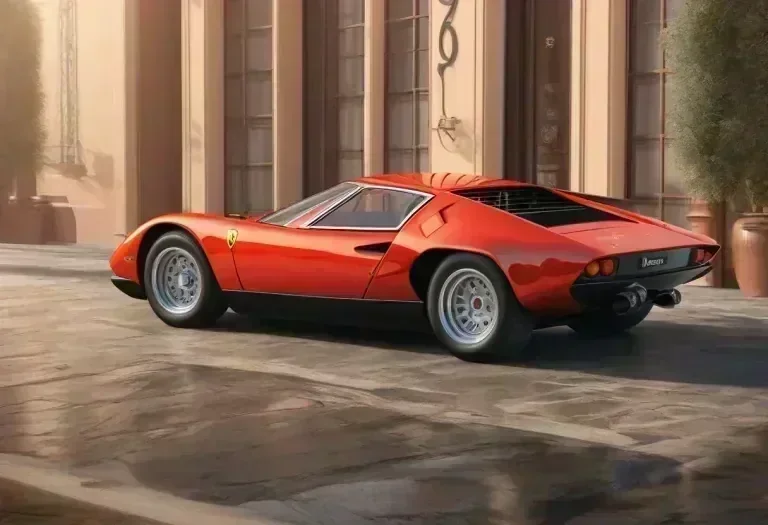
The more significant collector car today may be the Murciélago LP670-4 SuperVeloce. The high-performance V12 model was offered with Lamborghini’s six-speed gated manual transmission, but extremely few buyers selected it.
Only a handful of manual LP670-4 SV examples are known to exist. RM Sotheby’s has described one such car as a particularly important example and identified it as one of only five known manual LP670-4 SuperVeloce cars.
That extreme rarity helps explain why manual Lamborghini models command such attention from collectors. A manual Murciélago combines several characteristics that have become increasingly rare: a naturally aspirated V12, all-wheel drive, a traditional gated shifter and a mechanical connection between the driver and the drivetrain.
These cars represent a completely different engineering philosophy from the current Lamborghini lineup. Modern models are considerably more powerful and technologically advanced, but they no longer provide the same traditional three-pedal experience.
Why Are Manual Lamborghini Models So Valuable to Collectors?
Manual Lamborghinis occupy a special position because they represent the end of an era. As high-performance cars have adopted automated transmissions, hybrid systems and increasingly sophisticated electronic controls, traditional manual supercars have become uncommon.
Scarcity is particularly important in the Lamborghini market. A standard manual model is already unusual, but an extremely limited production Lamborghini equipped with a manual transmission can become a significant collector piece.
The Murciélago LP670-4 SuperVeloce illustrates the point. The car was already a special version of Lamborghini’s V12 flagship, and the manual transmission was an uncommon option even among those limited-production cars.
That combination creates a vehicle that is difficult to replicate. A collector cannot simply order a new Lamborghini with the same specifications because the company no longer offers a comparable manual V12 configuration.
The result is that the final manual Lamborghini models have become increasingly important as historical artifacts. Their appeal is not based solely on performance figures. It comes from the driving experience, rarity and mechanical character associated with the old-school transmission.
How Is Ferrari Handling the Return of Manual Supercars?
Ferrari has taken a more creative approach to the manual-transmission revival. The recently unveiled 12Cilindri Manuale features a physical clutch pedal and gated-style gear selector, but it does not use a conventional manual gearbox in the traditional sense.
Ferrari calls the technology Manuale by Wire. The system is based on the 12Cilindri’s existing eight-speed dual-clutch transmission, with electronic controls translating the driver’s clutch and gear-selector inputs into transmission commands.
The result is designed to recreate the experience of operating a conventional manual car while retaining the underlying hardware and electronic architecture of the dual-clutch system.
The distinction matters when comparing Ferrari’s approach with Lamborghini’s position. Ferrari has demonstrated that a manufacturer can create a three-pedal experience without completely redesigning a modern supercar’s drivetrain. Lamborghini could theoretically pursue a similar strategy in the future.
For now, however, Lamborghini has shown no indication that it intends to follow Ferrari down that road.
The Ferrari 12Cilindri Manuale is also extremely exclusive. Production is limited to 1,499 examples, placing it firmly in the collector-oriented portion of Ferrari’s portfolio rather than making the manual configuration a mainstream option.
What Is McLaren Doing With Manual Transmissions?
McLaren has gone further than Ferrari by announcing a genuine traditional manual transmission for its upcoming McL 6GT.
The McL 6GT is a limited-production model inspired by Bruce McLaren’s original M6GT concept from the late 1960s. The new car combines a mid-mounted V8 engine with rear-wheel drive and a conventional six-speed manual transmission.
McLaren says the model will emphasize driver involvement rather than simply chasing the lowest possible lap time or quickest acceleration figure. The car is expected to enter production in 2028, with only 500 examples planned.
The McLaren approach is significant because it demonstrates that a manufacturer can still justify developing a traditional manual supercar for a very small audience. The business case does not depend on selling thousands of cars. Instead, the exclusivity itself becomes part of the product.
For Lamborghini, the existence of the McL 6GT and Ferrari 12Cilindri Manuale could make the decision not to offer a manual even more noticeable. Enthusiasts now have fresh examples of what a modern three-pedal exotic can look like, while Lamborghini remains committed to automated transmissions.
Why Is a Manual Gearbox Difficult to Combine With Lamborghini’s Hybrid Technology?
The biggest obstacle is not necessarily the manual gearbox itself. It is integrating that gearbox into a modern hybrid vehicle while preserving the performance, reliability and electronic sophistication expected from a Lamborghini.
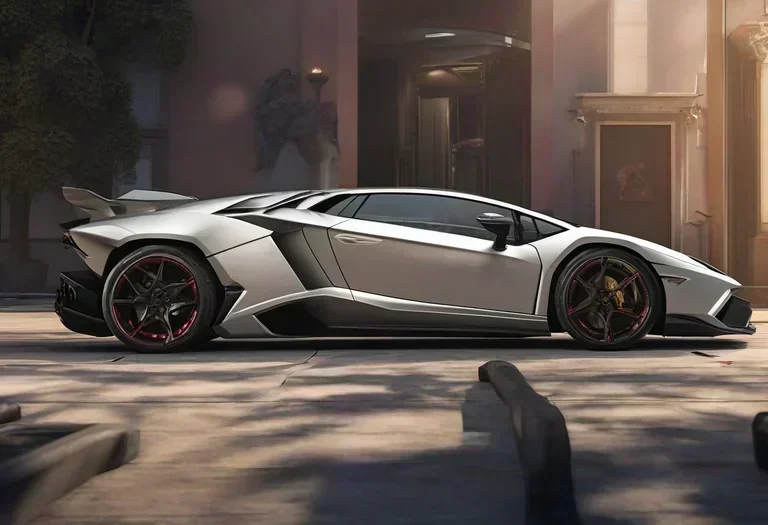
The Revuelto is a clear example. Lamborghini’s flagship V12 hybrid combines a 6.5-liter naturally aspirated V12 with three electric motors and an eight-speed dual-clutch transmission. The total system produces 1,015 CV, equivalent to approximately 1,001 horsepower.
The powertrain is designed as an integrated system. The internal-combustion engine, electric motors, battery, transmission and electronic controls work together to deliver the vehicle’s performance.
Replacing the dual-clutch transmission with a traditional manual gearbox would create major engineering challenges. Engineers would need to determine how the clutch interacts with the hybrid system, how torque is distributed during gear changes and how the electronics respond to driver-controlled shifts.
Regenerative braking creates another complication. Hybrid vehicles use the drivetrain and electric motors to recover energy during deceleration. A conventional manual transmission would need to operate alongside that system without creating undesirable transitions or compromising efficiency.
The result would be a highly specialized drivetrain designed for a relatively small number of buyers. Lamborghini has apparently determined that the engineering investment would not make sense compared with developing other technologies and derivatives.
How Does the Revuelto Illustrate Lamborghini’s Future?
The Revuelto is arguably the clearest indication of where Lamborghini sees its performance technology heading.
The V12 flagship uses a naturally aspirated 6.5-liter engine supported by three electric motors and a sophisticated dual-clutch transmission. Lamborghini lists combined system output at 1,015 CV, with a top speed above 350 km/h and a 0-100 km/h time of 2.5 seconds.
Those numbers demonstrate why Lamborghini is prioritizing automated transmission technology. The Revuelto’s drivetrain has to coordinate multiple power sources while delivering extremely rapid acceleration and precise torque management.
A manual gearbox would introduce another variable that the vehicle’s control systems would have to accommodate. While technically possible, it would be difficult to justify if the objective is maximum repeatable performance.
Lamborghini’s strategy is therefore relatively clear: keep the driver deeply involved through steering, braking, throttle response and paddle-operated gear changes while allowing electronic systems to manage the complex interaction between combustion and electric power.
What About the Lamborghini Temerario?
The Temerario provides another example of Lamborghini’s move toward electrified performance.
The successor to the Huracán uses a twin-turbocharged V8 engine paired with three electric motors. Lamborghini rates the system at 920 CV, or roughly 907 horsepower, making it one of the most powerful production models in the company’s history.
Like the Revuelto, the Temerario is designed around an electrified performance architecture rather than a conventional internal-combustion drivetrain with a manual gearbox.
The engineering priorities are different from those of older Lamborghini models. Instead of maximizing mechanical simplicity, Lamborghini is using hybrid technology to improve power delivery, responsiveness and overall performance.
That strategy makes a manual transmission increasingly difficult to justify. A three-pedal system would appeal to a relatively small group of collectors, while the majority of Lamborghini customers can access the performance benefits of the company’s automated drivetrain without sacrificing driver involvement.
Does Lamborghini Need a Manual Transmission?
From a performance perspective, Lamborghini does not need a manual gearbox. Modern dual-clutch transmissions can change gears extremely quickly, maintain the engine within its ideal power range and integrate directly with sophisticated electronic control systems.
The argument for a manual Lamborghini is therefore less about outright performance and more about emotion, engagement and exclusivity.
A manual gearbox gives drivers direct responsibility for gear selection and clutch operation. For some enthusiasts, that interaction is an essential part of the supercar experience even if it makes the car slower or less efficient.
That distinction explains why Ferrari and McLaren can justify highly limited manual models. They are not selling them because a clutch pedal makes the car objectively faster. They are selling a particular experience to customers willing to pay a premium for it.
Lamborghini appears to believe that its existing design language, naturally aspirated V12 heritage, hybrid performance and limited-edition models can provide exclusivity without adding a manual gearbox.
Could Lamborghini Change Its Mind Later?
A future manual Lamborghini cannot be completely ruled out because automotive product strategies can change. However, there is currently no announced plan for a conventional manual transmission to return to the production lineup.
The company’s current priorities point in the opposite direction. Lamborghini is developing electrified versions of its core models, expanding high-performance variants and using increasingly sophisticated transmission and control systems.
A special one-off or ultra-limited collector car would theoretically provide a way to offer a manual experience without changing the mainstream lineup. Ferrari’s 12Cilindri Manuale demonstrates how such a strategy could work, while McLaren’s McL 6GT demonstrates that a very small production run can support an entirely new manual application.
For Lamborghini to pursue something similar, the company would need to decide that the marketing and collector value outweighed the engineering and development costs. At present, its executives have indicated that the manual gearbox is not a priority.
What Does This Mean for Future Lamborghini Supercars?
For buyers looking at Lamborghini’s future lineup, the message is straightforward: expect more electrification and more advanced automated transmissions rather than a return to the gated manual shifter.
The Revuelto and Temerario already represent the company’s new performance formula. Both combine combustion engines with electric assistance, and both rely on sophisticated transmission technology to manage their powertrains.
Future Lamborghini models are likely to build on that architecture. The company has also indicated that additional high-performance versions of the Revuelto and Temerario are part of its development plans.
That does not necessarily mean Lamborghini is abandoning driving enjoyment. Instead, the brand is redefining driver involvement around modern technology. Paddle shifters, multiple drive modes, active chassis systems, torque vectoring and hybrid power delivery can provide a highly interactive experience without requiring a clutch pedal.
For traditionalists, that may not be enough. But Lamborghini’s decision reflects a broader shift in the supercar industry toward electrified powertrains and software-controlled performance.
Why Manual Lamborghinis Will Become Even More Important
The irony of Lamborghini’s decision is that refusing to bring back the manual may make its existing manual cars even more desirable.
The last generation of manual Lamborghinis already represents a disappearing category. Cars such as the Murciélago LP670-4 SuperVeloce with the rare six-speed gated manual transmission combine characteristics that are increasingly difficult to find in a new supercar.
As Lamborghini’s current lineup moves further into hybridization, the contrast between those older cars and the latest models will become more pronounced.
Collectors looking for a manual Lamborghini therefore have increasingly limited options. Instead of ordering a new car with three pedals, they must look to the used and collector markets for examples from the brand’s earlier generations.
That scarcity is likely to remain one of the defining characteristics of Lamborghini’s manual heritage. The company may continue producing faster and more technologically advanced cars, but the mechanical simplicity and driver involvement of its old manual models are unlikely to return in regular production.
Frequently Asked Questions
Q: Is Lamborghini bringing back the manual transmission?
No. Lamborghini has indicated that it does not currently plan to reintroduce a conventional manual transmission to its production lineup. The company is focusing on hybrid performance, automated transmissions and future high-performance models.
Q: What was the last manual Lamborghini?
The final manual Lamborghini models came from the Gallardo era, while extremely rare manual versions of the Murciélago LP670-4 SuperVeloce are among the last and most collectible manual V12 Lamborghinis.
Q: How rare is the manual Lamborghini Murciélago LP670-4 SV?
Only a handful of manual LP670-4 SuperVeloce examples are known. RM Sotheby’s has identified one example as one of five known cars equipped with the six-speed manual transmission.
Q: Why won’t Lamborghini bring back a manual gearbox?
Lamborghini’s current performance strategy prioritizes hybrid powertrains and automated transmissions. A manual gearbox would also require substantial engineering and integration work to function with modern hybrid systems and electronic controls.
Q: Is Ferrari bringing back the manual transmission?
Ferrari has introduced the limited-production 12Cilindri Manuale, which provides a physical clutch pedal and gated-style shifter. However, its Manuale by Wire system is electronically integrated with the existing dual-clutch transmission rather than being a conventional mechanical manual gearbox.
Q: Is McLaren bringing back the manual transmission?
Yes. McLaren has unveiled the McL 6GT, a limited-production model with a traditional six-speed manual transmission and rear-wheel drive. Production is planned for 500 examples beginning in 2028.
Q: Does the Lamborghini Revuelto have a manual transmission?
No. The Revuelto uses an eight-speed dual-clutch transmission as part of its hybrid V12 powertrain. Lamborghini combines the transmission with three electric motors and a 6.5-liter naturally aspirated V12.
Q: Does the Lamborghini Temerario have a manual transmission?
No. The Temerario uses an electrified powertrain consisting of a twin-turbocharged V8 and three electric motors, paired with an automated transmission.
Q: How much power does the Lamborghini Revuelto make?
The Revuelto produces a combined 1,015 CV, or approximately 1,001 horsepower, from its V12 engine and three electric motors.
Q: How much power does the Lamborghini Temerario make?
The Temerario produces 920 CV, or approximately 907 horsepower, from its twin-turbocharged V8 and three electric motors.
Q: Could Lamborghini build a manual as a limited-edition model?
A limited-edition manual Lamborghini is technically possible, but the company has not announced such a project. Its current strategy indicates that resources are being directed toward electrification and high-performance derivatives rather than a manual transmission program.
Model and Transmission Details
| Model or Program | Transmission / Powertrain Details |
|---|---|
| Lamborghini Revuelto | 6.5-liter naturally aspirated V12, three electric motors and eight-speed dual-clutch transmission |
| Lamborghini Revuelto Output | 1,015 CV combined |
| Lamborghini Temerario | Twin-turbocharged V8 with three electric motors |
| Lamborghini Temerario Output | 920 CV combined |
| Modern Lamborghini Manual Strategy | No announced return of a conventional manual transmission |
| Ferrari 12Cilindri Manuale | Three-pedal Manuale by Wire system based on an eight-speed dual-clutch transmission |
| Ferrari 12Cilindri Manuale Production | 1,499 examples |
| McLaren McL 6GT | Traditional six-speed manual transmission with rear-wheel drive |
| McLaren McL 6GT Planned Production | 500 examples |
| Notable Manual Lamborghini | Murciélago LP670-4 SuperVeloce with rare six-speed gated manual transmission |