North Carolina Legalizes AI Plate Cameras On Nearly Every State Road
North Carolina allows permanent ALPR placement in state rights-of-way, sparking concerns about mass surveillance.
Key Takeaways
- North Carolina has moved beyond a limited pilot program and now allows automated license plate readers (ALPRs) to be installed in state Department of Transportation rights-of-way under the state’s expanded program.
- ALPR systems photograph passing vehicles and use software to convert license plate images into searchable data that can be used for defined law-enforcement purposes.
- North Carolina law generally limits retention of captured plate data to 90 days, although specific data can be preserved longer when statutory requirements, a preservation request, or a search warrant applies.
- The state’s initial ALPR program had 140 camera locations installed by March 15, 2026, while additional locations were still moving through the approval and installation process.
- ALPRs are intended to help law enforcement investigate crimes, locate missing or endangered people, find stolen vehicles and identify vehicles connected to criminal investigations.
- The law does not create one universal operating policy for every camera. Participating agencies remain responsible for policies governing how their systems are operated and how data is accessed.
- Privacy advocates have raised concerns that ALPR systems can create detailed records of where vehicles travel, potentially expanding surveillance beyond the investigation that initially prompted the technology.
What Is Changing With North Carolina’s ALPR Program?
North Carolina is expanding the use of automated license plate readers on roads and highways across the state, giving law enforcement agencies a larger framework for deploying the technology in state-maintained rights-of-way.
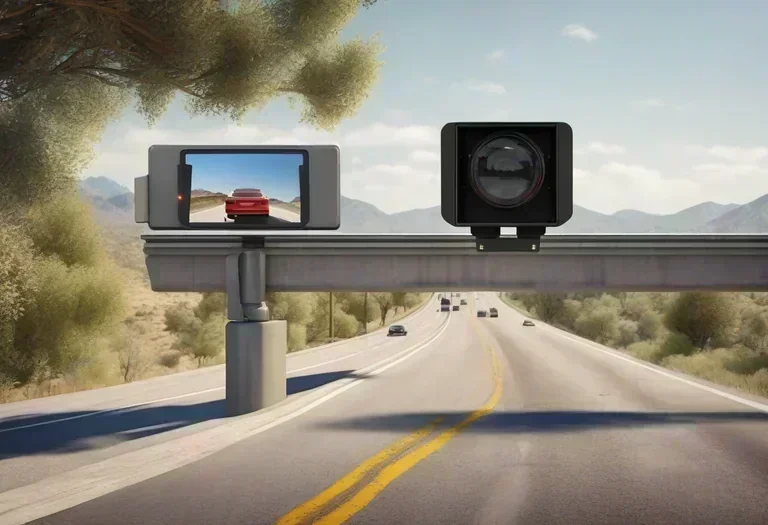
An automated license plate reader, commonly called an ALPR or LPR, is a camera system that photographs vehicles as they pass. Computer software analyzes the images and converts readable license plates into computer-searchable information. Depending on the system, the captured record can also include information such as the date, time and location of the camera.
The technology is different from a conventional traffic camera. An ALPR is generally designed to identify and catalog passing license plates rather than automatically issue a speeding ticket or red-light citation. North Carolina law separately defines ALPR systems and excludes traditional traffic-control photographic systems from the definition.
The expansion means drivers may encounter more fixed ALPR cameras on North Carolina roads as law enforcement agencies obtain approvals, funding and equipment for new installations.
For the most direct information about North Carolina’s statutory requirements, the North Carolina General Assembly’s General Statutes provide the governing legal framework for ALPR systems and data retention.
What Do ALPR Cameras Actually Record?
When an ALPR camera detects a passing vehicle, it can capture an image of the license plate and convert the plate number into searchable data. The system can associate that plate information with the time and location where the vehicle was observed.
This means an ALPR database can contain information about vehicles that are not suspected of any crime. A driver does not necessarily need to be speeding, stopped by police or suspected of wrongdoing for the vehicle’s plate to be captured.
That distinction is central to the debate over ALPR technology. Law enforcement agencies generally describe the systems as investigative tools that help officers find vehicles connected to crimes. Privacy advocates focus on the fact that the same technology can collect information about large numbers of ordinary drivers who are simply traveling through an area.
The system can therefore be useful for identifying a specific vehicle while simultaneously creating a broader record of vehicle movements.
Why Is North Carolina Expanding ALPR Use?
Law enforcement agencies have increasingly adopted ALPR technology because it can help investigators quickly determine whether a particular vehicle has been observed by a camera.
For example, if investigators are looking for a stolen vehicle, an ALPR system can alert officers when a matching license plate is detected. The technology can also assist investigations involving vehicles believed to have been connected to crimes.
North Carolina’s statutory definition of a law-enforcement purpose includes criminal investigations, arrests, prosecutions and supervision, as well as locating people with outstanding felony warrants, finding missing or endangered people and locating lost or stolen vehicles.
That gives agencies several legitimate investigative uses for the technology without making ALPR cameras traditional traffic-enforcement devices.
Can North Carolina ALPRs Be Used to Issue Traffic Tickets?
ALPR systems should not be confused with automated traffic-enforcement cameras. The purpose of an ALPR is to capture and identify license plates for law-enforcement purposes, not to function as a general-purpose speed camera.
North Carolina’s ALPR framework specifically defines the technology separately from traffic-control photographic systems. A conventional traffic-control camera can be used in circumstances authorized by state or local law to document particular traffic violations, while an ALPR is designed primarily to collect searchable license-plate information.
This distinction matters because the presence of an ALPR camera does not mean every driver passing it is automatically receiving a traffic citation.
How Long Can North Carolina Keep ALPR Data?
One of the most important protections in North Carolina’s ALPR law concerns data retention.
Captured plate data obtained by an ALPR operated by or for a law enforcement agency for law-enforcement purposes generally cannot be preserved for more than 90 days after it is captured.
However, the 90-day period is not an absolute end point for every piece of information. North Carolina law provides circumstances under which specific ALPR data can be preserved beyond 90 days.
A law enforcement agency can request preservation of particular information when it has specific and articulable facts establishing reasonable grounds to believe the data is relevant and material to an ongoing criminal or missing-person investigation or is needed to prove a violation of a motor-carrier safety regulation.
The law also permits longer preservation pursuant to a state or federal search warrant.
In other words, the system is not designed to allow every plate record to remain indefinitely in an ordinary database. Longer retention requires a defined legal or investigative basis.
What Happens After the 90-Day Retention Period?
For ordinary captured plate data that does not qualify for an authorized preservation exception, the 90-day limit is intended to prevent indefinite storage.
That time limit is significant because ALPR technology can potentially generate enormous quantities of information. A camera operating continuously can record thousands of vehicles over a relatively short period.
A 90-day limit therefore places a boundary on how long ordinary records can remain available for future searches.
At the same time, the preservation provisions mean that information connected to an active investigation can remain available for longer when the statutory requirements are satisfied.
The result is a system that combines a general retention deadline with exceptions intended to preserve evidence that may be relevant to a particular case.
How Many ALPR Cameras Are Operating in North Carolina?
The scale of the state’s program has already grown substantially.
According to the state’s initial ALPR program reporting, 32 agencies were participating in the pilot program, including police departments, sheriffs’ offices and the North Carolina State Highway Patrol. As of March 15, 2026, 17 participating agencies had installed ALPRs in North Carolina Department of Transportation rights-of-way.
Those agencies had installed 140 camera locations. Another 75 camera locations were in the approval process or awaiting installation.
The numbers show that the technology is not limited to a handful of experimental cameras. The program was already operating at dozens of locations before additional installations were completed.
The state report also recommended extending the pilot period so participating agencies could finish installations and officials could continue evaluating the technology and its usefulness.
How Does an ALPR Help Police Investigations?
The main advantage of ALPR technology is speed. Instead of relying exclusively on officers to manually identify vehicles, investigators can search available plate records for a vehicle that may have been observed by a participating camera.
Consider a stolen vehicle investigation. If investigators have the license plate number, they may be able to determine whether the vehicle was detected by an ALPR and identify the camera location and time associated with the observation.
The same principle can apply when investigators are attempting to locate a missing person or identify a vehicle believed to have been involved in a crime.
ALPR data can therefore provide investigators with leads that might otherwise require substantial time and manpower to develop.
Does Every Police Department Have Access to Every ALPR Camera?
Not necessarily.
North Carolina’s system does not simply mean that every law enforcement officer automatically has unrestricted access to every ALPR database in the state.
Individual agencies operate systems under their applicable policies, agreements and legal requirements. The state’s initial program involved participating agencies working with the State Bureau of Investigation and the Department of Transportation on installations in state rights-of-way.
Data management and potential statewide interoperability are also significant issues as the program grows. The state has considered how ALPR information from different vendors and agencies could potentially be handled and accessed in the future.
That means the structure of the network could become an important part of the privacy and oversight debate as North Carolina adds more cameras.
What Are the Privacy Concerns?
The primary privacy concern is that ALPR cameras do not inherently distinguish between people suspected of crimes and people going about their daily lives.
A camera positioned on a busy road can capture plates from commuters, families, workers, tourists and other drivers. Most of those people have no connection to a criminal investigation.
When those records are stored and searchable, they can potentially reveal patterns about where vehicles were observed and when.
Privacy advocates argue that this creates a form of location surveillance that can extend beyond the original purpose of finding stolen vehicles or investigating individual crimes.
The concern becomes more significant as the number of cameras increases. A single camera may provide a limited snapshot, while a large network of cameras can create a much broader picture of vehicle movements.
What Does the ACLU Say About ALPR Surveillance?
The American Civil Liberties Union of North Carolina has raised concerns about ALPR systems and the possibility that they could become tools for broad location tracking.
The organization has argued that ALPR technology can collect information about people who are not suspected of wrongdoing and has called for safeguards governing access, sharing and retention of the data.
The debate is not necessarily about whether ALPR technology can help solve crimes. Even critics acknowledge that there can be legitimate law-enforcement uses. The disagreement centers largely on how much information should be collected, who should be able to access it, how long it should be retained and what restrictions should apply to secondary uses.
The ACLU of North Carolina maintains information about privacy and surveillance issues through its privacy and surveillance resources.
Could ALPR Data Be Used for Other Purposes?
The potential for secondary use is one of the most controversial aspects of ALPR technology.
Data collected for one law-enforcement purpose can become valuable for another investigation if it remains available and searchable. That raises questions about whether information collected to locate stolen vehicles could later be used for unrelated investigative purposes.
North Carolina law establishes specific law-enforcement purposes and retention requirements, but individual agency policies remain important because they determine how systems are operated within the applicable legal framework.
Critics are particularly concerned about the possibility of data being used for activities far removed from the original reason the cameras were installed.
Supporters, meanwhile, argue that restricting access to useful investigative information can make it harder for police to solve crimes and locate endangered people.
Does North Carolina Have One Statewide ALPR Policy?
North Carolina’s ALPR framework does not eliminate the role of local law enforcement policies.
Participating agencies can have their own written policies governing the operation and use of their systems. Those policies can address issues such as who can access ALPR information, how requests are handled and how the agency complies with state retention requirements.
This creates an important distinction between statewide law and local implementation. The state establishes legal boundaries, but the day-to-day operation of an ALPR program can depend heavily on the agency operating the cameras.
For drivers, that means the rules governing ALPR technology may not be experienced identically in every community.
Where Are ALPR Cameras Being Installed?
The initial state program focused on fixed ALPR cameras installed in North Carolina Department of Transportation rights-of-way. Participating agencies must go through the appropriate process before placing cameras in those locations.
The technology can be particularly useful on major roads, highway approaches, corridors connecting communities and other locations where vehicles regularly travel.
The state’s initial program was not intended to cover every ALPR system in North Carolina. It specifically addressed fixed cameras in state rights-of-way. ALPR systems operated on municipal streets or private property can be governed by different arrangements and requirements.
As the state program expands, the number and geographic distribution of cameras will depend on participating agencies, available funding, local priorities and required approvals.
Will North Carolina Add More ALPR Cameras?
Expansion is likely to remain an important issue because law enforcement agencies participating in the program have expressed interest in maintaining and expanding ALPR access.
The state’s initial reporting found that several agencies were still working through permitting and installation procedures, while others were seeking funding for future installations.
The state also identified additional time as necessary to evaluate the effectiveness of the technology before making decisions about its long-term structure.
That means North Carolina’s ALPR network is not necessarily finished at the 140-camera level. Additional locations can be added as agencies complete the required process.
What Are the Arguments in Favor of ALPRs?
Supporters of ALPR technology point to its investigative value. A stolen vehicle can cross multiple jurisdictions quickly, and traditional police methods may not provide immediate information about where it has traveled.
ALPRs can provide a digital record that investigators can search when a vehicle becomes relevant to a case.
The technology can also help locate missing or endangered people and identify vehicles associated with criminal investigations.
Another advantage is that ALPRs can automate a task that would otherwise require officers or investigators to manually observe and record license plates.
Supporters argue that these capabilities can make law enforcement more efficient without requiring officers to stop every vehicle or physically inspect every passing car.
What Are the Arguments Against ALPRs?
Critics argue that the scale of collection creates a privacy problem because most vehicles captured by ALPR cameras are not connected to crimes.
Even with a 90-day general retention limit, critics question whether the government should create searchable records showing where large numbers of ordinary vehicles were observed.
There are also concerns about data security, access controls, information sharing and the possibility of using ALPR information for purposes beyond the original reason for collection.
The debate therefore involves more than the cameras themselves. It also involves database architecture, agency policies, oversight, retention, search procedures and rules governing who can access the information.
What Does the ALPR Expansion Mean for North Carolina Drivers?
For the average North Carolina driver, the most immediate change is that more license plates may be captured by law enforcement-operated cameras positioned along state-maintained roads.
Passing an ALPR camera does not by itself mean that a driver is suspected of a crime. The system is designed to capture plates broadly and then allow authorized personnel to search the resulting information for defined law-enforcement purposes.
Drivers should also understand that the presence of ALPR technology is different from automated traffic enforcement. An ALPR camera is not simply a speed camera that automatically issues a citation.
The larger issue is data collection. Every additional camera increases the potential number of vehicle observations that can be recorded, stored and searched under the applicable rules.
What Should Drivers Know About the 90-Day Rule?
The 90-day retention limit is one of the most important details for understanding North Carolina’s ALPR system.
Ordinary captured plate data generally cannot be retained beyond 90 days when it is obtained through an ALPR operated by or for a law enforcement agency for law-enforcement purposes. However, specific records can be preserved longer when the legal requirements for preservation are met.
A preservation request must identify the relevant camera or cameras, the particular license plate, the applicable dates and time frames, the case involved and specific facts establishing why the information is relevant and material to an ongoing investigation or qualifying matter.
Search warrants provide another route for longer preservation.
Therefore, the 90-day rule should be understood as the general retention period rather than an absolute guarantee that every ALPR record disappears after exactly 90 days regardless of circumstances.
What Is the Future of ALPR Surveillance in North Carolina?
North Carolina is now at a point where the central debate is shifting from whether ALPR technology should be tested to how the technology should be governed as its use expands.
The state has already demonstrated that ALPRs can operate at a substantial number of locations, while law enforcement agencies continue to seek additional installations.
Future policy decisions are likely to focus on data sharing, statewide interoperability, retention, access controls, audits, public transparency and the circumstances under which investigators can search historical plate information.
The technology itself is unlikely to disappear. The more significant question is how North Carolina chooses to balance its investigative benefits against the privacy implications of recording vehicle movements on a large scale.
Law and Policy Details
| Issue | North Carolina Rule or Current Status |
|---|---|
| Technology | Automated license plate reader systems use fixed or mobile high-speed cameras and computer algorithms to convert license plate images into searchable data. |
| State Rights-of-Way | North Carolina allows ALPR installations in Department of Transportation rights-of-way under the state’s expanded program and applicable approval requirements. |
| General Data Retention | Captured plate data generally may not be preserved for more than 90 days when obtained by an ALPR operated by or for a law enforcement agency for law-enforcement purposes. |
| Longer Preservation | Specific data can be preserved longer through an authorized preservation request or a state or federal search warrant. |
| Law-Enforcement Uses | Authorized purposes include criminal investigations, arrests, prosecutions, locating people with outstanding felony warrants, finding missing or endangered people, and locating lost or stolen vehicles. |
| Initial Camera Deployment | 140 camera locations had been installed in state rights-of-way by March 15, 2026, according to the state’s initial program report. |
| Additional Locations | 75 additional camera locations were in the DOT approval process or awaiting installation as of March 15, 2026. |
| Participating Agencies | 32 agencies were participating in the initial program, including police departments, sheriffs’ offices and the North Carolina State Highway Patrol. |
| Local Policies | Participating law enforcement agencies maintain policies governing the operation and use of their ALPR systems within applicable state requirements. |
| Traffic Enforcement | ALPR systems are distinct from traffic-control photographic systems used for automated traffic enforcement. |
Frequently Asked Questions
Q: What is an ALPR?
An Automated License Plate Reader is a camera-based system that photographs license plates and uses computer software to convert the images into searchable data. The resulting information can be associated with the time and location where a vehicle was detected.
Q: Why is North Carolina using ALPR cameras?
North Carolina law allows ALPR technology to be used for defined law-enforcement purposes, including criminal investigations, locating missing or endangered people, finding stolen vehicles and locating individuals with outstanding felony warrants.
Q: How long can North Carolina keep ALPR data?
Captured plate data generally cannot be preserved for more than 90 days when obtained by an ALPR operated by or for a law enforcement agency for law-enforcement purposes. Specific information can be preserved longer when the statutory requirements for a preservation request or search warrant are satisfied.
Q: Does every vehicle passing an ALPR camera get recorded?
ALPR systems are designed to capture license plate images from passing vehicles within the camera’s operating range. The system does not inherently determine whether a driver is suspected of a crime before capturing the plate.
Q: Does an ALPR automatically issue speeding tickets?
No. ALPR systems are designed primarily to identify and record license plates for law-enforcement purposes. They are legally distinct from traffic-control photographic systems used for automated traffic enforcement.
Q: How many ALPR cameras are currently part of North Carolina’s state-rights-of-way program?
The state’s initial report said 140 camera locations had been installed in DOT rights-of-way as of March 15, 2026. Another 75 locations were in the approval process or awaiting installation at that time.
Q: Can ALPR data be kept longer than 90 days?
Yes, but the general 90-day retention limit has exceptions. Specific data can be preserved longer through a qualifying preservation request or pursuant to a state or federal search warrant.
Q: Who can use North Carolina ALPR data?
Access is governed by applicable law and the policies of the law enforcement agencies operating the systems. The expansion of the program does not mean every officer automatically receives unrestricted access to every ALPR database.
Q: Are ALPR cameras a privacy concern?
Privacy advocates argue that ALPR systems can create records of vehicle movements involving people who are not suspected of any wrongdoing. Supporters counter that the technology provides valuable investigative information for locating stolen vehicles, missing people and vehicles associated with crimes.
Q: Can North Carolina police use ALPRs to track a person’s movements?
ALPR systems can create time-and-location records of vehicle observations. How those records may be searched and used is governed by North Carolina law, applicable preservation requirements and the policies of the agency operating the system.
Q: Will North Carolina install more ALPR cameras?
Additional installations are possible. The state’s initial program report identified agencies that were still seeking approvals, completing installations or pursuing funding for additional cameras. The future size of the network will depend on state policy, agency participation, funding and required approvals.