Porsche 911 Challenge Debuts As $275k Entry-Level Race Car
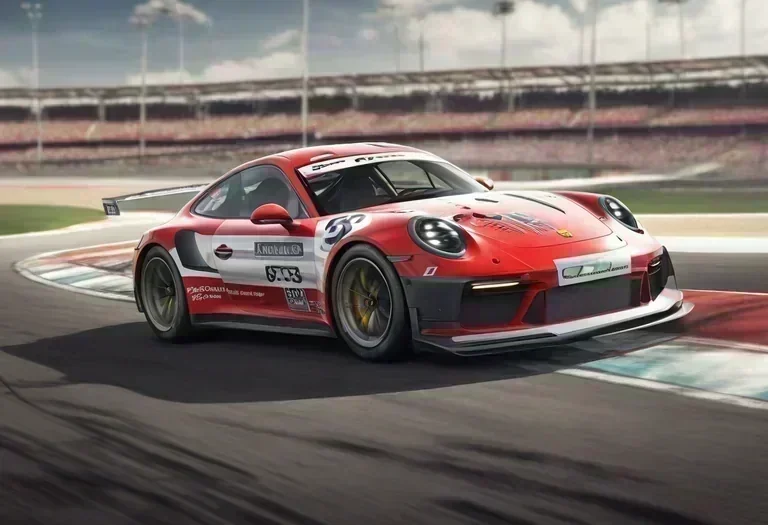
Porsche introduces the 911 Challenge, a $275,000 entry-level race car based on the 911 GT3, with a 508 hp engine and racing-spec components.
Key Takeaways
- Porsche has introduced the new 911 Challenge as the entry-level model in its current customer-motorsport lineup.
- The 911 Challenge is closely based on the current 911 GT3, using its 4.0-liter naturally aspirated flat-six engine and seven-speed PDK transmission.
- The race car produces 508 hp (379 kW) in Porsche’s U.S. specification and reaches its maximum output at 8,500 rpm, with a 9,000-rpm redline.
- Porsche Motorsport North America is offering the 911 Challenge to 2027 Porsche one-make entrants in the United States for $275,000, including import and delivery.
- The 911 Challenge is not street legal. It is a purpose-built competition car with a welded-in roll cage, six-point harness, FIA safety equipment and a 110-liter fuel tank.
- The car uses 18-inch wheels with racing slicks, a motorsport-specific suspension, adjustable anti-roll bars and a four-position adjustable rear wing.
- From the 2027 season, the 911 Challenge will be eligible for multiple Porsche one-make racing championships worldwide.
- In North America, eligible series include the Porsche Sprint and Endurance Challenge North America by Yokohama, the Porsche Sprint Trophy Porsche Club of America by Yokohama and the Porsche Sprint Trophy Porsche Owners Club.
What Is the Porsche 911 Challenge?
The Porsche 911 Challenge is a new customer-racing car designed to provide a more accessible entry point into Porsche motorsport. Porsche unveiled the model on August 26, 2026, positioning it beneath the company’s more specialized 911-based competition cars.
Unlike a road-going 911 with a track package, the 911 Challenge is a dedicated race car. It has no road approval and is built specifically for circuit competition, with the interior stripped of unnecessary road-car equipment and replaced with motorsport safety hardware.
The concept behind the car is different from Porsche’s 911 Cup. Whereas the 911 Cup is a dedicated high-level one-make competition car, the 911 Challenge makes extensive use of production-based 911 GT3 technology. Porsche says this approach is intended to make the transition from driving a road-going GT3 to competing in customer racing more familiar.
The new model also completes a shift in Porsche’s customer-racing lineup. The 911 Challenge succeeds the original Cayman GT4 Clubsport and the more recent 718 Cayman GT4 RS Clubsport as Porsche’s entry-level competition car.
Porsche describes the 911 Challenge as a bridge between its road-going sports cars and dedicated racing machines. The car uses production-derived components where they make sense while adding the safety equipment, chassis hardware and operating features required for competition.
The connection with the road-going 911 GT3 is particularly strong. Porsche says the 911 Challenge shares the GT3’s engine and PDK transmission, while the body dimensions and key body components are also identical to the GT3. The racing version then adds the equipment necessary to transform the platform into a dedicated track car.
That includes a welded-in roll cage, racing seat, six-point harness, fire-extinguishing system, FIA-certified rain light, integrated air jacks and racing slicks. The combination means the 911 Challenge is not simply a modified street car but a purpose-built customer-racing vehicle.
Porsche’s official announcement provides the confirmed technical and competition details for the new model: Porsche Newsroom: New 911 Challenge.
How Does the 911 Challenge Differ From the 911 GT3?
Although the Porsche 911 Challenge is closely related to the road-going 911 GT3, the two cars serve completely different purposes. The GT3 is a road-legal high-performance sports car that can also be used on a racetrack, while the 911 Challenge is built exclusively for competition.
The race car retains the GT3’s basic powertrain architecture but receives a motorsport-specific chassis. Its shock absorbers use racing-specific characteristics, while the standard anti-roll bar can be adjusted through three positions.
The 911 Challenge also rides on 18-inch wheels fitted with treadless racing slicks. These tires are designed specifically for circuit use and provide substantially different characteristics from the road tires fitted to a street-legal 911 GT3.
Braking hardware has also been adapted for racing. Porsche specifies steel brake discs measuring 380 mm in diameter at both the front and rear, with the braking technology drawing on the company’s motorsport development work.
A mechanically adjustable rear wing provides four different settings. This gives teams the ability to alter aerodynamic balance according to circuit characteristics, tire behavior and setup requirements.
The car also receives an integrated three-jack air-jack system. This allows the vehicle to be lifted quickly during pit-lane servicing without requiring conventional external jacks.
The bonnet uses integrated quick-release fasteners, making access faster during racing and maintenance. A FIA-certified rain light is installed at the rear for poor-weather competition conditions.
Inside, the differences from the road-going GT3 become even more obvious. Porsche removes sound-deadening materials, carpets and conventional interior trim to reduce unnecessary weight and create space for the racing equipment.
A welded-in roll cage reinforces the structure and provides additional protection for the driver. The cockpit contains an adjustable racing bucket seat and a six-point harness, while a fire-extinguishing system provides another layer of motorsport safety.
The 911 Challenge also retains production-derived controls in several areas. Porsche specifically highlights the seven-speed PDK gearbox, the GT3 RS steering wheel with racing-specific functions and air conditioning. This is intended to make the car easier to understand for drivers who already have experience with road-going Porsche GT models.
What Engine Does the 911 Challenge Have?
The Porsche 911 Challenge is powered by a naturally aspirated 4.0-liter six-cylinder boxer engine largely derived from the engine used in the current 911 GT3.
For the 911 Challenge, Porsche lists maximum output at 508 hp (379 kW) in the U.S. announcement. The engine reaches that output at 8,500 rpm and continues to a 9,000-rpm redline.
European Porsche specifications list the same engine at 515 PS, or 379 kW. The difference between the 508-hp U.S. figure and the 515-PS European figure is a result of the different horsepower measurement conventions rather than two different engines.
The high-revving naturally aspirated engine is paired with a seven-speed dual-clutch PDK transmission. Porsche says the PDK is derived from the production GT3, and the race car retains the ability to use automatic or manual gear changes through steering-wheel paddles.
The exhaust system has also been modified for racing. Porsche says the racing muffler includes a catalytic converter but does not require a particulate filter.
The combination of a naturally aspirated 4.0-liter boxer engine, high-revving character and PDK transmission gives the 911 Challenge a powertrain that should be familiar to current 911 GT3 owners while being configured for dedicated track use.
Importantly, Porsche has not presented the 911 Challenge as a road-going performance model. The car is designed as a competition vehicle and is not street legal, so its specifications should be considered in the context of closed-course racing rather than everyday driving.
What Are the Key Features of the 911 Challenge?
The 911 Challenge combines the GT3-derived powertrain with a range of equipment designed specifically for customer racing. One of its most important features is the integrated air-jack system, which incorporates three jacks into the vehicle.
The chassis is also designed to allow substantial setup adjustment. The motorsport-specific shock absorbers and three-position anti-roll bar give teams a way to tune the car for different circuits and driving conditions.
Porsche Torque Vectoring Plus, or PTV+, is another adjustable system. The multi-stage setup allows the driver and team to tailor the vehicle’s behavior for different situations.
Electronic driver-assistance systems are also adjustable. ABS, traction control and electronic stability control can be configured for motorsport use, helping drivers adapt the car to different levels of grip and track conditions.
The inclusion of these systems is particularly relevant to the 911 Challenge’s role as an entry-level Porsche race car. Rather than removing all electronic assistance, Porsche has developed adjustable systems that can help drivers transition into competition while still allowing experienced racers to configure the car more aggressively.
The aerodynamic package includes the mechanically adjustable rear wing, which can be set to four different positions. This allows teams to balance aerodynamic downforce and straight-line performance depending on the circuit.
Safety equipment is extensive. Along with the welded-in roll cage and six-point harness, the 911 Challenge includes a fire-extinguishing system, FIA-certified rain light and an FT3-specification fuel tank with a capacity of 110 liters.
Because the car is designed solely for racing, Porsche has removed conventional comfort equipment where it is unnecessary. At the same time, air conditioning remains installed, providing a useful feature for drivers competing in demanding conditions.
Where Can the 911 Challenge Compete?
The Porsche 911 Challenge is scheduled to become eligible for Porsche one-make competition beginning with the 2027 season. Porsche says the car can be entered in numerous one-make series around the world, subject to the sporting and technical regulations of each championship.
In North America, the car is eligible for the Porsche Sprint and Endurance Challenge North America by Yokohama. It can also compete in the Porsche Sprint Trophy Porsche Club of America by Yokohama and the newly announced Porsche Sprint Trophy Porsche Owners Club, subject to the applicable regulations.
The model’s role in Porsche’s racing ladder is important. It gives drivers an alternative route into Porsche customer motorsport before moving toward more specialized machinery such as the 911 Cup, 911 GT4 R and 911 GT3 R.
Porsche Motorsport North America is initially prioritizing allocations for full-season entrants in its North American one-make series. The company says the 911 Challenge is expected to become available at a later stage in 2027 for enthusiasts interested in track days, testing, driver development and private motorsport activities.
The car therefore targets more than professional race teams. Its relatively accessible position within Porsche’s competition lineup is intended to attract drivers who want to move from track-day driving into organized racing.
Porsche Motorsport North America has announced a U.S. price of $275,000 for the 911 Challenge, including import and delivery. That figure applies to the U.S. market and should not be treated as a universal global price because Porsche lists different pricing structures in other markets.
For comparison, Porsche’s European announcement lists the car at €208,800 before country-specific VAT. This reinforces the importance of checking the applicable market when comparing the 911 Challenge’s price.
Specifications
| Specification | Value |
|---|---|
| Model | Porsche 911 Challenge |
| U.S. Price | $275,000 including import and delivery |
| Engine | 4.0-liter naturally aspirated six-cylinder boxer |
| U.S. Power Rating | 508 hp (379 kW) |
| European Power Rating | 515 PS (379 kW) |
| Maximum Power Speed | 8,500 rpm |
| Redline | 9,000 rpm |
| Transmission | Seven-speed PDK dual-clutch transmission |
| Wheels | 18-inch wheels |
| Rear Wing | Mechanically adjustable, four positions |
| Brake Discs | 380 mm steel discs front and rear |
| Fuel Tank | 110 liters (29 gallons), FIA FT3 |
| Air-Jack System | Integrated three-jack system |
| Safety Equipment | Welded-in roll cage, six-point harness and fire-extinguishing system |
| Road Legal | No |
| Competition Eligibility | Porsche one-make racing series from the 2027 season |
Frequently Asked Questions
Q: What is the Porsche 911 Challenge?
The Porsche 911 Challenge is a dedicated customer-racing car that combines technology derived from the current 911 GT3 with motorsport-specific chassis, aerodynamic and safety equipment. It is Porsche’s new entry-level 911-based competition car and succeeds the 718 Cayman GT4 RS Clubsport at the bottom of the customer-motorsport range.
Q: How much does the Porsche 911 Challenge cost?
Porsche Motorsport North America is offering the 911 Challenge to 2027 Porsche one-make entrants in the United States for $275,000, including import and delivery. Porsche lists a different price for Europe, where the car is announced at €208,800 before country-specific VAT.
Q: What engine does the Porsche 911 Challenge have?
The 911 Challenge uses a naturally aspirated 4.0-liter six-cylinder boxer engine largely derived from the current 911 GT3. Porsche’s U.S. announcement gives the engine a maximum output of 508 hp (379 kW) at 8,500 rpm, with a 9,000-rpm redline.
Q: Does the 911 Challenge use the same transmission as the 911 GT3?
Yes. The 911 Challenge uses a seven-speed PDK dual-clutch transmission derived from the production 911 GT3. The car retains paddle-operated manual gear changes as well as automatic shifting functionality.
Q: Is the Porsche 911 Challenge street legal?
No. The 911 Challenge is designed exclusively as a competition car and does not have road approval. Its equipment includes a welded-in roll cage, racing bucket seat, six-point harness, fire-extinguishing system, racing slicks and an FIA-specification fuel tank.
Q: What makes the 911 Challenge different from a Porsche 911 GT3?
The 911 Challenge uses significant GT3-derived technology but replaces road-car equipment with motorsport hardware. It has racing-specific shock absorbers, an adjustable three-position anti-roll bar, 18-inch wheels with racing slicks, a four-position adjustable rear wing, an integrated air-jack system, a roll cage and competition-specific safety equipment.
Q: What racing series can the Porsche 911 Challenge enter?
From the 2027 season, the 911 Challenge will be eligible for numerous Porsche one-make series worldwide, subject to individual sporting and technical regulations. In North America, Porsche has confirmed eligibility for the Porsche Sprint and Endurance Challenge North America by Yokohama, the Porsche Sprint Trophy Porsche Club of America by Yokohama and the Porsche Sprint Trophy Porsche Owners Club.
Q: Does the Porsche 911 Challenge replace the 718 Cayman GT4 RS Clubsport?
Yes. Porsche identifies the 911 Challenge as the successor to the 718 Cayman GT4 RS Clubsport as the entry-level model in its customer-motorsport lineup. The change also means the current Porsche customer GT racing range is built around the 911 platform.
Q: How much fuel does the Porsche 911 Challenge carry?
The car has a 110-liter (29-gallon) FIA FT3 fuel tank. This large competition-specification tank is designed for racing use rather than the requirements of a road-going sports car.
Q: Is the 911 Challenge intended only for professional drivers?
No. Porsche specifically positions the car as an entry point into customer racing for both racing newcomers and experienced drivers. Its adjustable ABS, traction control, ESC and Porsche Torque Vectoring Plus systems are intended to help drivers transition into motorsport while still providing the setup flexibility expected from a dedicated race car.